
My cat, Koga, has a white slash across her right eye. I have no idea how she got the scar. What I do know is that, when we first met, she hopped into my lap and looked up at me. No hesitation. Everything that happened before then, out on the mean streets of Brooklyn, is shrouded in mystery.
Anyone who meets Koga thinks she’s a kitten at first. But no, she’s at least six years old – maybe older. I have no idea, and the vets don’t either. She’s so small. My best guess is that Koga probably spent some time starving. Even now, many years later, meat has a certain way of making her seem possessed. Whatever actually happened, the truth is that I don’t like thinking about it. She’s the sweetest cat I’ve ever met, and the idea that she spent any time at all suffering – however brief it might have been – immediately makes me upset.
After playing Mewgenics, I started thinking about Koga’s time as a stray differently. Sure, she’s partially blind now. But she’s alive. Out in the real world, most stray cats only survive for a couple of years, if that.
When you first start playing Mewgenics, the brutality of the tactical game is a shock. When you finish a run, chances are high that your felines will lose at least one teammate – if they come back at all. Mewgenics is a roguelike, so this conceit around death shouldn’t be surprising. But I was taken aback by how the cats die.
Your cats don’t just tip over and disappear, as they might in most games. No, in Mewgenics, there’s no such thing as a normal death. Your cats explode into tiny chunks. Your cats are eaten whole by disgusting monstrosities. Your cats will become infested from the inside out with pests.

Even the moments leading up to death can be awful. Maybe your tabby loses a limb, or it spends an entire battle bleeding out. Perhaps your calico contracts a deadly disease and spreads it to your entire team, causing you to wipe out completely. There are even psychological effects, like a status that makes your cat lose its mind or flee in fear.
Like much of Edmund McMillen’s work, the shock factor is played for laughs. It’s a spectacle, almost: when your cat suffers a particularly harsh death, the game plays a gasping audience sound bite. But just like The Binding of Isaac or even Super Meat Boy before it, behind every childish joke and gross moment is a kernel of vulnerability.
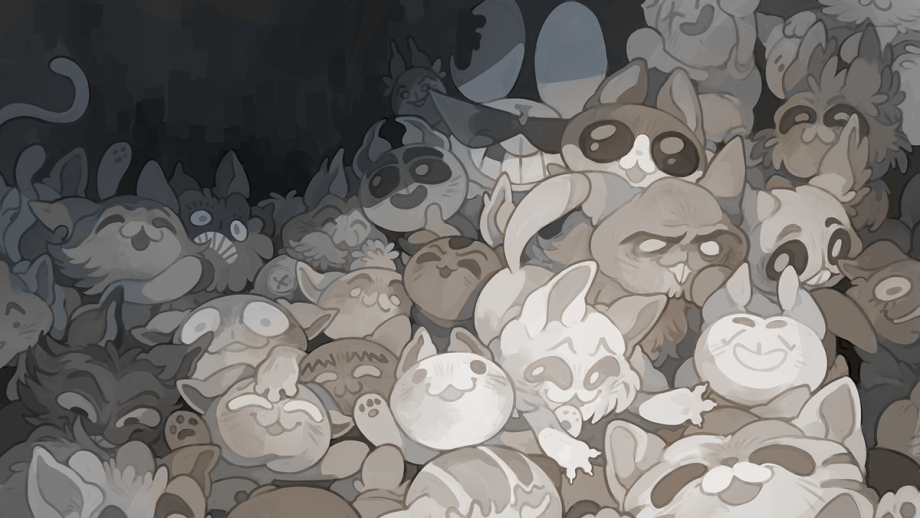
Despite all the violence, Mewgenics is not a game that could have been made by someone who hates cats. A person who revels in the suffering of an animal would not spend countless hours coming up with thousands of possible designs and funny names for them. Someone who hates cats would not take care in recording thousands of voice lines that capture a vast spectrum of possible meows.