SINGAPORE – With Singapore’s domestic recycling rate falling to an all-time low and contamination remaining a persistent issue for recyclables, residents in one housing estate are taking matters into their own hands.
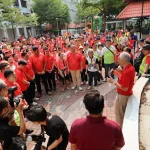
Driven by a desire for a cleaner neighbourhood, residents of Tiong Bahru’s Seng Poh estate are launching an experiment from April 11 to temporarily remove blue recycling bins for close to three months.
Instead, people in the neighbourhood can deposit their recyclables during community drives to be held twice a month at Tiong Bahru Community Centre.
Architect Kelvin Wang, who is helping to coordinate the initiative titled Love Tiong Bahru, said the residents had been “disturbed enough” by the deterioration of their living environment to take action.
The contamination rate for blue recycling bins has remained at about 40 per cent since 2017.
“For those who say it’s a terrible idea, I am sure they don’t mean to say that they are happy with the current unsightly and uncivilised situation where recycling efforts are undone,” Mr Wang said.
“Why not try something different and see what we can improve from there to make every recycling effort count?”
He believes this is possibly the first time residents in Singapore have asked the authorities to take away their public recycling bins.
While the idea may seem novel in Singapore, a centralised recycling system mirrors practices in other places such as Japan, Taiwan and Thailand, he said.
“We are a heritage neighbourhood meant to represent Singapore’s history and culture,” he said.
“We cannot have an environment that is so messy and unhygienic, depending only on our already hard-working town council cleaners to keep picking up after litterbugs.”
Another resident, Mr Alvin Yeo, who has lived in Tiong Bahru all his life, said the situation has worsened since the introduction of the blue bins, which have become rubbish bins for passers-by, businesses and residents.