When the Airbus A380 was first announced, there was no shortage of ideas about what to do with all that real estate. In the early days, there was talk of shopping malls, gyms, bars, and beauty parlours, with some proposals more reminiscent of a cruise ship than an airplane.
But there was one particular proposal that stood out: a flying casino. Virgin Atlantic founder Richard Branson claimed he’d outfit his six A380s with roulette, blackjack and slot machines, which coupled with double bed suites, would give passengers “two chances to get lucky.”
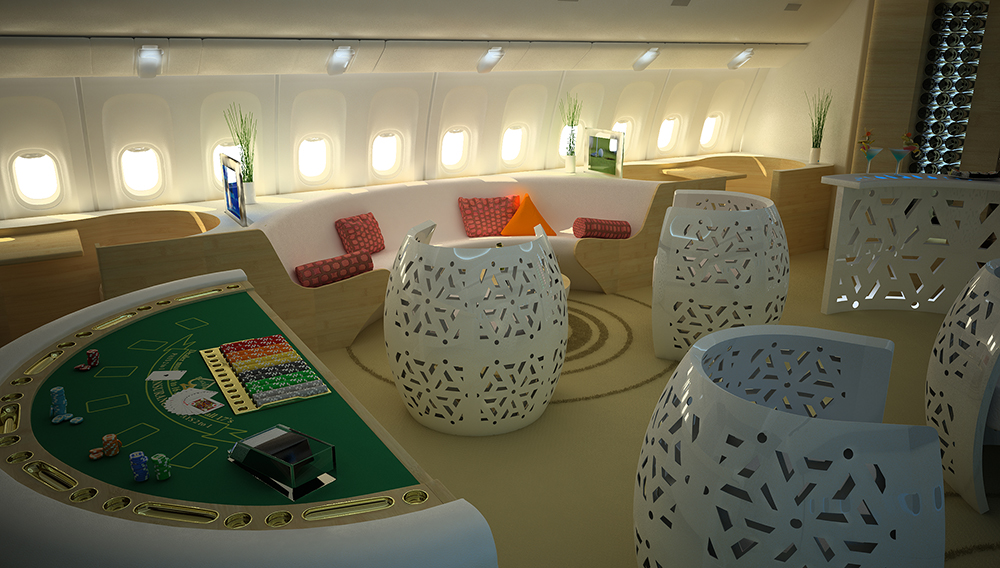
While double beds did eventually find their way into commercial aviation, the casino turned out to be a mere flight of fancy, as Virgin Atlantic never took delivery of a single superjumbo.
But if Sir Richard had simply bothered to consult his 49% shareholder Singapore Airlines, he might have played his cards a little differently. After all, Singapore Airlines already had a brush with inflight gaming a few decades ago, and it didn’t quite work out the way they wanted…
A gamble on inflight entertainment
In the 1980s, Singapore Airlines was looking for new ways to entertain its customers. They had already tried live entertainment a few years prior, with singing troupes serenading passengers from the aisles. Then came an inflight fashion show to commemorate the launch of services to Paris. But the minds at Airline House wanted to know: what was the next big trend for inflight entertainment?
A (probably apocryphal) story goes that Las Vegas was founded on the unshakable belief that you could always count on men to be two things: horny, and greedy. And since SIA couldn’t really cater to the former (at least not without jeopardising its air operator certificate), it might as well give the latter a try.
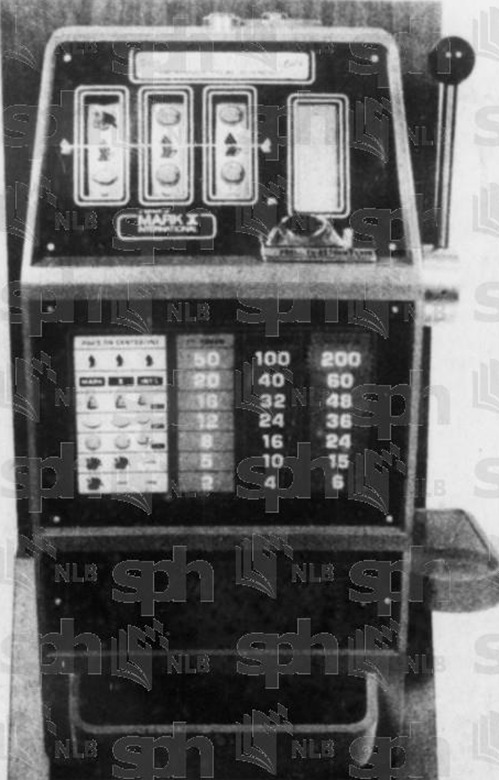
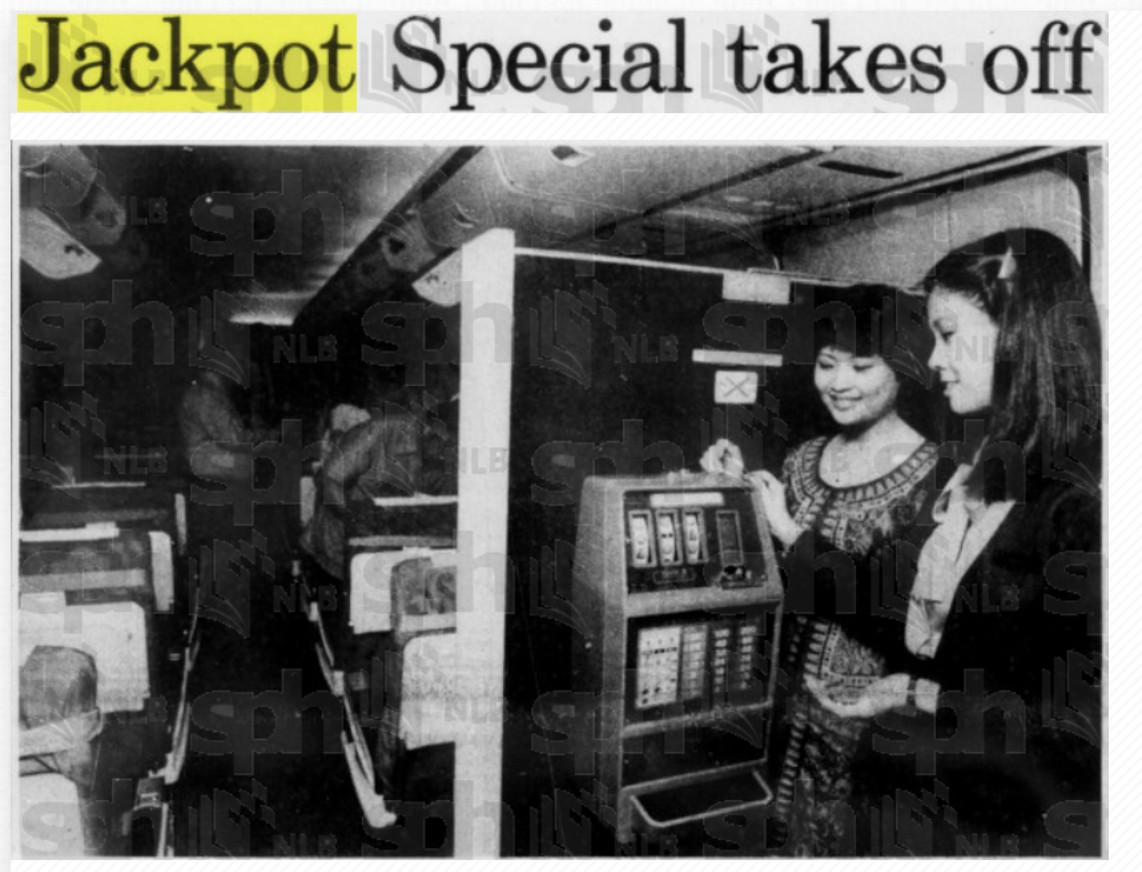
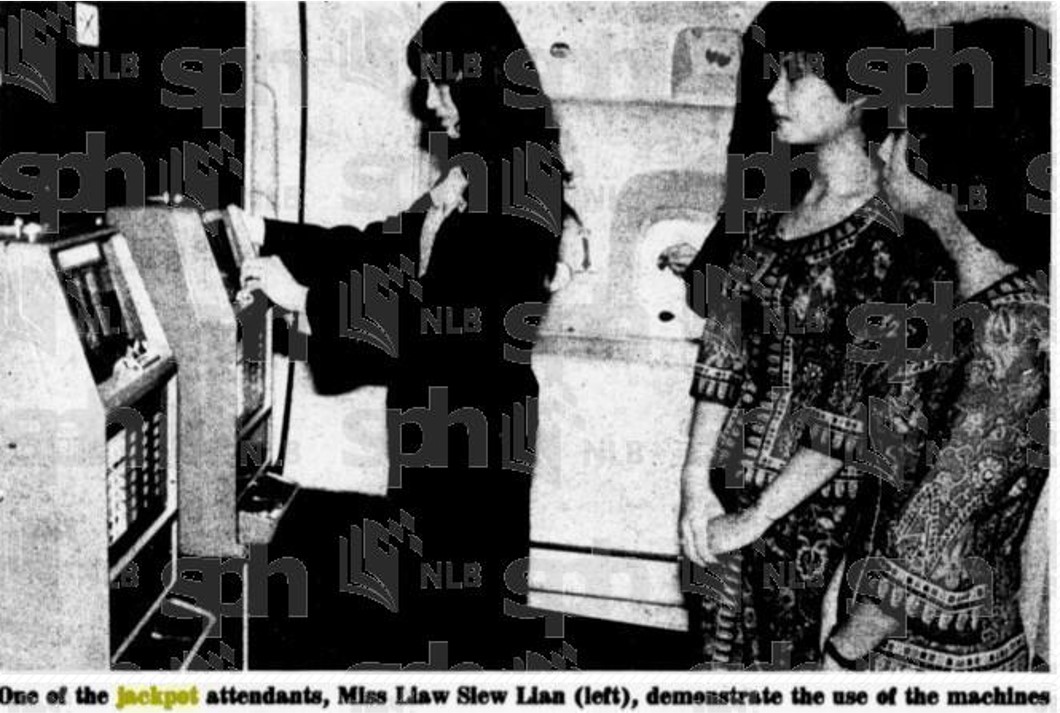
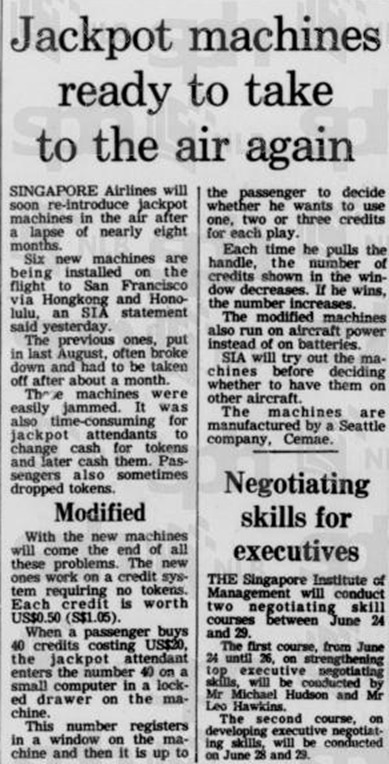
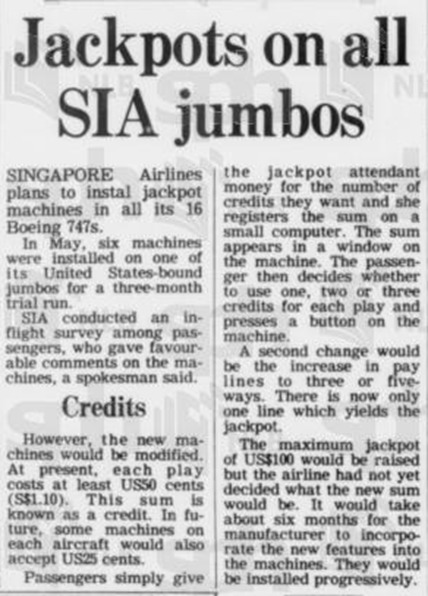
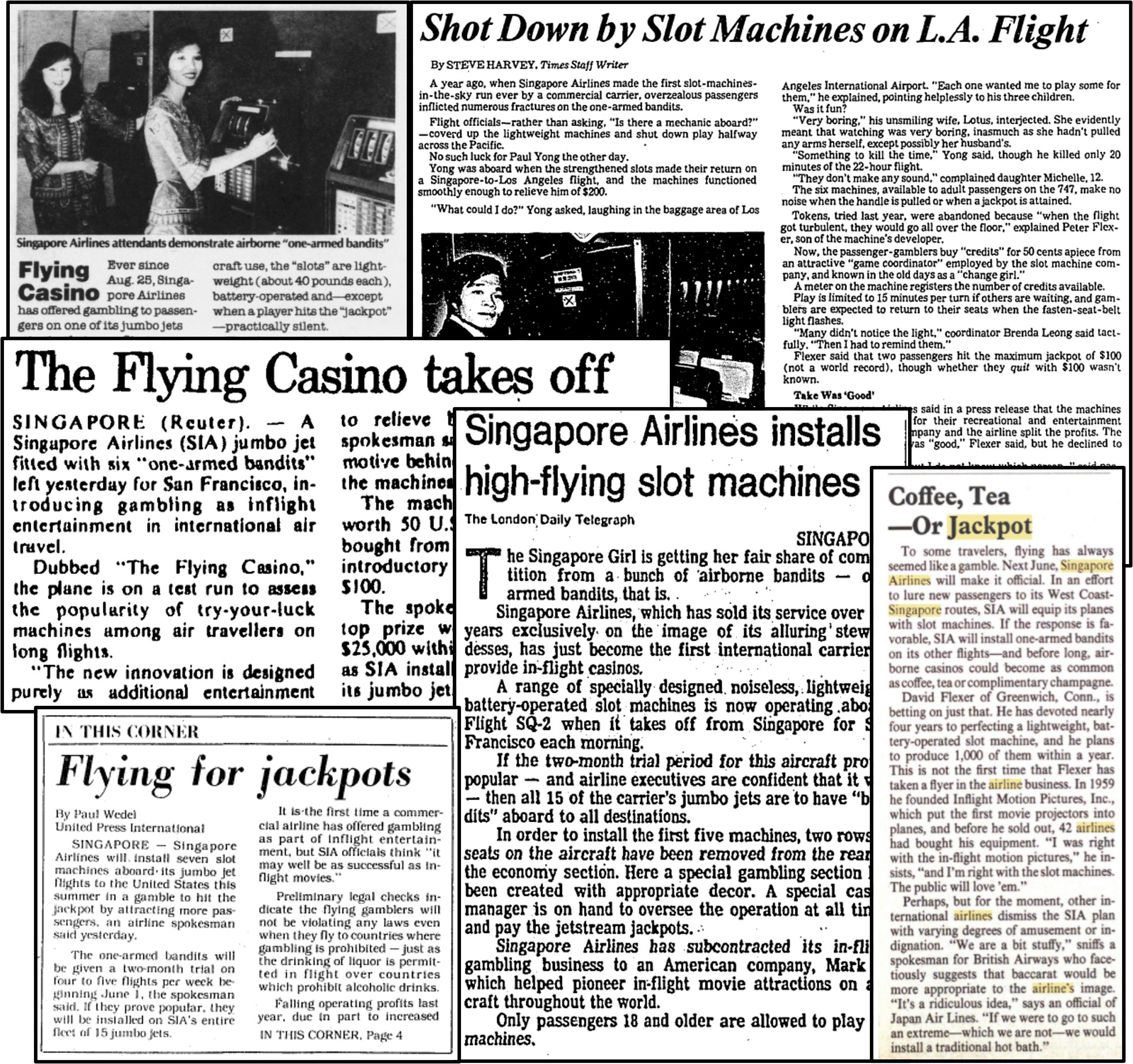
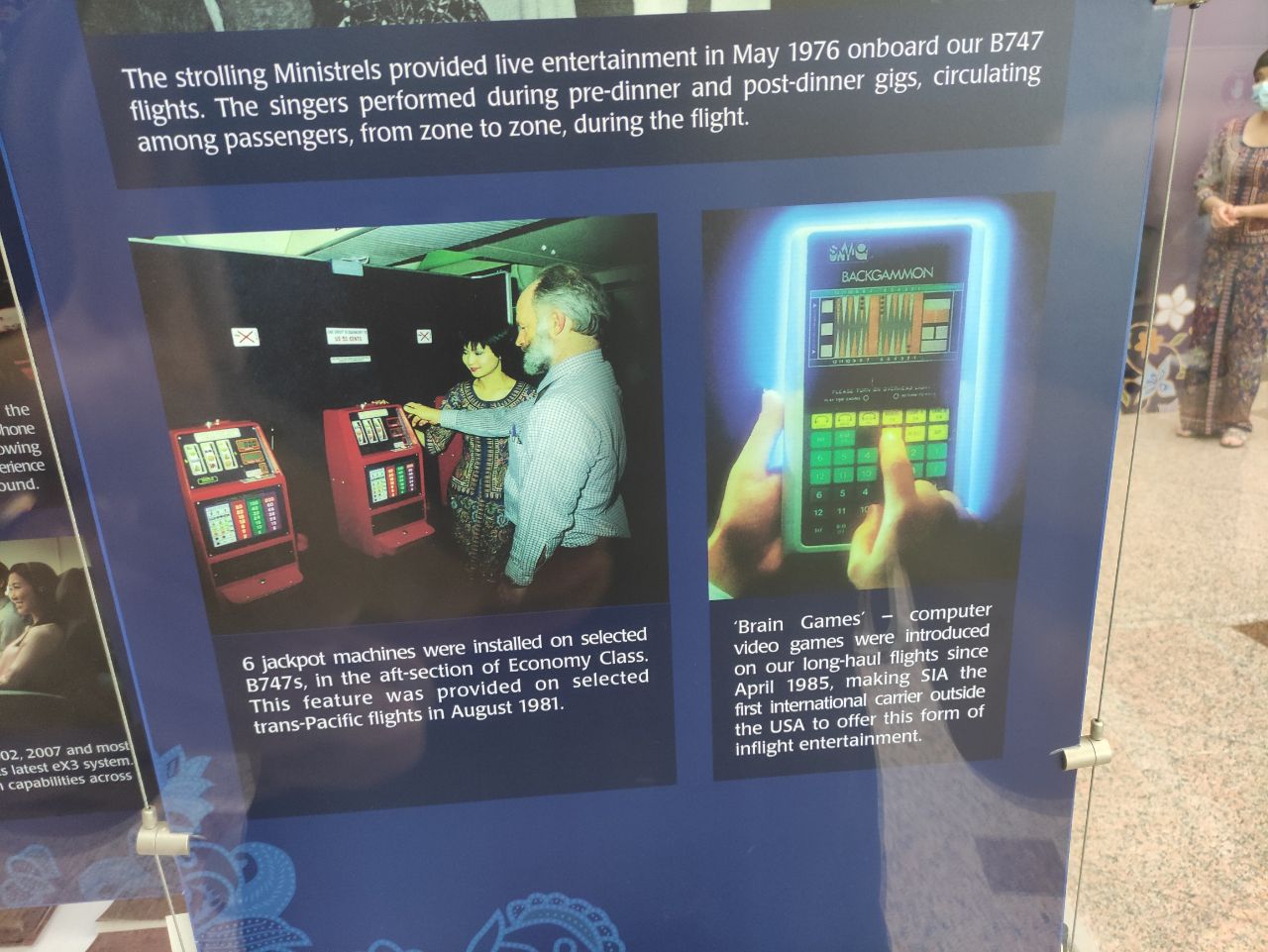
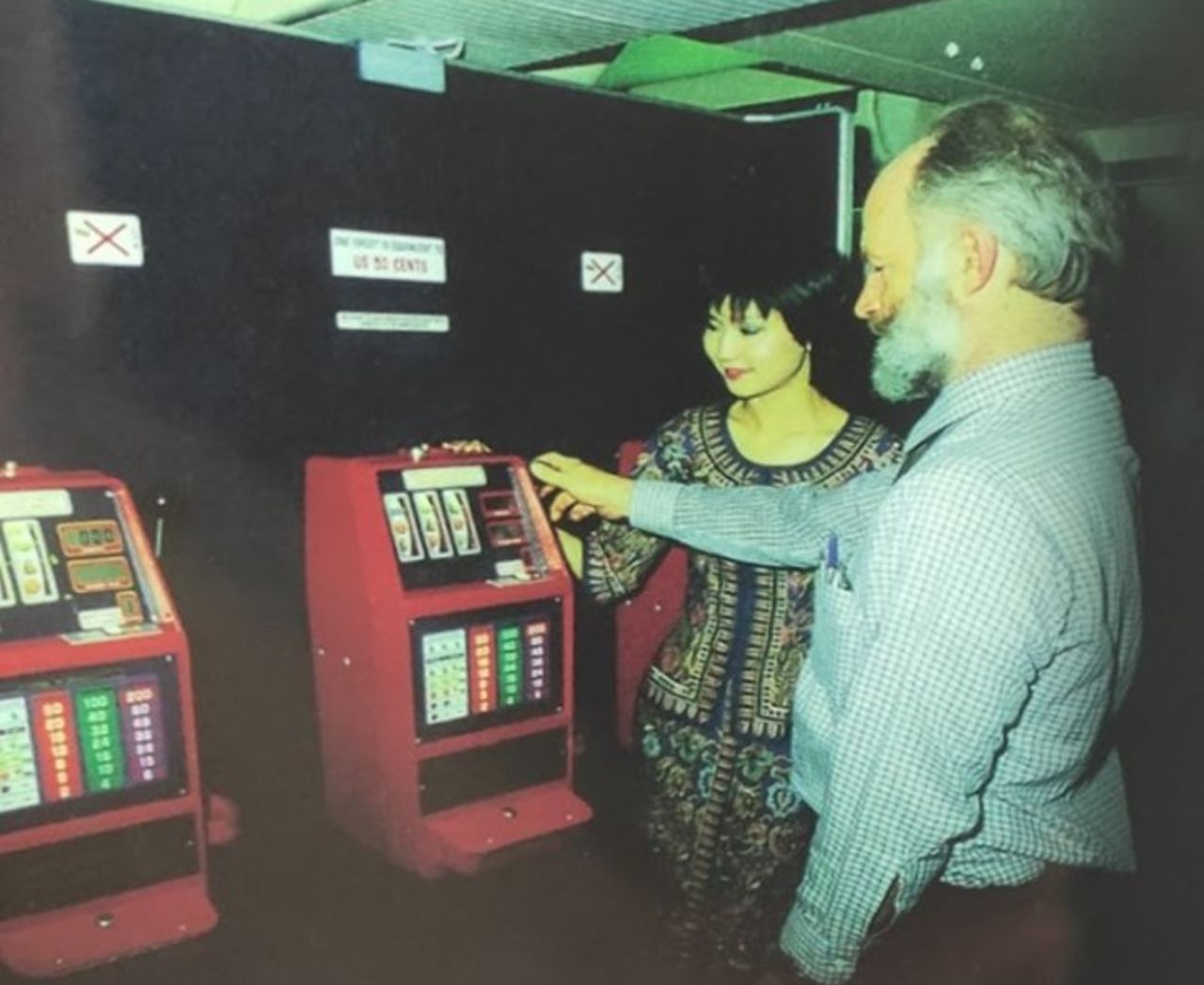
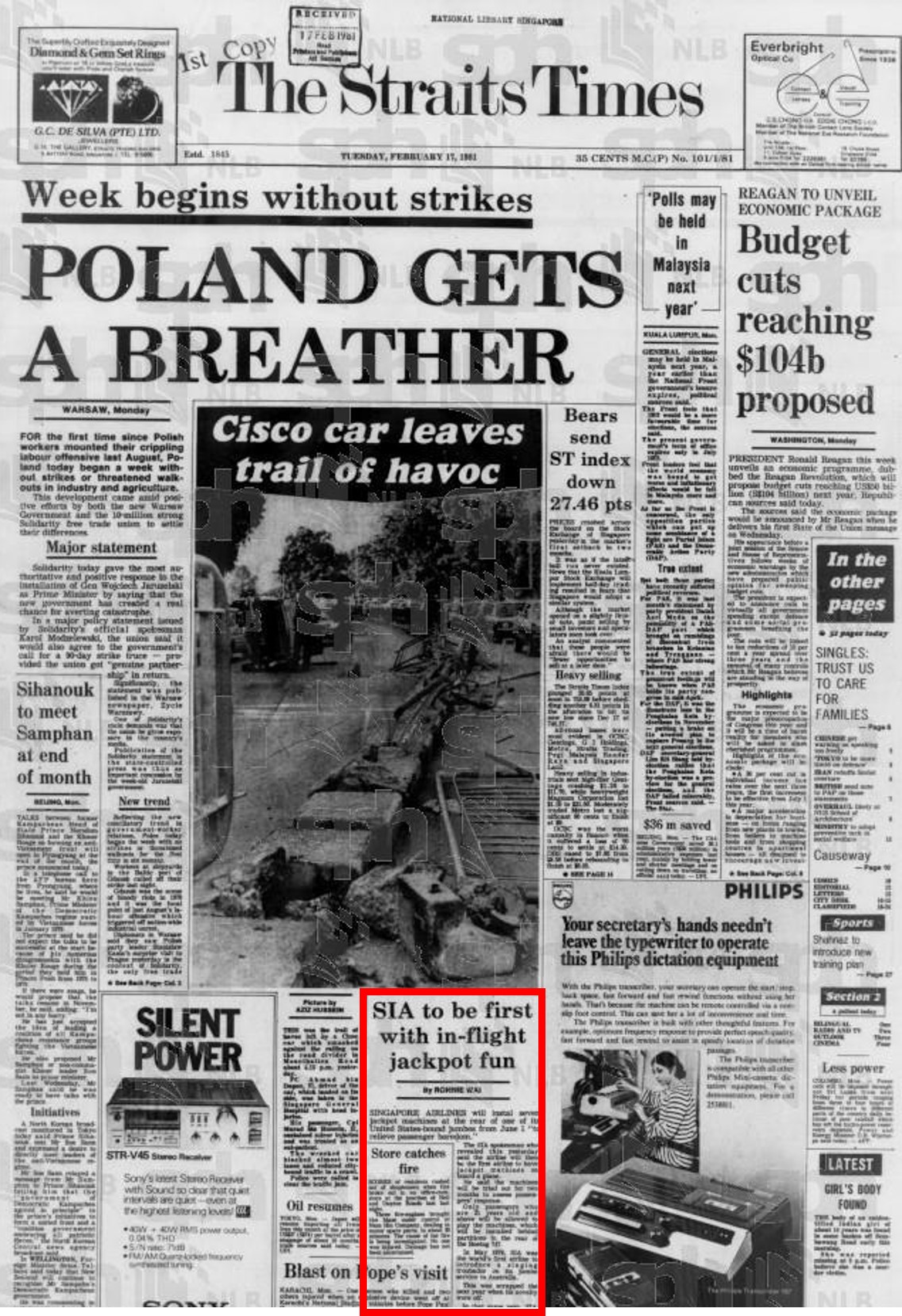
So in February 1981, the airline announced that it would be the first in the world to install jackpot machines, onboard one of its US-bound Boeing 747s. A two-month trial would be conducted, after which a decision would be made whether to install jackpot machines on the 15 other jumbo jets in its fleet.
This was deemed newsworthy enough to make the front page of The Straits Times, though it was probably a bad omen to have to share column space with “Store catches fire”.
SIA officials took pains to emphasise that they were not endorsing gambling, only providing their customers with a different form of inflight entertainment. A statement issued by the airline said “the machines are being introduced solely on the merits of their recreational value to passengers.” Sure, and the sole purpose of an integrated resort is to let us sample a wide variety of celebrity chef restaurants.
The company behind the jackpot machines was Cemae Investment, run by one David Flexer. Although he’s far from a household name, aviation boffins would recognise him as the man who single-handedly popularised the concept of the inflight movie (in a remarkable example of the duality of man, Flexer, who had no qualms about running an airborne gambling den, also hired undercover police to keep immorality in check at his drive-in cinemas).
In one sense, Flexer was a visionary. While films had been screened on aircraft as early as 1921, they were essentially one-time promotional stunts, and airlines were roundly disinterested in the idea, believing the space and manpower required to run a projector wouldn’t justify the benefit.
But Flexer, himself a film buff who owned a small chain of movie houses, felt otherwise. After a particularly arduous transcontinental flight in 1956, he concluded that “air travel is the most advanced form of transportation, and also the most boring”, and set out to change it.
It was Flexer who solved the problem of creating lightweight, completely automated film equipment, and the end result was a 75-pound cabin-certified projector playing 16mm film (the gauge that allowed for full movies to be screened). TWA debuted its “Strato-Cinema” for First Class passengers in 1961, and we’ve been glued to our screens ever since.
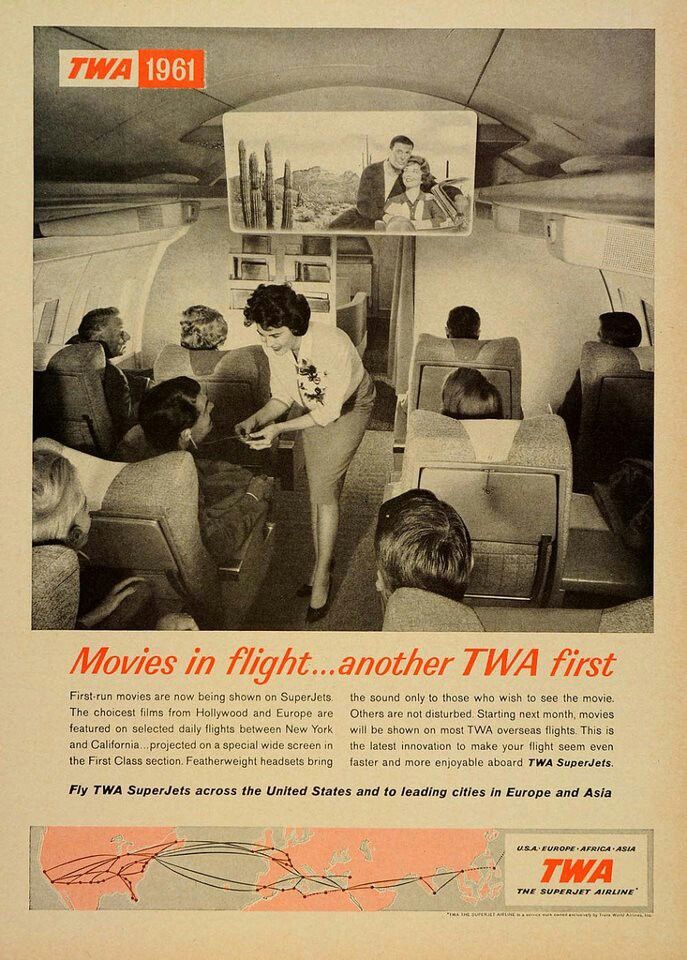
In another sense, however, Flexer was hopelessly off base about the popularity of the inflight slot machine. He fully expected that flying casinos would be the wave of the future, and invested significant amounts of his own money in the concept. Researching the first generation of slot machines and getting FAA approval alone took three years and millions in R&D, and he was keen to market the idea to other carriers too. He’d have to wait though, as SIA had secured exclusive rights to the machines for four months, after which other airlines would be permitted to purchase and install them.