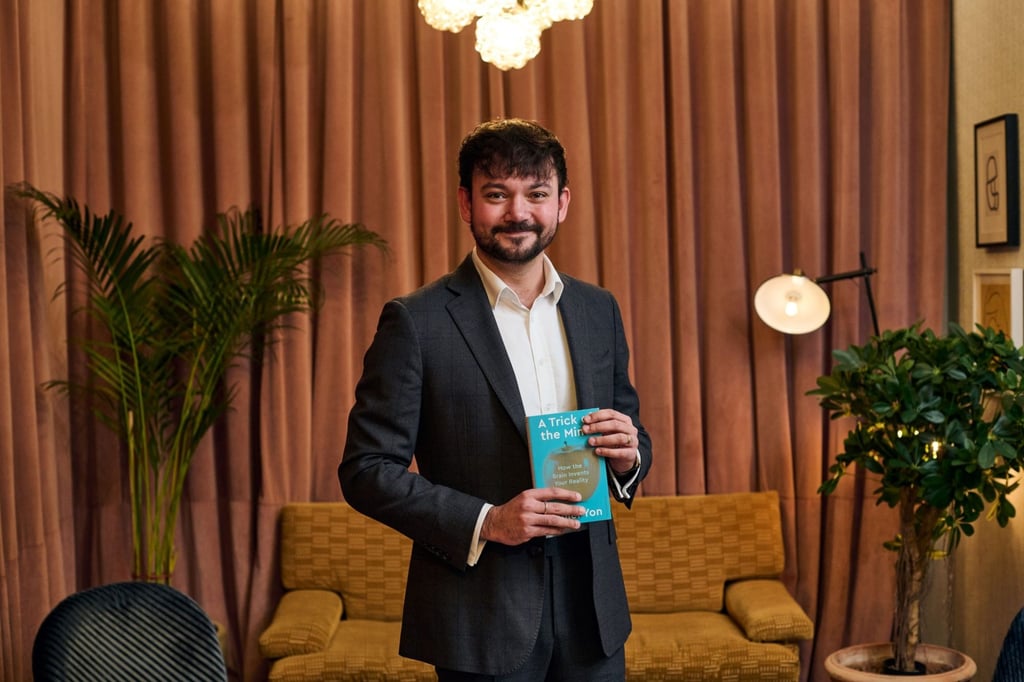
Seeing is believing, right? Well … perhaps not.
In the early 1700s, the philosopher Bishop Berkeley pointed out that we never experience the outside world directly – we only experience what our sense perceptions tell us about that world.
Seeing is believing, right? Well … perhaps not.
In the early 1700s, the philosopher Bishop Berkeley pointed out that we never experience the outside world directly – we only experience what our sense perceptions tell us about that world.

Tins of fried dace with salted black beans – known as dau si leng yu in Cantonese – are a pantry staple in Hong Kong…
China’s luxury hotel sector has unlocked new avenues for business growth, fuelled by a boom in inbound tourism and a growing number of foreign business…
The cast of Netflix’s live-action One Piece is not ready to dock its pirate ship any time soon. “As long as people enjoy [the show],…

French-Canadian Mathieu Bedard is CEO of Camden, a global boutique communications agency; he established its Hong Kong office in 2020. He spoke to Andrew Sun….

Days before Obsession opened in cinemas across the US, its 26-year-old director, Curry Barker, made a bet with his manager and agent. They said if…