Reviewing a new Call of Duty game used to follow a familiar rhythm year in and year out. You’d clear the campaign in a couple of evenings, jump into multiplayer for a few long nights, poke at Zombies, and come away with a sense of how that year’s entry fit into the wider series. With the latest COD entry, Black Ops 7, that rhythm is gone. This is not a COD that wants to be experienced in parts. It wants to be absorbed as a single, unified game – campaign, multiplayer, Warzone-adjacent modes, and Zombies all feeding into one another.
That ambition, unfortunately, comes at a cost.
I knew something was off with Black Ops 7 long before the campaign reached anything resembling a climax. It wasn’t a single bug or an especially bad mission. It was the creeping realisation, somewhere between swapping armour plates and unloading yet another magazine into a stubborn enemy, that this didn’t feel like a CODcampaign at all. It felt like I’d wandered into a training mode that forgot to end.
Black Ops 7 doesn’t really introduce itself. It drops you in and assumes familiarity – with Warzone systems, with multiplayer pacing, and with the idea that all of this should already make sense. Armour plates are here. Weapon rarities are here. Enemies soak up damage in ways that feel tuned for spreadsheets rather than drama. Instead of carefully staged firefights, most encounters turn into prolonged damage races where success comes less from positioning and reflex and more from sheer persistence. At some point, I stopped thinking about tactics and started thinking about how much ammunition I had left, which is usually a sign something’s gone wrong.
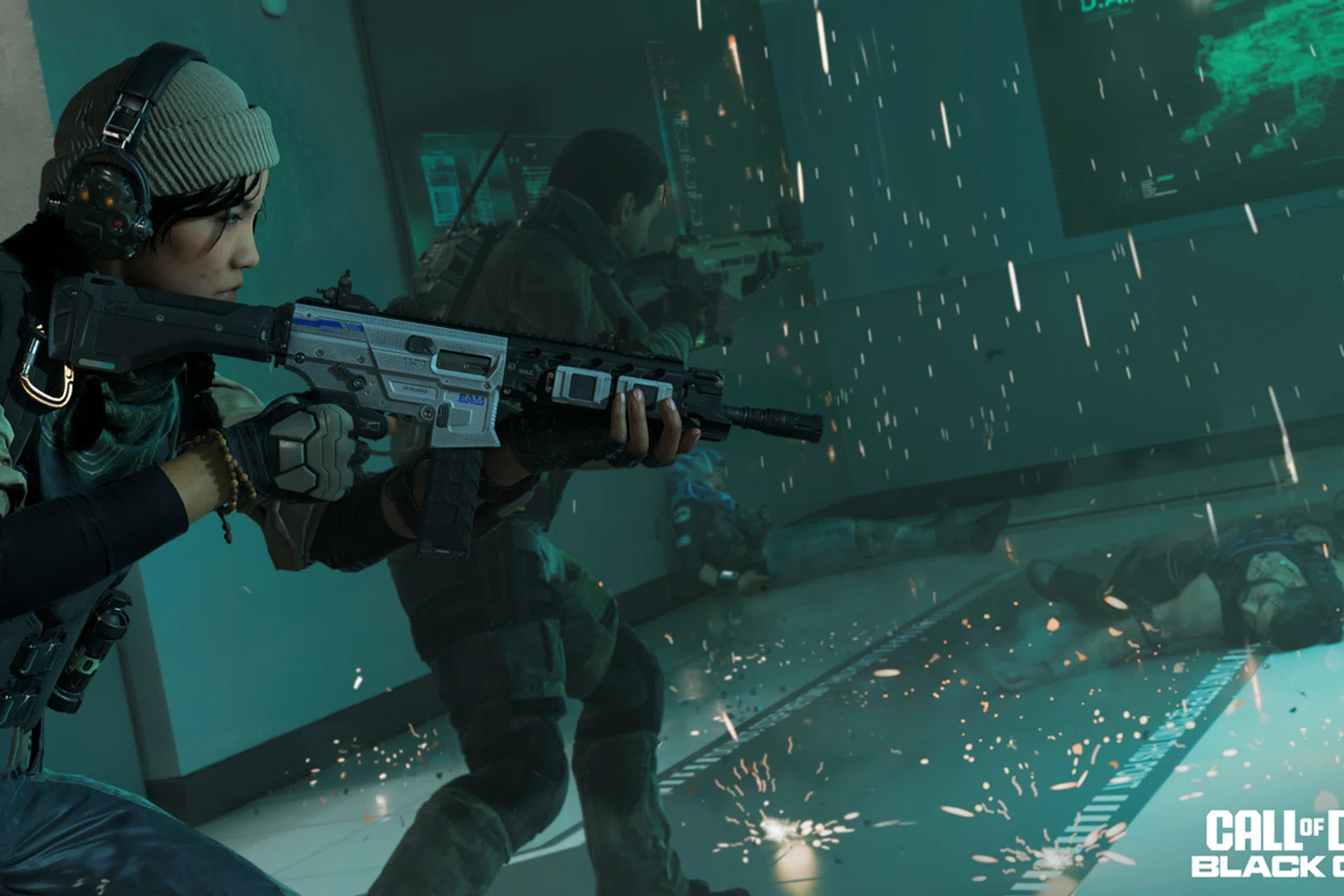
Image: Activision Blizzard
The campaign’s story doesn’t offer much of a lifeline either. Built around shared hallucinations and memory-hopping that follows the aftermath of Black Op 6, it leans heavily on the legacy of Woods and Mason without doing much to justify the revisit. Familiar locations and characters return, but not in ways that feel meaningful or even coherent. It’s nostalgia stripped of context, replayed louder and stranger, as if spectacle alone might carry the weight of earlier entries. I kept telling myself the next mission might pull things back together. Well, to nobody’s surprise, it rarely did.
What becomes increasingly clear is that Black Ops 7’s campaign isn’t unfocused by accident. It feels like co-developers Treyarch and Raven Software purposefully structured it that way for efficiency. Missions double as Warzone spaces. Mechanics are shared across modes. Encounters feel interchangeable. The result is a campaign that’s technically cohesive but emotionally flat, where nothing quite earns its place because everything feels repurposed.