[The content of this article has been produced by our advertising partner.]
On a Tuesday afternoon at the AIRSIDE shopping centre in Kai Tak, a mother held up her phone as her daughter twirled inside a mirrored tunnel that turned every movement into a miniature avatar. Nearby, a pair of teenage girls compared their “virtual outfits” in a glowing display. In the next room, a digital disco shimmered on a giant wall, its cartoonish avatars dancing under a violet sky while reflections from the floor made visitors look as if they had stepped into the scene.
Inside AIRSIDE’s Gate33 Gallery, the exhibition had the feel of a gentle sci-fi playground. Screens pulsed with colour from every angle, casting reflections onto mirrored floors and metallic structures. Mannequins were dressed in pieces by Paris Fashion Week 2025 designers Alain Paul, Caroline Hu, Didu and Kevin Germanier, shown alongside looks from Hong Kong fashion talents Derek Chan, Brun Chan and Tiger Chung. Each design stood inside an angular silver plinth, framed by animated visuals created by media artists that echoed the mood of the garment. The atmosphere was lively and welcoming, more like an art-driven funhouse than a traditional fashion showcase.
This was “Play, Pose and Pixel”, the digital fashion exhibition presented by the Hong Kong Design Centre (HKDC) as part of its flagship programme, Hong Kong Fashion Fest. It brought couture, technology and childhood nostalgia into one public space and, through interactive play, opened the world of fashion to anyone willing to take a curious step inside.
A journey from dolls to digital couture
The exhibition was arranged as a four-part journey. The first zone greeted visitors with rows of vintage dolls, Barbie dolls and French brands such as Dior, Givenchy and YSL collaborations, and glossy fashion miniatures from the past, placed alongside handcrafted doll art pieces. It was a gentle reminder of how fashion often begins for many of us, through play, imagination and tiny outfits pulled onto tiny bodies.
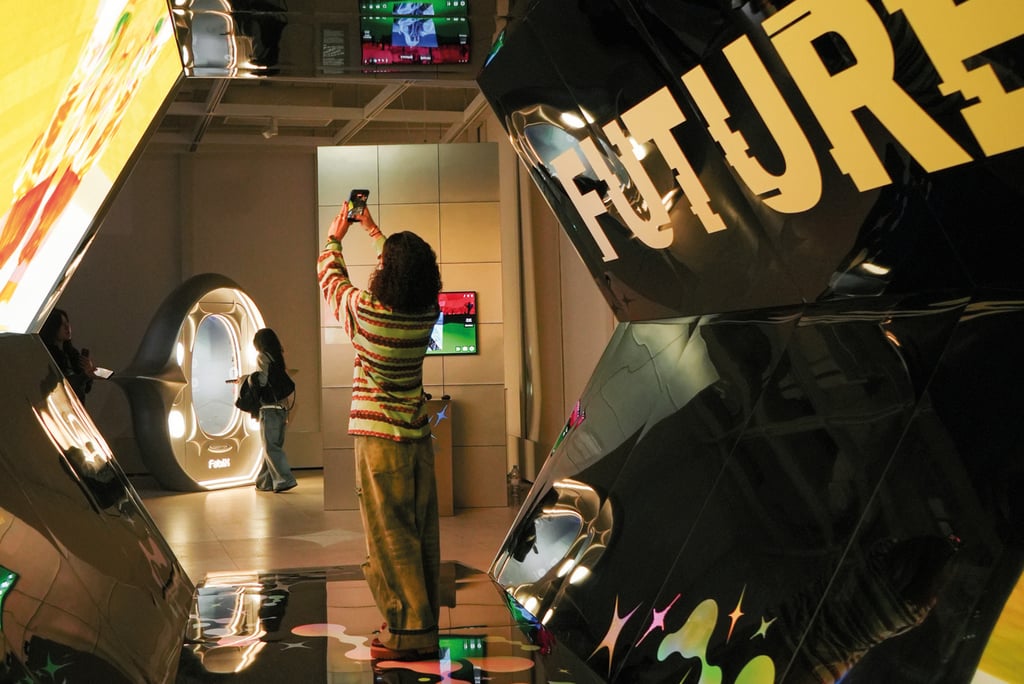
The exhibition’s centrepiece was Zone 3, where Paris Fashion Week designers, including Alain Paul, Caroline Hu, Didu and Kevin Germanier, appeared beside Hong Kong talents, all interpreted through augmented reality try-ons. Technology was the very fabric of the experience.
The final zone revealed a “blind box” surprise for each visitor. After a quick scan, the system assigned one of several preset futuristic looks and turned it into a personalised avatar on screen. These digital characters then appeared on a large LED wall while an 80s Cantopop soundtrack hummed in the background.
A creative bridge between Hong Kong and Paris
Beneath the light-hearted mood was an ambitious collaboration. The exhibition drew from “Tomorrow Was _____”, a project shown during Paris Fashion Week, where fashion designers and visual media artists created hybrid works that blurred the line between couture and moving image.
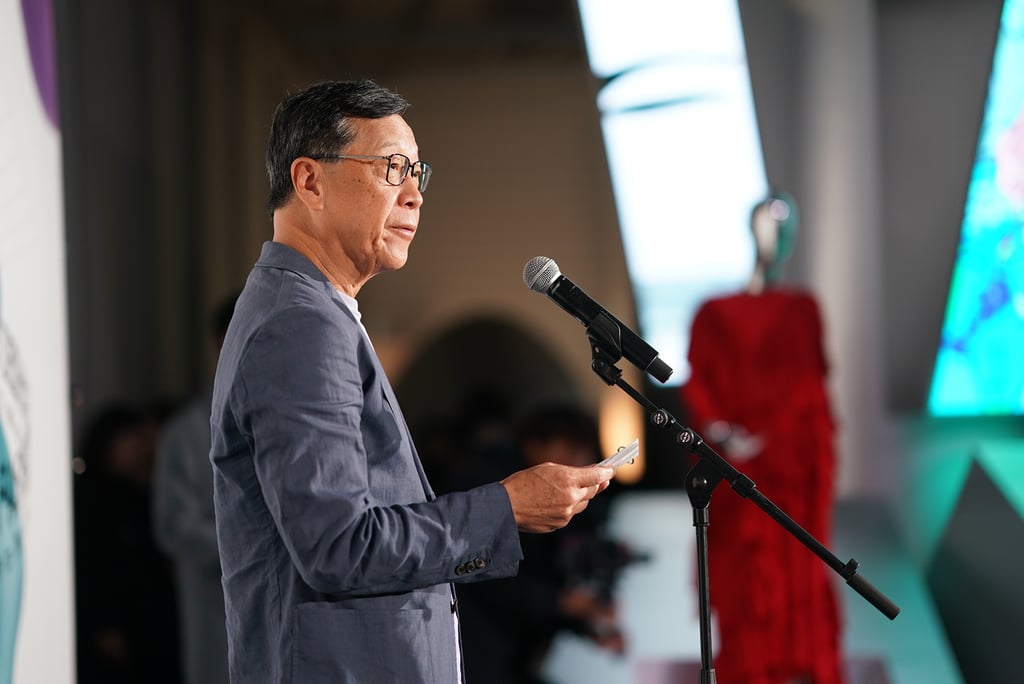
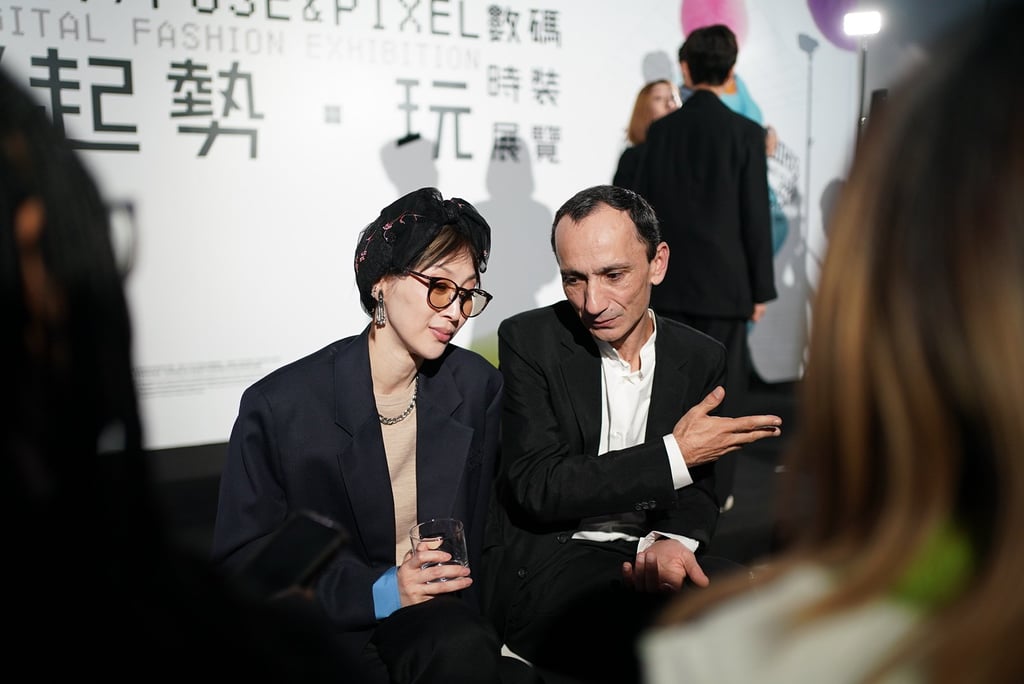
Working with Fédération de la Haute Couture et de la Mode (FHCM), the organisation behind Paris Fashion Week, allowed FabriX and Hong Kong Design Centre to bring that spirit to Hong Kong. “The collaboration started with a simple conversation about connecting technology with emerging talent,” said Serge Carreira, Director of Emerging Brands Initiative at FHCM. “It grew naturally into the idea of a full exhibition.” For FHCM, the show added an artistic layer to digital fashion, a chance to explore how Paris-based designers could speak to audiences abroad.
Opening doors for homegrown talent
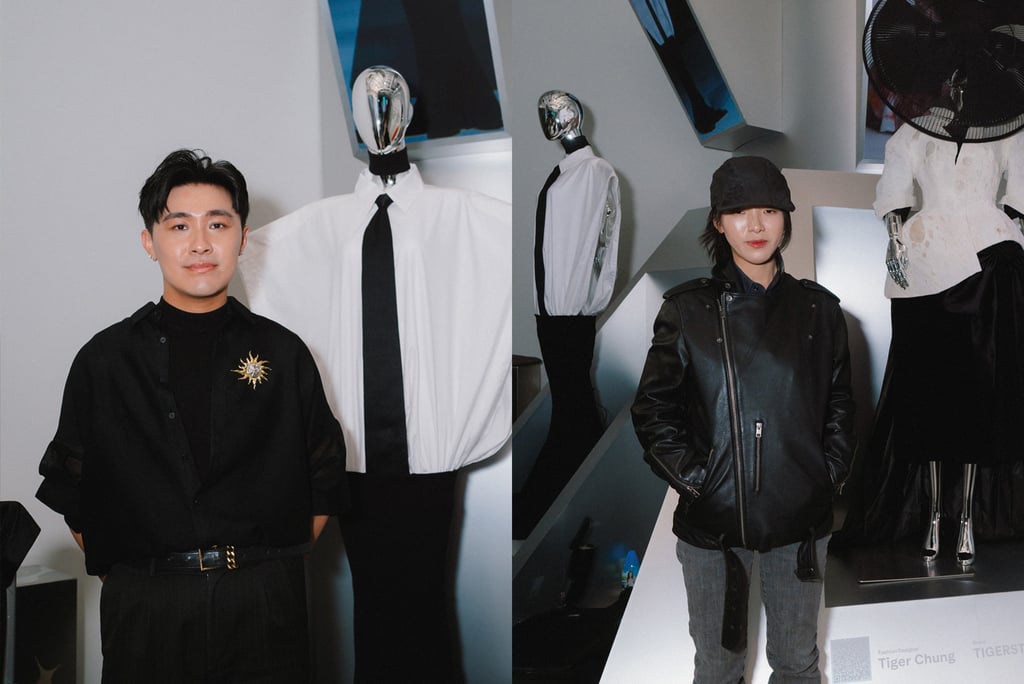
Among the local designers featured, Tiger Chung, founder of Tigerstrolling and a winner of the Hong Kong Young Fashion Designers’ Contest, offered some of the clearest reflections on what digital fashion could bring to the public. “Being part of ‘Play, Pose and Pixel’ is meaningful because it shows how digital fashion can make the industry more open,” she said. “It allows a much wider audience to engage with designs that were once exclusive.”
For Derek Chan, founder of DEMO and an alumnus of HKDC’s Fashion Incubation Programme, the exhibition was a form of recognition for the “creative language” his label had been building, a blend of craftsmanship, poetry and gender-fluid storytelling that he felt showed Hong Kong’s design voice belonged on the global stage. Being shown alongside international peers not only widened his audience, he said, but reinforced the idea that Hong Kong creativity could stand shoulder to shoulder with the rest of the world.
“I always believe that aesthetics is a universal language; design merit transcends geographical borders. Being alongside Paris Fashion Week brands proves Hong Kong design is on a level playing field,” said Brun Chan, founder of röyksopp gakkai, an alumnus of HKDC’s Design Incubation Programme, and a past recipient of the DFA Hong Kong Young Design Talent Award.
There was a clear consensus among the designers that platforms such as Hong Kong Fashion Fest and Hong Kong Design Centre-curated exhibitions were vital because they gave local talent space to experiment, tell their own stories and connect with the wider public, not only the fashion industry.
According to Hong Kong Design Centre, incubation programmes were only the first step. What helped designers most was the opportunity to present work internationally and gain confidence through global collaborations such as those with FHCM.
Fashion for everyone
“Play, Pose and Pixel” may have sounded like a futuristic project, but the mood inside AIRSIDE told a different story. The exhibition was designed like a gallery, yet it also felt like a public playground for creativity, where visitors laughed, posed and compared avatars. By placing homegrown talent alongside international names in an engaging, interactive setting, the exhibition showed how digital fashion could spark new ideas, give local creators greater visibility and encourage exchange between Hong Kong and the global fashion scene.