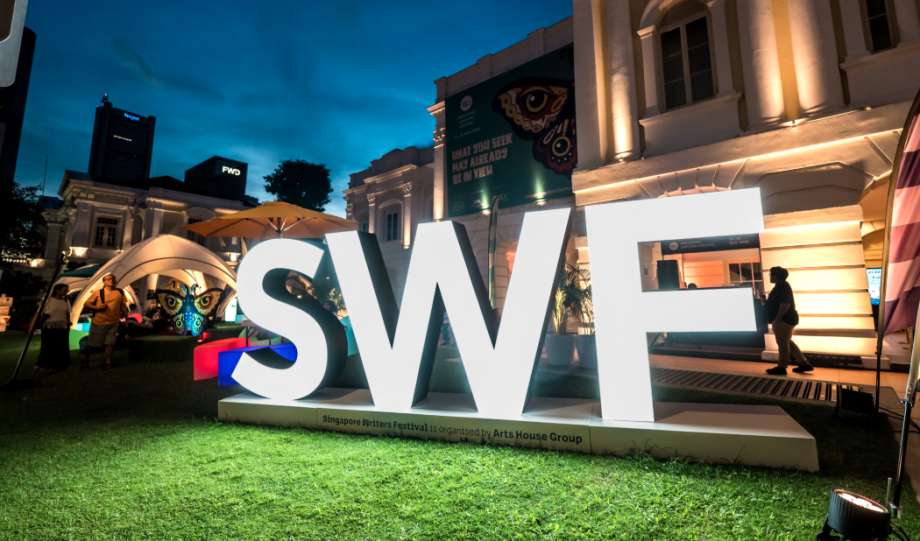
For ten days in November, Singapore became a meeting place for stories from around the world. The 29th edition of the Singapore Writers Festival (SWF), which concluded on 22 November, brought together close to 80,000 Festivalgoers for conversations, readings, workshops and experiences that explored the many ways literature helps us understand ourselves and the world around us.
Centred on the theme Hidden in Plain Sight, this year’s Festival invited audiences to look beyond the familiar, uncover overlooked narratives and question the assumptions that shape how we see the world. Across more than 240 programmes and over 20 venues, more than 400 local and international writers, moderators and speakers offered fresh perspectives on everything from family histories and migration to technology, identity, crime and the environment.
The enthusiasm was evident in the numbers. Festival Passes sold out for the second consecutive year, despite an increase in availability, while more than half of all ticketed programmes were fully booked. For readers, aspiring writers and the simply curious, SWF once again offered plenty of reasons to step into a conversation.

Some of the Festival’s most anticipated encounters brought audiences face to face with writers and thinkers whose work challenges the way we understand the world.
Award-winning novelist Amitav Ghosh drew a full house for his Festival Keynote, examining the narratives surrounding environmental grief and planetary collapse. He returned to the stage alongside Jemimah Wei and Balli Kaur Jaswal for What The Family Doesn’t Say, a conversation about family secrets, migration and the silences that can stretch across generations.
The response extended beyond the auditorium. Ghosh’s book-signing sessions drew lengthy queues, with readers waiting patiently for the chance to meet the author. Reflecting on his visit, he said: “But the best part was the enthusiasm and warmth of the audiences. After one of my events, I was signing for almost an hour and a half, and I was told that the queue was so long that it extended beyond the theatre.”
Elsewhere, sociologist and MacArthur Fellow Ruha Benjamin invited audiences to consider the hidden biases embedded in digital technologies, while author Stephen Witt unpacked Nvidia’s rise and the questions surrounding the future of artificial intelligence. Silvia Moreno-Garcia explored truth, deception and authenticity in writing, adding to a programme that moved between literature, technology and contemporary social concerns.
For readers drawn to darker narratives, the new Crime and Mystery Spotlight offered a different kind of literary adventure. Discussions led by authors including Seo Mi-ae, Faridah Àbíké-Íyímídé, Robin Stevens, Louise Hegarty and Ovidia Yu explored criminal psychology, literary mysteries and the craft of suspense. Audiences could also try their hand at mystery-writing masterclasses, investigate forensic storytelling in How 2: Solve a Bad Case of Poisoning, or take part in the sold-out tabletop role-playing programme Accuse You, Excuse Me.

One of SWF’s defining qualities is its celebration of Singapore’s multilingual literary landscape, bringing English, Chinese, Malay and Tamil voices into conversation. This year, Chinese, Malay and Tamil programmes increased by 15%, creating more opportunities for audiences to encounter different literary traditions and perspectives. The Festival also expanded its accessibility efforts, with programmes supported by live interpretation and AI-assisted translation tools increasing by more than 70%.
The conversations crossed languages, generations and cultural experiences. In Reading (and Writing) Between the Lines, poets Lutfi Ishak, Hartinah Ahmad and Samsudin Said considered how poetry can hold private longing, national memory and defiance within the ordinary. A Song That Has Shaped A Generation: Singapore and Taipei brought media personality Yu Neng together with Taiwanese writer-broadcaster Ma Shih-fang to explore youth and identity through the songs that have shaped generations.
Tamil-language programme நிலமும் நிலம் சேர்ந்த நாமும் We, and the Lands We Reach turned to the relationship between people and place, with writers Sayanthan and Latha reflecting on life after war and the ways landscapes shape personal histories.


Read Full Article At Source