MARCH 28 — Across South-east Asia, discussions on academic freedom and political expression often emerge in contexts where contestation is visible and public debate unfolds in sharper political terms.
Singapore rarely sits at the centre of such regional reflections. It is more frequently referenced through governance effectiveness, institutional order, and policy coherence.
Precisely for this reason, moments that draw attention to the boundaries of expression in Singapore tend to stand out.
They are seldom openly discussed, and when they surface, they invite closer and more careful scrutiny.
Recent developments involving the denial of entry to Malaysian scholar and also activist Fadiah Nadwa Fikri, the earlier refusal of entry to Hong Kong figure Nathan Law, and the security checks involving Indonesian academic Muhammad Zulfikar Rakhmat reopen a discussion that is not often pursued in the region.
While these cases differ in context, together they point to a shared question about how political expression is interpreted when it crosses borders, particularly when scholarship intersects with advocacy.
Singapore’s Ministry of Home Affairs stated that Fadiah had engaged in political activism in Singapore and promoted what authorities described as “radical advocacy,” including encouraging youths to mobilise communities and support disruptive actions.
In remarks reported publicly, Home Affairs Minister K. Shanmugam reiterated that foreigners should not participate in domestic political activities and added that Singapore was increasingly seeing individuals from Malaysian society seeking to intervene in the country’s politics and policies.
He emphasised that advocacy seen as confrontational or disruptive would not be permitted.
Such reasoning reflects a longstanding approach in which political mobilisation, particularly by foreign individuals, is assessed in terms of its potential impact on domestic discourse.
What makes the case significant, however, is not only the decision but the profile involved.
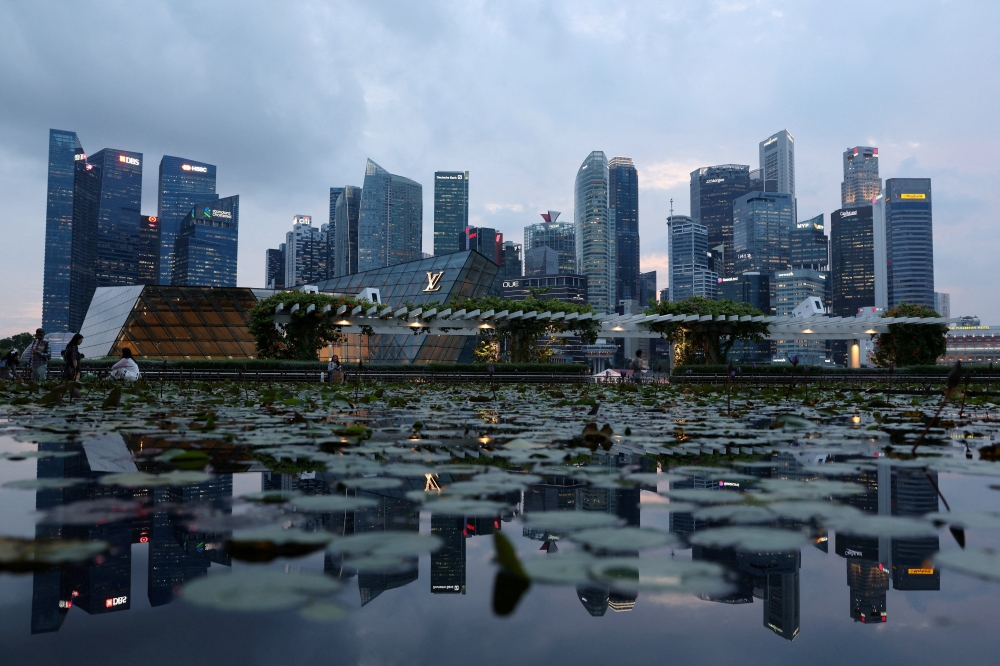
A view of the central business district skyline in Singapore. — Reuters pic
Fadiah is a scholar, also an activist, who had studied and lived in Singapore and was reportedly travelling for academic engagement.
Her profile is not unusual in South-east Asia. Scholars increasingly write on governance and rights, participate in civil society discussions, and engage public audiences.