SINGAPORE – “Eleven thirty.”
Chinese Peranakan Alvin Yapp often heard this Hokkien taunt as a child. It meant he was just shy of 12 o’clock – or “not quite Chinese enough”.
“I grew up in a time when I felt being Peranakan was looked down on,” he said. “People said I was orang Cina bukan Cina, or Chinese but not Chinese.”
The embarrassment led to curiosity. Learning about his heritage gave him the confidence to share it with his classmates.
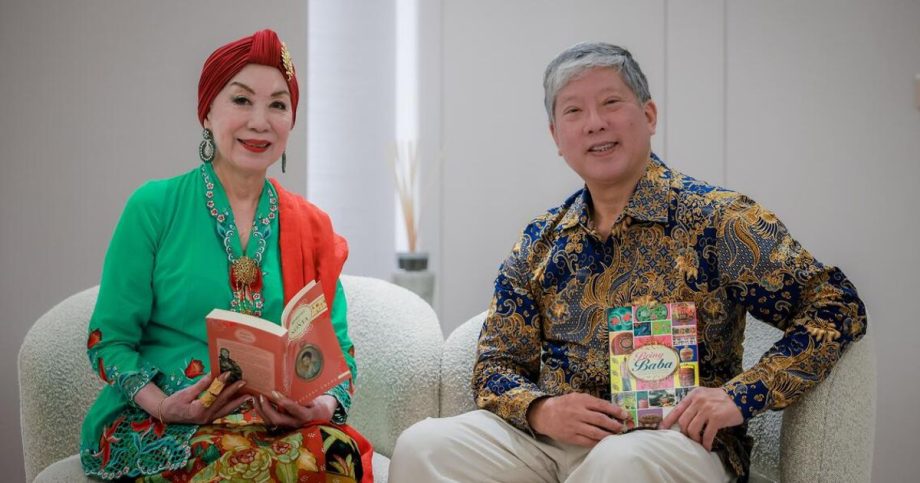
Today, the 56-year-old champions his culture through The Intan, his private home in Joo Chiat that doubles as a living home museum.
Peranakan culture in Singapore has stepped into the limelight, especially over the last decade, noted Yapp.
The Peranakan community includes a range of mixed-heritage groups from South-east Asia, such as Arab Peranakans, Chinese Peranakans, Indian Peranakans (or Chetti Melakans) and Jawi Peranakans.
The growing interest in Peranakan culture is driven by popular entertainment, heritage initiatives and greater efforts to showcase its traditions.
Social historian Seng Guo-Quan, who researches the history of Chinese Peranakans in South-east Asia, said that although they form a relatively small community in Singapore, core members are active in the museum, heritage, theatre and musical scenes.

Alvin Yapp, 56, owner and curator of The Intan, a living museum housing thousands of unique Peranakan treasures and antiques.
PHOTO: ALVIN YAPP
Some also have regional connections, said the assistant professor at the National University of Singapore. From Nov 20 to 22, hundreds of members from Peranakan associations will converge at the 37th Baba Nyonya International Convention in Penang, Malaysia.
Television dramas have helped bring the culture to a wider audience. Mediacorp Channel 8’s The Little Nyonya (2008-2009) and its spin-off Emerald Hill – The Little Nyonya Story in 2025 were popular in Singapore, Malaysia and China.
Recent recognition of heritage icons, such as the kebaya and the Katong-Joo Chiat precinct with its colourful Peranakan shophouses, has also raised the culture’s profile among Singaporeans.
Those offering services and experiences related to the culture have seen growing interest. Some are wary that becoming more “mainstream” may risk cultural appropriation, while others worry that gatekeeping the culture may also contribute to it being forgotten.
The Peranakan Association Singapore (TPAS) said membership has risen steadily, including among non-Peranakans and younger Singaporeans. It had 2,400 members as at June 2026.
The growth is partly due to its organising more activities, such as demystifying Peranakan cooking, learning basic Baba Malay and the card game Cherki.
Yapp said visitor numbers to The Intan increased by about 30% in the last three to five years. He hosts about 200 guests a month, including teachers and students.
The quality of his recent partnerships also signals the culture’s growing recognition, he said, citing a 2023 merchandise collaboration with Starbucks and a feature in a Singapore Airlines’ in-flight safety video.
Russell Seah, the second-generation owner of the Peranakan Inn in East Coast, said there has been broader awareness and appreciation beyond the region, including among younger people.
This has changed the profile of his diners, although it has not translated into a significant increase in customers, he said.
Peranakan beadwork artist Angeline Kong, founder of Nyonya Needlework And Crafts, has also seen growing interest in her culture and craft workshops across ages and backgrounds.
The 58-year-old recently collaborated with artist Carolyn Law and a team of beaders on a hand-beaded helmet for McLaren Formula 1 driver Oscar Piastri at the 2026 Singapore Grand Prix.

Beading students gather at the Peranakan Mansion in June 2026 for a workshop by Angeline Kong.
PHOTO: ANGELINE KONG
Veteran kebaya-maker Raymond Wong, who embroidered costumes for Emerald Hill – The Little Nyonya Story, has seen more interest at his Rumah Kim Choo shop in East Coast.
Since the SG Culture Pass was introduced in 2025, he has had more participants in his kebaya styling sessions, beadwork workshops and heritage-sharing sessions.
Greater visibility has sparked questions over how Peranakan culture is represented, who gets to tell its stories and how they are told.
Several members of the community were upset when TikTok videos surfaced in August showing dancers in sarong kebayas shouting and staging a martial arts sequence in Chinatown. Others felt this was unsurprising, given the culture’s popularity.
Philanthropist Genevieve Peggy Jeffs, TPAS’ first female president in its more than 120-year history, said the group received complaints, which it conveyed to the National Heritage Board.


Read Full Article At Source