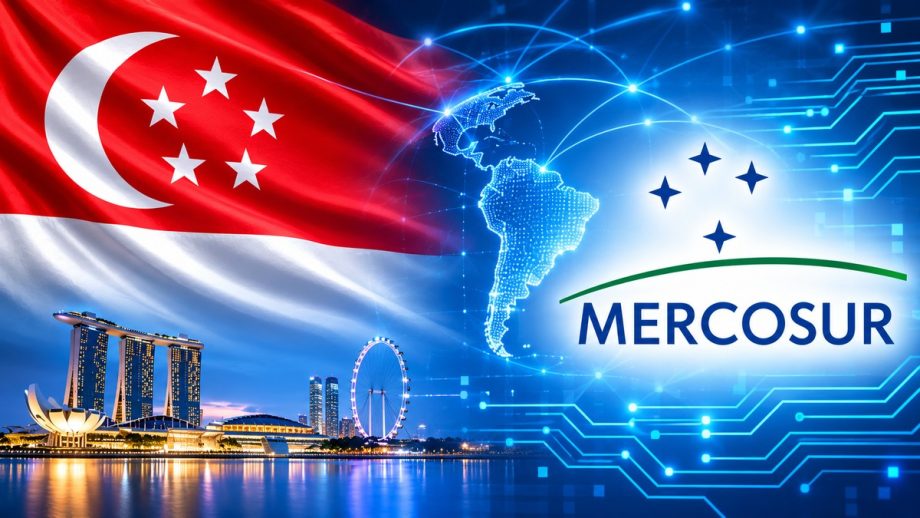
With a dedicated chapter on e-commerce, the Mercosur‑Singapore Free Trade Agreement (MCSFTA) has entered into force for all parties.
On 1 November, the Mercosur‑Singapore Free Trade Agreement (MCSFTA) entered into force for Argentina. With Argentina’s domestic approval, the MCSFTA is now in force for Singapore and each Mercosur country – a treaty between Argentina, Brazil, Paraguay, and Uruguay. A joint statement by Singapore’s ‘Ministry of Energy, Trade and Industry (METI) and Argentina’s embassy in Singapore described the MCSFTA as a ‘significant milestone’ in Singapore-South America economic engagement, with the parties set to cooperate on e-commerce; digitalisation; and micro, small, and, medium sized enterprise (MSME) development.
The MCSFTA was originally signed in December 2023 at the 63rd Summit of Heads of State of Mercosur and Associate States. The agreement phases in the reduction or elimination of tariffs on trade in over 96% of goods over a 15-year period and includes provisions on trade facilitation, services, intellectual property rights, e‑commerce, and investment. According to a communication by Gan Kim Yong, Singapore’s Deputy Prime Minister and Minister for Trade and Industry, the agreement ‘will strengthen trade and investment links, improve market access, and provide greater certainty for businesses seeking opportunities across the region’. On ‘electronic commerce’, Chapter 12 of the text specifically covers areas such as electronic transactions, e-signatures, online consumer protection, paperless trade, e-invoicing, and cybersecurity cooperation.
Why does it matter?
With a dedicated chapter on e-commerce, the MCSFTA creates framework for digital trade between Singapore and the Mercosur bloc. By establishing rules for the digital economy, the agreement aims to provide legal certainty for businesses and support the development of MSMEs in each jurisdiction.
Read Full Article At Source