
Since the earliest times, humans have looked to the skies to measure time. The movements of the sun, moon and stars helped them determine the precise day, date and time, something that still inspires wonder – from children gazing up at the night sky to astronomers charting distant galaxies.

Perpetual calendars, including those crafted by Audemars Piguet, translate the principles of astronomy and the Gregorian calendar into high watchmaking – an intricate blend of art, mechanics and design.
At the heart of each perpetual calendar is a complex mechanism known as a cam, which has a 48-month mechanical memory that automatically accounts for the varying lengths of the months and leap-year cycle.
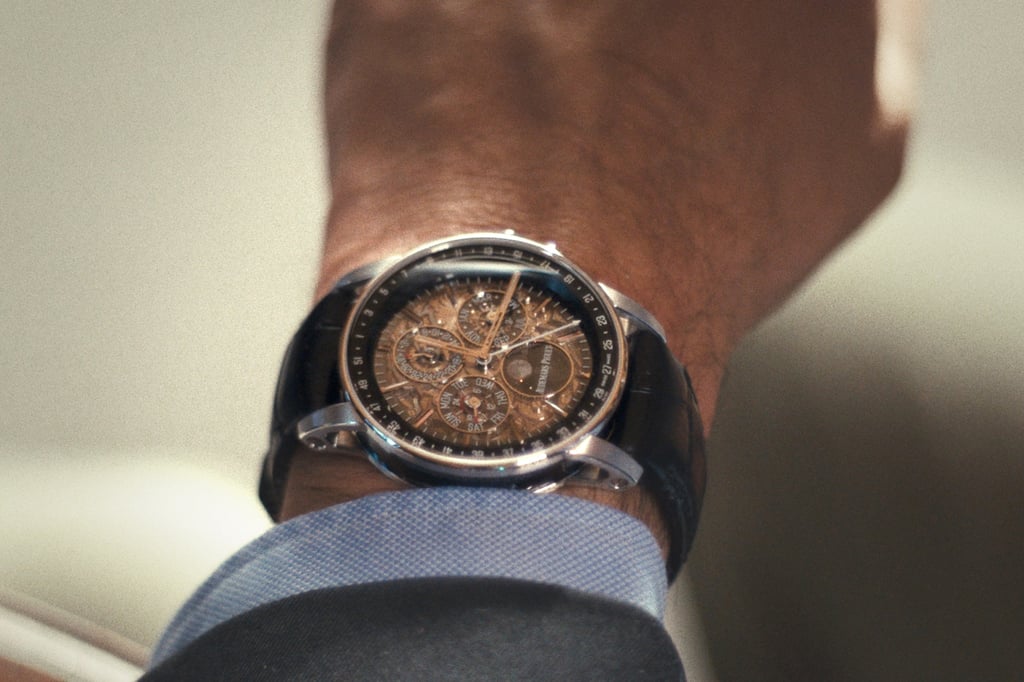
In certain timepieces, the Swiss haute horlogerie manufacturer pays further tribute to astronomy with a moon-phase complication tracking the 29.5-day lunar cycle, which depicts the moon’s changing appearance as seen from Earth in a striking visual expression of watchmaking artistry.
“Every night, the moon and stars move across the sky in patterns that have never changed,” Sebastian Vivas, heritage and museum director at Audemars Piguet, says. “It’s like a graceful ballet that’s been going on for thousands of years.
“Long ago, we realised we could track their steps, and that could be used as a code to count days, months and even years. The stars served as the world’s very first clock.”
Lucas Raggi and Sebastian Vivas answer questions from a curious young mind in a series of four videos that break down the complexities of watchmaking. Watch the first episode to find out more about perpetual calendars.
Read Full Article At Source