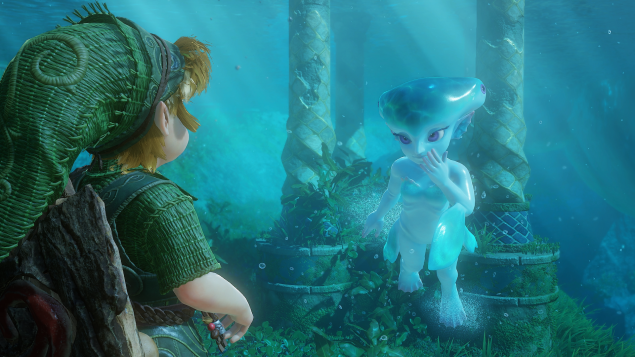
2026’s The Legend of Zelda: Ocarina of Time is a reverent remake, remaining true to all the silliness and solemnity of the original, modernizing some gameplay elements with an elegance that feels so natural, it’s as if it had always been there, and respecting the original design ethos enough to trust that all of the exploration and adventure will still feel great. For fans, to play this remake is to remember over and over again why you fell in love with Ocarina in the first place, and to see the brilliance with fresh eyes. For newcomers, this is now the definitive way to experience this all-time classic, and it’s a can’t-miss Switch 2 exclusive for everyone else.
In case you’re coming to this entirely fresh, Ocarina of Time was the first 3D Zelda game. This is the game that established series mainstays like Epona, Z-targeting, and the Goron and Gerudo. The Zelda series would not be the same without Ocarina of Time, so it holds a special place in the hearts of Zelda fans and in the history of Nintendo. Alongside Super Mario 64, this set the template for decades of the company’s development. And since Nintendo tends to blaze trails that others follow, it was also remarkably influential on the industry as a whole.
The most noticeable change to Ocarina 2026, naturally, is to the presentation, and the upgrade is stellar. Put simply, this is one of the best-looking Switch 2 games and a showpiece for the system. Link and the Kokiri children have been given careful plant-fiber stitching to their clothes, driving home the idea that they’re forest sprites innately connected to the woods they occupy. Light glints off the titular Ocarina of Time as if it’s a real piece of glazed ceramic. The brick textures of dungeons look decrepit and lived-in, and become spookier when lit by the dim glow of your fairy friend, Navi. Boss creatures crumble into purple ash and collapse into dust when defeated. Every piece of this world has been lovingly crafted, and as a returning fan, I was consistently wowed by how gorgeous it looks.
The revamped presentation extends beyond just the graphical fidelity and into detailed touches in animation and sound design. You can actually see Link’s cheeks puff up when he blows into his ocarina, and his individual finger movements at least appear to track with the notes. When you reach the Lost Woods, following the directional sound cues is a more fully realized spatial experience. The reorchestrated music throughout the game sounds just as stirring and majestic as it did in 1998, blending in seamlessly with my memories.
Many of the characters have been given full voice acting for cutscenes and certain pieces of dialogue, and they are across-the-board well-performed, imbuing their characters with personality and heart. Ganondorf’s actor sinks his teeth into the villainous role with gusto and menace. King Darunia the Goron’s actor is hearty and cheerful. Link’s childhood best friend, Saria, sounds heartfelt and sweet. Impa is a no-nonsense badass. The child version of Princess Ruto was a personal favorite, a pushy but lovable little scamp. Navi’s voice sounds a little older but still childlike, and often functions as Link’s voice, since he remains silent aside from his battle barks and shocked reactions.

The one drawback to the addition of voice acting is Sheik, through no fault of the performer. I previously wondered how the Ocarina remake would handle that particular twist, and the answer is that it tries but ultimately fails to strike a satisfying balance. The dialogue makes it clear that the game wants to maintain its original intent, but both the revised character model and the voice acting make it less believable. The actor does as great a job as the rest of the cast, but it’s difficult to maintain a plot revelation that, in hindsight, relied so heavily on the limitations of the N64. At a certain point, it strains credulity that Link and Navi don’t just figure it out.