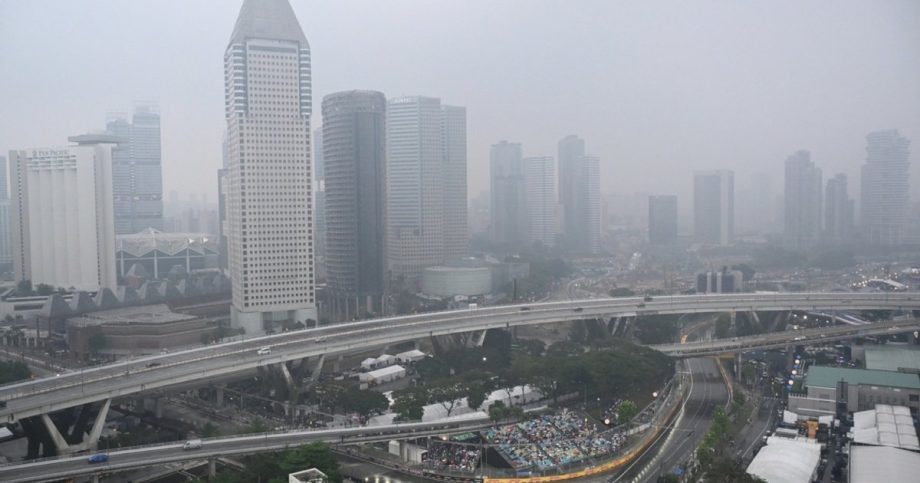
SINGAPORE – Singapore is looking into strengthening its transboundary haze law, with the aim of addressing enforcement gaps and improving the country’s ability to hold to account those responsible for the fires.
Minister for Sustainability and the Environment Grace Fu said this on Oct 27, as she noted two challenges to enforcing Singapore’s Transboundary Haze Pollution Act.
These are the gathering of evidence and the securing of cooperation from companies outside Singapore, she said at an event on sustainable procurement hosted by the Singapore Environment Council (SEC).
Her comments come amid the Singapore Government’s widening probe against firms linked to the ongoing haze episode – one of South-east Asia’s worst ones – with at least 20 firms in the Republic and Indonesia served legal notices under the Republic’s haze law.
The Government first issued notices to 10 Indonesian firms under Section 9 of the law, which required them to take preventative action against the fires. There is no penalty under this section for a non-response.
Later, Singapore stepped up its probe against companies linked to fires.
It issued notices under Section 10 of the law to 10 Singapore-registered companies in the palm oil or forestry businesses. These notices require them to provide information needed for investigations.
Fu said: “There is an important distinction. Section 9 is aimed at getting companies to take preventive action against the fires. Section 10 helps us gather the information and evidence needed for our investigations.”
This is the second time the haze law has been used to target companies. It was also wielded in 2015, but no firms were sued or fined. Cases against four Indonesian firms issued Section 9 notices then remain open. Three of them have been implicated again in the 2026 haze episode.
On the difficulty in ensuring that companies cooperate, Fu pointed out that enforcement is hard if an overseas company refuses to comply and none of its officers enter Singapore.
Singapore has consistently expressed openness to working with the Indonesian authorities who share the Republic’s objective of holding responsible companies accountable, she said.
Fu said: “Our enforcement framework should not allow a company to frustrate an investigation simply by refusing to cooperate or remaining outside Singapore.”

Read Full Article At Source
