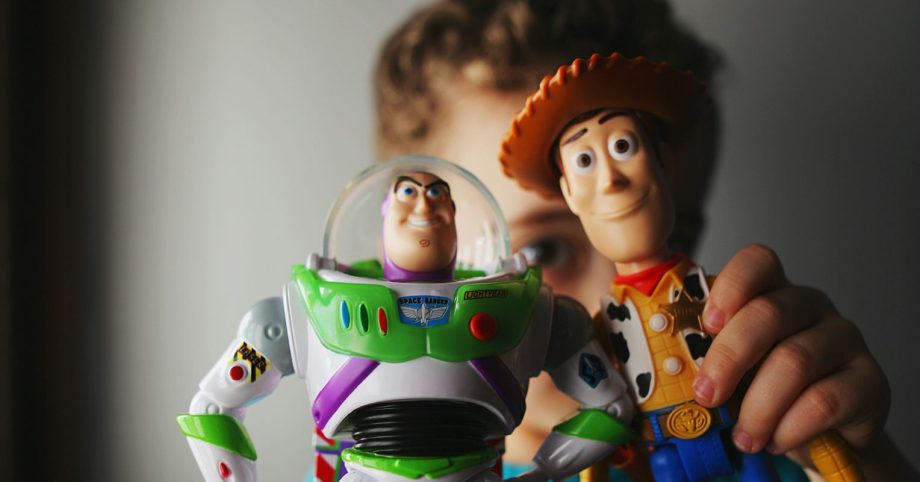
Watching Toy Story 5 with my grandchildren reminded me that some of the most important conversations about child development begin where imagination flourishes. Beneath the humor and adventure lies a thoughtful exploration of one of the defining questions of contemporary childhood: What happens when imaginative, child-led play gradually gives way to increasingly screen-based experiences?
As a family therapist, I find myself asking a slightly different question. Not simply what do children need, but what helps parents create the emotional conditions in which children can flourish? From a Bowen family systems perspective, healthy development is less about adults carefully managing children and more about gradually raising young people who can think for themselves while remaining deeply connected to others. Free play provides one of the richest settings for this kind of growth in childhood.
Why Imaginative Play Still Matters
Developmental psychology has long recognised that imaginative play nurtures creativity, emotional regulation, empathy, flexible thinking, and problem-solving. When children organise games, negotiate rules, work through disagreements, and recover from mistakes, they strengthen capacities that no adult can simply teach through instruction.
Bowen family systems theory reminds us that resilience grows through experience (a relational process) rather than through parenting techniques. As children navigate the ordinary ups and downs of play, they gradually learn to regulate themselves rather than relying on adults to manage every situation. The enduring appeal of the Toy Story films lies in understanding that toys become meaningful because children transform them into stories, friendships, and shared worlds.
Screens Aren’t the Solo Villain
One of the film’s strengths is its refusal to make technology the villain. Digital devices are now woven into all our lives. The developmental challenge is to ensure that technology complements rather than replaces opportunities for imaginative, embodied, and relational play. The question is not whether screens belong in childhood, but what experiences they may be displacing.
What’s Disappearing From Childhood?
Historians Peter Stearns and Steven Mintz argue that perhaps the most revolutionary change in childhood since the Second World War has been the transformation of children’s play. They conclude that “the transformation of play was one of the most striking features of the larger shift in American culture” (Stearns & Mintz, 2025).
In The Parenting Paradox, I wrote: “There’s an alternative narrative to Haidt’s argument, presented by Professor Peter Gray, a research professor at Boston College, who proposes that the loss of free play may have more to do with the decline in mental health than social media.”
Read Full Article At Source