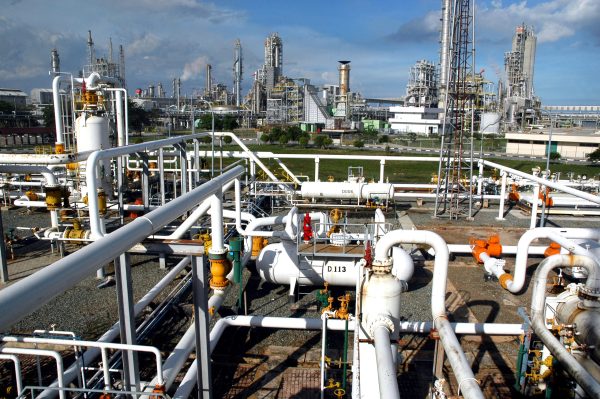
Indonesia on Saturday began reducing natural gas exports to Singapore in order to divert more supplies to domestic electricity needs, the country’s upstream oil and gas regulator SKK Migas said.
According to reports by Reuters and Channel News Asia, SKK Migas chairman Djoko Siswanto said that the diversion involves 31 million standard cubic feet of gas per day, which would be redirected to meet electricity needs in Batam, Bintan, and Sumatra. This comprises 15 million standard cubic feet of gas per day from Natuna and 16 million from Sumatra, which makes up around 9 percent of Indonesia’s total exports of natural gas to Singapore.
“In order to safeguard the reliability of domestic gas supplies for electricity generation, effective today, gas supplies previously destined for Singapore are being redirected for domestic use,” Djoko said, as per Reuters.
The latest cut comes after a series of serious power outages in Indonesia, including a major blackout across at least six provinces in Sumatra in May and rolling outages in Java and Kalimantan in June and July. More recently, the island of Batam in Riau Islands Province was last week hit with a 16-hour power outage.
Singapore is highly dependent on imported gas for electricity generation, generating more than 90 percent of its power from this source. Last year, around 43 percent of the country’s imported gas was shipped by pipeline from Indonesia and Malaysia, with the remaining 57 percent made up of liquefied natural gas shipped by sea.
Despite Singapore’s reliance on Indonesian gas, the reduction is unlikely to have much impact on the country’s electricity supply. Singapore’s Energy Market Authority said on Saturday that the reduction would amount to around 17 billion British thermal units per day over a period of 18 days. This, it said, equated to “less than 2 percent of our total daily gas demand.”
Tan See Leng, Singapore’s minister for energy, trade, and industry, said yesterday that Singapore has sufficient gas supply to meet its demand, and was seeking continuously to diversify its sources of gas to guard against any potential future shocks.
“In the short term, the prices would not really affect that much,” he said. “I would like to urge all of our fellow Singaporeans: keep calm and carry on. We have dealt seamlessly with such reductions in the past without any incident, and the government will continue to ensure the reliability and the resilience of Singapore’s energy supply.”
The gas supply cut is consistent with Indonesia’s long-standing policy of prioritizing the use of natural resources for its domestic needs. Under Jakarta’s regime of Domestic Market Obligations, producers of key natural resources and commodities are required to reserve a specific portion of their production for the local market at below-market prices, before being allowed to export the remainder. For instance, in January 2022, the Indonesian government banned coal exports for a month after supplies at domestic power plants ran low.
Indonesia has also banned the export of unprocessed nickel, bauxite and raw copper to encourage companies to refine minerals domestically and boost the local economy.
The gas cut was foreshadowed by Indonesian Energy Minister Bahlil Lahadalia, who told reporters on October 21 that Indonesia would not hesitate to prioritize natural resources for its own domestic needs and that President Prabowo Subianto had ordered Indonesia “to adopt a survival-oriented approach amid geopolitical tensions and global energy challenges,” in the words of the Jakarta Globe.
The following day, he said that the government might also cut off supplies to nations that did not respect Indonesia.
“Don’t come asking for help only when you’re in need, but when other issues that can actually be discussed arrive, act like you have no sense of propriety, like someone who doesn’t know how to conduct yourself properly,” Bahlil said, as per the South China Morning Post.
The minister’s remarks were cryptic, and he made no mention of Singapore, but they come at a time of growing friction between the two neighbors due to the toxic haze resulting from months of Indonesian wildfires, and the recent turbulence in the Indonesian stock market.
In recent weeks, Singaporean citizens have grown increasingly frustrated with the haze, a result of raging forest and peatland fires in Sumatra and Kalimantan, and the apparent inaction of the Indonesian authorities – a sentiment that has not been helped by the defensive statements of some Indonesian officials.
Singapore’s government, too, has begun to express its discontent with Jakarta over the haze, albeit in much more measured language. On October 15, Prime Minister Lawrence Wong said that the government was looking into Indonesian companies that could be responsible for the fires in Indonesia, and potentially take action under its Transboundary Haze Pollution Act.
Senior Minister K Shanmugam said on October 19 that Singapore will “sustain pressure” on these companies even after the haze passes. “If companies refuse to cooperate, regardless of whether they have a presence in Singapore or do not have a presence in Singapore, we will use every legal and regulatory lever at our disposal to exert pressure where it matters,” he said.
There have also been tensions related to the recent threat of global index provider MSCI to downgrade Indonesia to “Standalone Market” status due to a lack of transparency in its stock market. The possible downgrade, which was announced on October 16, led to an immediate plunge in the Indonesian stock market, which shed 15 percent of its value over two days of trading.
In the aftermath, Indonesia’s former Trade Minister Muhammad Lutfi claimed on social media last week that the Singaporean state investment firms GIC and Temasek had pressured MSCI to downgrade Indonesia in order to suppress stock prices. The two firms have denied his claims. Prabowo himself responded to the downgrade threat with strident nationalism, claiming that MSCI “intended to intimidate us.”
Prabowo’s two years in office have been marked by increasingly strident nationalism and rhetoric about national self-sufficiency, which have resulted in ever-more overt state involvement in the economy. While this policy may serve to safeguard Indonesia’s domestic energy and food security in the short term, the longer-term impact will be to undermine business confidence and potentially to generate friction with Indonesia’s neighbors. In this particular instance, it is hard to see that Indonesia’s main regional economic partners will begin to look elsewhere for their energy supplies, as indeed, Singapore is already doing.
Read Full Article At Source
You May Also Like:
- Employees in Singapore increasingly taking “snooze days” as sleep gap widens
- MPs’ heat-beating plans for Singapore: Microforests, sheltered walkways, and more outreach
- Last four privately owned HDB wet markets to be refreshed after leases expire by 2027
- Heavy departure traffic at Woodlands Checkpoint amid tailback from Malaysia, Singapore News