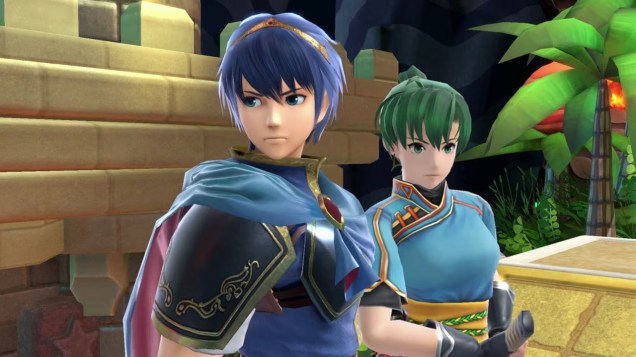
Though it may not be a sales juggernaut on the scale of Mario or The Legend of Zelda, Fire Emblem is one of Nintendo’s preeminent franchises. Like so many of its vaunted stablemates, the series is almost as old as Nintendo’s gaming ambitions, debuting on the Famicom and appearing on nearly every home and handheld console since. Given this prominence, it’s almost difficult to believe that Fire Emblem’s future was ever in jeopardy, but such was indeed once the case; there was a point in time when the series was very much on the verge of cancellation, and it took a dramatic shakeup to reverse its fortunes.
To fully contextualize this rocky period in Fire Emblem’s history, we need to look back at its trajectory in the wake of its belated international debut. Unlike Nintendo’s other marquee properties, Fire Emblem took a circuitous route to Western markets. Though the series began in 1990, its first several installments were never released outside of Japan, and most Western players would end up being introduced to the franchise not through one of its mainline entries, but through Super Smash Bros. Melee for the Nintendo GameCube.
Even more so than its predecessor, Melee was a veritable celebration of Nintendo history. The game drew deeply from the company’s rich oeuvre; its roster was stuffed with beloved mascots, and its extensive array of collectible trophies covered the full sweep of the publisher’s gaming legacy, from renowned classics to obscure curios. What generated the most chatter among international players, however, were two particular hidden fighters who hailed from a series most had never heard of: Marth, hero of the first Fire Emblem, and Roy, protagonist of the series’ then-newest installment, The Binding Blade.
Despite their unfamiliarity, these mysterious swordsmen instantly became two of Melee’s most popular characters thanks to their cool designs and nimble swordplay, which helped set them apart from the more recognizable characters on the roster. More consequentially, their newfound popularity among Western players generated immediate interest in Fire Emblem as a whole–a series that, to that point, had been all but unknown outside of Japan. That the franchise was notable enough to warrant not one, but two representatives in Melee was yet more indication of its significance, and only further stoked players’ curiosity.