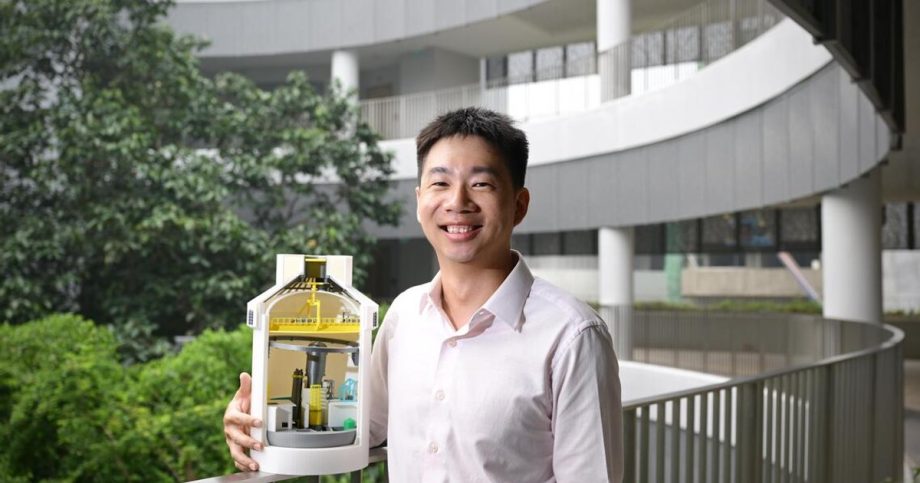
SINGAPORE – When Singaporean nuclear energy scientist Ian Ang recently visited his neighbourhood doctor for a check-up, he did not expect a debate over his area of research.
“Oh, I disagree with that,” the general practitioner blurted out upon learning that Ang was a researcher at the NUS Singapore Nuclear Research and Safety Institute (SNRSI).
Ang, 35, is not unfamiliar with the topic of nuclear energy triggering opposition. Instead of feeling disheartened, he saw the moment as another opportunity to debunk fears about nuclear energy. “I think it’s funny that nobody really has an opinion about a researcher, but everybody has an opinion if you are doing nuclear energy,” said the nuclear safety researcher.
Probing further, he learnt the doctor had formed his negative opinion of nuclear energy by “many people dying” due to the Chernobyl and Fukushima nuclear disasters.
In 1986, the world’s worst nuclear accident at the Soviet-built Chernobyl plant in Ukraine exposed millions to radiation and contaminated swathes of land.
Decades later, in 2011, a natural disaster triggered meltdowns at Japan’s Fukushima Daiichi Nuclear Power Plant. While many had died from those disasters, Ang told the doctor the UN had concluded in 2020 that there were no radiation-related deaths directly attributable to the Fukushima incident.
Some 18,430 people died or went missing from the earthquake and tsunami in Fukushima, while more than 3,700 died from illness or suicide linked to the tragedy’s aftermath.
Turning to Chernobyl, Ang noted that while about 50 emergency responders died, less than 0.5% of some 6,000 cases of thyroid cancer linked to the accident resulted in death, according to a 2008 UN report. Most thyroid cancer cases can be cured with treatment.
“To me, (the Chernobyl accident) was an issue caused by humans, not really the technology itself,” Ang said.
Read Full Article At Source