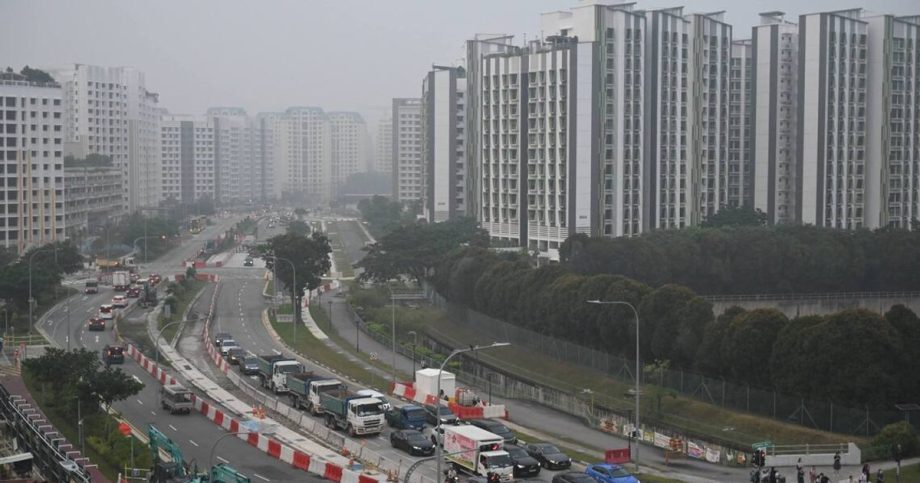
SINGAPORE – Singapore has registered unhealthy Pollutant Standards Index (PSI) readings daily since Oct 5 – making this 12-day period the longest continuous stretch of poor air quality the country has had to endure since the 2015 haze crisis.
That year, Singapore experienced a 14-day stretch of bad air between Sept 23 and Oct 7, The Straits Times checks on historical 24-hour PSI readings on government data portal Singstat showed.
In comparison, during the haze episodes in 2019 and 2023, Singapore experienced shorter stretches of unhealthy air, with each lasting a couple of days.
A day is considered to have unhealthy air quality when the PSI reading at any point in the day exceeds 100 in any part of Singapore.
Singapore’s PSI has five bands – good (0-50), moderate (51-100), unhealthy (101-200), very unhealthy (201-300) and hazardous (>300).
Based on the health advisories pegged to PSI readings, healthy people should scale down normal activities once PSI readings hit 101 and above.
When air quality is considered very unhealthy, people with no health issues should avoid prolonged or strenuous outdoor physical activity. At hazardous levels, healthy people should minimise outdoor activities.
Singapore’s air quality index breached hazardous levels in 2015, with readings above 300.
In 2026, air quality has so far reached very unhealthy levels.
The PSI first entered this range at 9pm on Oct 14, with a PSI reading of 203 in the western region of Singapore.
Very unhealthy air quality has persisted, and the PSI in central Singapore was 226 at 8am.
Worsening air conditions have prompted the Government to launch new relief measures.
Community clubs (CCs) across Singapore on Oct 14 began distributing N95 masks to eligible Singaporeans, including Pioneer and Merdeka Generation seniors, lower-income families, pregnant women, children and asthma patients.

Mask distribution at Kallang CC on Oct 15.
ST PHOTO: JASON QUAH


Read Full Article At Source