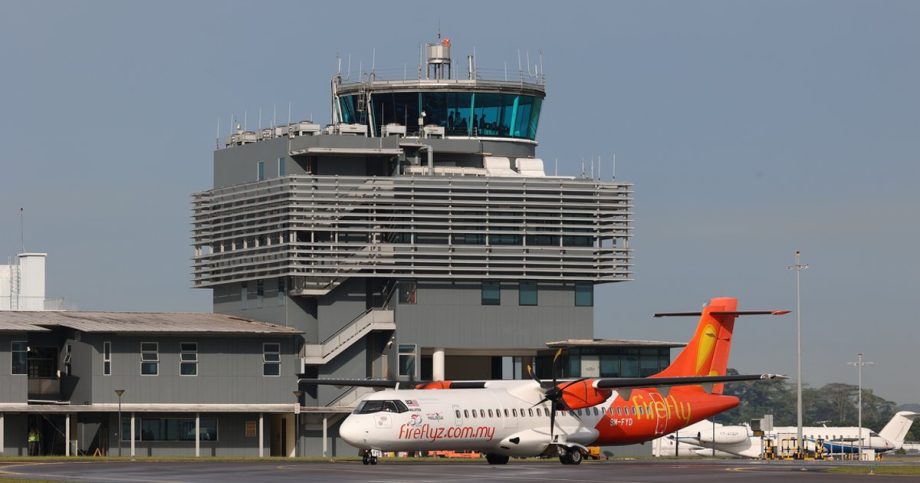
SINGAPORE – Malaysia’s Firefly has again extended its cancellation of flights on the Subang-Seletar route, this time until Oct 14.
The airline had earlier cancelled flights between Sultan Abdul Aziz Shah Airport in Subang and Singapore’s Seletar Airport from Oct 10 to 12 due to the haze, and then extended the cancellation to Oct 13.
Separately, the Civil Aviation Authority of Singapore (CAAS) and Changi Airport Group (CAG) said in a joint media reply on Oct 13 that both airports in Changi and Seletar remain operational, and that 16 flights from Seletar were diverted from Oct 5 to 11 as a precaution due to low visibility.
“Some airlines have also chosen to adjust or cancel flights based on prevailing conditions,” they said.
This comes as Singapore is blanketed by smoke haze from forest fires in the region, with the 24-hour Pollutant Standards Index (PSI) reading climbing as high as 192, close to the “very unhealthy” range of 201 to 300.
In a notice on its website, Firefly said the following flights were cancelled:
Subang to Seletar:
-
FY3122 (Oct 13 and 14)
-
FY3124 (Oct 13 and 14)
-
FY3126 (Oct 13 and 14)
-
FY3128 (Oct 13)
Seletar to Subang:
-
FY3123 (Oct 13 and 14)
-
FY3125 (Oct 13 and 14)
-
FY3127 (Oct 13 and 14)
-
FY3129 (Oct 13)
-
FY3131 (Oct 13)
-
FY3133 (Oct 13)
-
FY3144 (Oct 14)
Firefly stated on its website that affected passengers will be reallocated to Malaysia Airlines flights from Kuala Lumpur to Singapore, where possible.
Those who do not want the replacement flights can receive a full refund, according to the website.
CAAS and CAG said they will implement additional measures if the haze worsens, including switching on airfield lights during daytime to improve visibility and increasing the timings between aircraft landings and take-offs.
They added that aviation companies and unions are taking steps to protect their outdoor workers, such as reviewing non-essential outdoor activities and ensuring that there are enough N95 masks for airport employees.
CAAS and CAG said they are “closely monitoring the PSI levels and taking the necessary measures to protect” passengers and crew.
The 24-hour PSI first breached “unhealthy” levels in 2026 due to smoke haze from Sumatra and Kalimantan on Sept 4, the National Environment Agency said.
The PSI then spiked to a 2026 high, reaching 192 on Oct 9 in the central region between 5pm and 8pm.
The haze task force then announced on the same day that N95 masks would be distributed to vulnerable groups here when air quality reached “very unhealthy” levels.
-
Read Full Article At Source