When senior social worker Kalajayanthi Jayagomar, 38, and her colleague from social service agency Allkin Singapore visited a family’s home in early August, they were following up on an incident. A parent had used harsh physical punishment on their child aged under six.
But what they found was a household grappling with much more.
The parents were overwhelmed with caregiving, faced significant emotional and financial stress, and quarrelled often, Kalajayanthi recalls. There was also a history of spousal violence.
One of them told her that struggling with their child’s behaviour – who Kalajayanthi observed to be restless – had led to the harsh physical punishment, she says.
Their visit had been triggered by an alert from a new Ministry of Social and Family Development (MSF) unit: Sensemaking Alerts for Frontline Engagement and Response (SAFER), which flags information that may require a closer look at a family to assess if they need support. (See box below).
In this case, SAFER drew on data from a police report. The family told Kalajayanthi that the police had conducted checks, she says.
She shared support options with them, including for the child’s behavioural needs.
The parents agreed to a safety plan to prevent repeated family violence, she adds. They would avoid harsh physical punishment on the child, seek counselling, and ensure the child is not exposed to spousal or family conflicts.

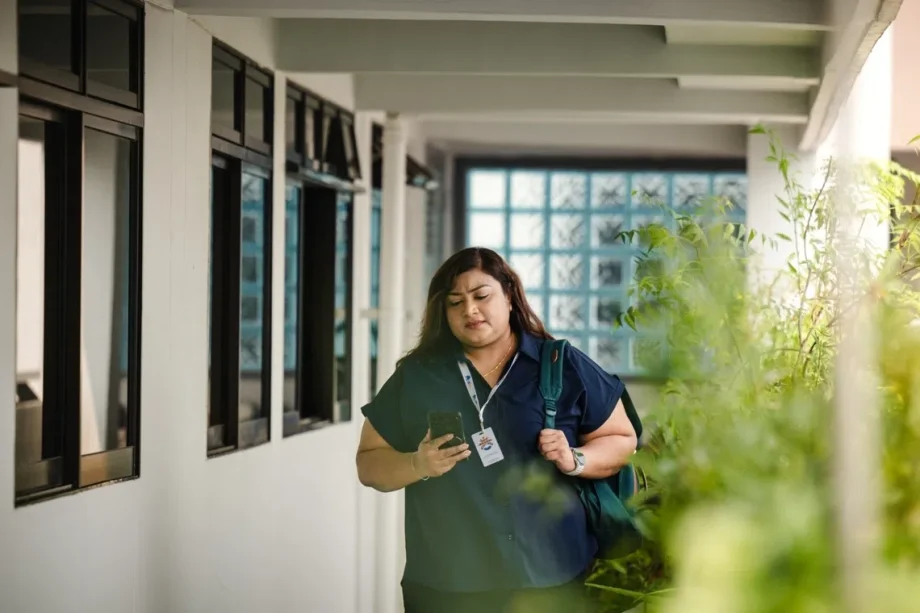
An alert from MSF’s new SAFER unit led senior social worker Kalajayanthi Jayagomar to a struggling family – one who had not sought social services’ help before.
PHOTO: SAMUEL HE
Kalajayanthi also roped in their extended family members to help keep watch and support the family’s safety and well-being. No further incidents have been reported since, she says.
The case demonstrated the importance of reaching a family early, she says. “There were so many layers of issues, and they may not have sought help,” she says
Without SAFER’s alert, the family – which had never been in touch with social services before – might not have received the support they needed in time, she adds.
Reaching families early
Reaching families early gives social service professionals a chance to match them with the right support before harm deepens, explains Kalajayanthi.
The work involves a qualified professional helping them better understand their own behaviour patterns and the support available, and to “unlearn (the harmful habits) they have learnt”, she says.
How SAFER joins the dots
Rolled out since end-June 2026, the Sensemaking Alerts for Frontline Engagement and Response (SAFER) unit brings together information from different government agencies to give frontline professionals a fuller picture of a family’s situation. This helps them provide the right level of support earlier.
It was set up by the Ministry of Social and Family Development (MSF) after a 2025 review of Singapore’s child protection system, prompted by the death of four-year-old Megan Khung.
In its first two months, SAFER has flagged 70 cases to MSF’s Protective Service (PSV) and Child Protection Case Management Agencies’ case managers to step up or strengthen support for the families involved.
These comprised 68 existing cases updated with new information, a known case escalated to MSF PSV, and a new case referred to a family service centre.

Left without support for too long, those patterns could become entrenched and harder to undo. Victims, including children who grow up in abusive households, may come to see those harmful habits as normal, she adds, and not recognise them as harm.
But families in need must be found first – and some may suffer in silence.
Victims sometimes hesitate to disclose what is happening because they want to “save face” or fear implicating themselves, she says. Others may not realise they were harmed, Kalajayanthi adds.

Senior social worker Kalajayanthi Jayagomar helps families recognise unhealthy patterns and the support available to them – so they can unlearn any harmful habits.
PHOTO: SAMUEL HE
While physical abuse can leave visible signs, psychological abuse – from economic control and intimidation to gaslighting and using children as leverage – can be harder to spot.
Detection has traditionally depended on outsiders, such as schools noticing cane marks on a child, she adds.
When more comes to light
To better understand the families they support, social workers typically contact schools, hospitals or community agencies about attendance, behavioural concerns or medical compliance, says Kalajayanthi.
Kalajayanthi says certain agencies require consent from clients before social workers can access certain information. When they refuse, it leaves gaps in what caseworkers know, she adds.
Family service centres (FSCs), or community-based social services that support vulnerable individuals and families with social and emotional issues, also work with community police units on these cases, she adds.
Before SAFER, a caseworker would usually be unaware of a family member’s arrest unless shared by the family, or if circumstances required existing protocols for law enforcement agencies to notify MSF of possible child safety risks.
In this family’s case, MSF’s initial checks with the child’s school did not turn up any signs of family violence. The school had identified behavioural concerns, and referred the child for assessment and support, Kalajayanthi says.
By bringing together relevant information across government agencies, SAFER now helps social workers like Kalajayanthi spot child safety risks that may not be apparent when the information is viewed separately.
But SAFER’s alert is only the starting point. Early intervention also means strengthening a person’s support network, from their own family to the wider community, she says.

Senior social worker Kalajayanthi Jayagomar encourages the wider community to help protect families and individuals.
PHOTO: SAMUEL HE
“Protecting families is a shared responsibility,” adds Kalajayanthi, who encourages the public to report suspected abuse cases to the authorities.
“When individuals and families are given opportunities to access the right support at the right time, positive change becomes possible.”
Helplines
Family violence
-
National Anti-Violence & Sexual Harassment Helpline: 1800-777-0000 (24 hours) / go.gov.sg/navh (online report)
Mental wellbeing
-
National helpline: 1771 (24 hours) / 6669-1771 (via WhatsApp)
-
Samaritans of Singapore: 1-767 (24 hours) / 9151-1767 (24 hours CareText via WhatsApp)
-
Singapore Association for Mental Health: 1800-283-7019
-
Silver Ribbon Singapore: 6386-1928
-
Chat, Centre of Excellence for Youth Mental Health: 6493-6500/1
-
Women’s Helpline (Aware): 1800-777-5555 (weekdays, 10am to 6pm)
-
The Seniors Helpline: 1800-555-5555 (weekdays, 9am to 5pm)
Counselling
-
Touchline (Counselling): 1800-377-2252
-
Touch Care Line (for caregivers): 6804-6555
-
Counselling and Care Centre: 6536-6366
-
We Care Community Services: 3165-8017
-
Shan You Counselling Centre: 6741-9293
-
Clarity Singapore: 6757-7990
Online resources
Better Starts With Us
Better Starts with Us is the Ministry of Social and Family Development’s (MSF) multi-year effort to build a more caring and inclusive Singapore through the shared “We First” spirit.
MSF works with social service agencies, corporates, institutes of higher learning, volunteers, and the community to pool collective expertise and resources, with the aim of building strong families and resilient individuals.
Find out how MSF, its partners, and you can play a part at go.gov.sg/betterstartswithus
In partnership with the Ministry of Social and Family Development
Read Full Article At Source