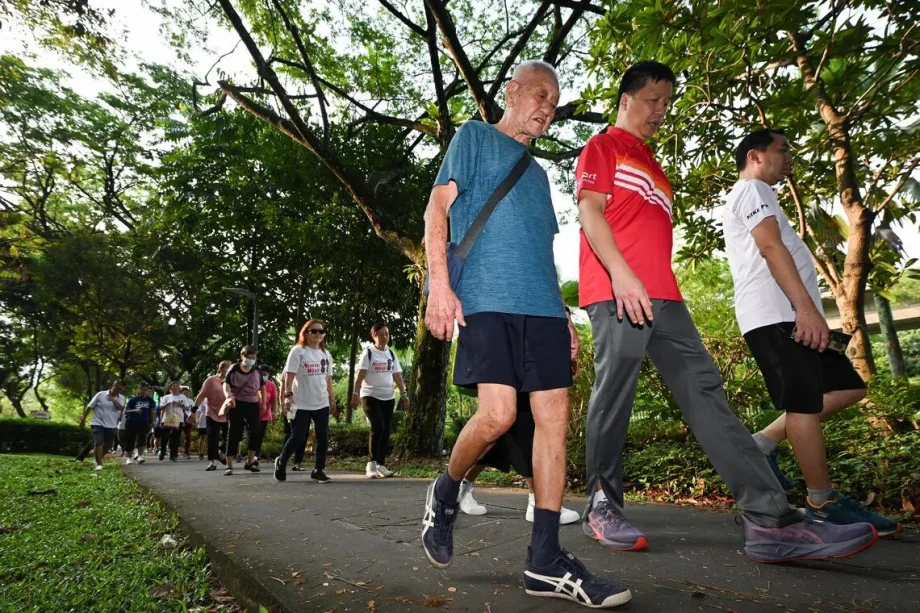
SINGAPORE – Nearly all residents in Singapore consume double the global limit for sodium, and more than half eat too many calories, despite a whopping 87 per cent of the population hitting recommended physical activity targets.
Staying active remains a vital pillar of health, but health experts warn that physical fitness cannot completely offset a bad diet.
Newly released findings from the 2025 National Nutrition Survey show that more than half of Singapore’s population consumes too many calories relative to their energy needs, pushing average daily intake to 2,460 kcal, up from 2,410 kcal in 2022 and 2,360 kcal in 2019.
Total dietary fat intake has also risen over the years.
And more than nine in 10 residents (95%) also consume too much sodium, averaging roughly 4,000mg a day, double the recommended daily threshold of 2,000mg, or about one teaspoon of salt.
With more people eating out more frequently, avoiding hidden calories and sodium can be an uphill battle, especially as commonly consumed dishes like fried carrot cake with dark soya sauce, mee siam and nasi briyani have become saltier and higher in calories over time.
At the same time, people continue to consume processed foods.

Fit but unhealthy
Doctors say they often encounter patients who think burning calories through some form of physical activity, including just brisk walking or daily active commuting, grants them a free pass at the hawker centre.
“My patients are exercising more today than before, but many of them erroneously think they can compensate for that with excessive calorie and sodium intake,” said Donna Tan, a family physician, consultant and deputy director of NHG Polyclinics’ clinical services department. “You might run three times a week but still be overweight. For someone who goes to the gym regularly, if your diabetes is not optimally controlled, you would be considered unhealthy.”
Tan, who has a special interest in weight management, said she reminds her patients that exercise alone cannot offset poor diet, inadequate sleep, stress, or poorly controlled conditions such as diabetes and hypertension.
Continue exercising, but pay attention to portion sizes and do not overeat after a workout, she said.
Hidden traps in
‘healthy’ foods
Tan cautioned that seemingly healthy options such as granola, smoothies, fruit juices, salads with creamy dressings and large sandwiches may contain excessive calories, sugar, fat or sodium.


Read Full Article At Source