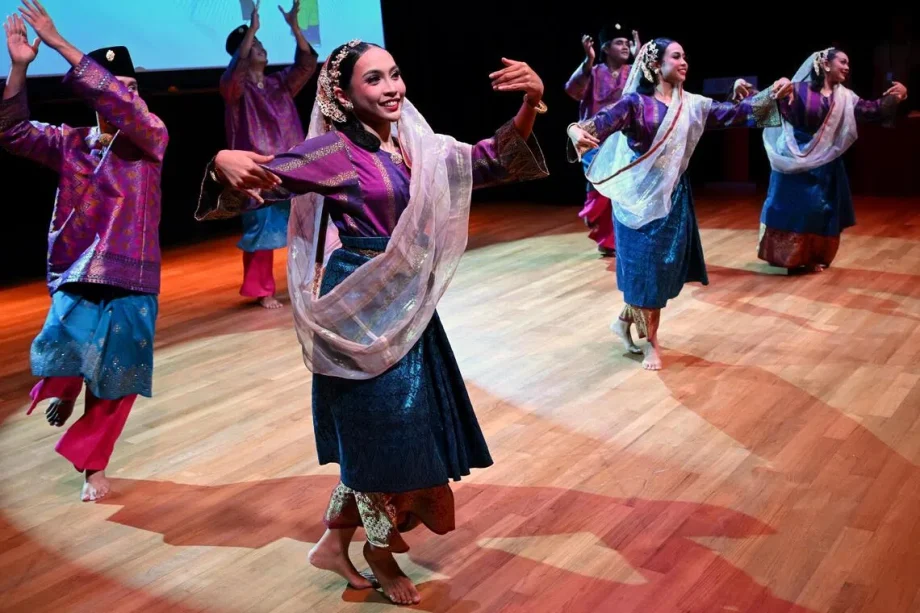
SINGAPORE – Singapore, Brunei, Indonesia and Malaysia will be putting up a joint bid for zapin, a traditional Malay performing art with deep roots in the region, to be inscribed on UNESCO’s intangible cultural heritage list.
The four participating countries aim to submit their nomination to UNESCO in March 2027, said the National Heritage Board (NHB) on Sept 24.
NHB chief executive Chang Hwee Nee said the nomination underscores the cultural significance of zapin for communities in Singapore and across the region.
“We hope this milestone will inspire a new generation of practitioners to keep this cherished dance form alive as part of our living heritage, while encouraging Singaporeans to explore and embrace its rich traditions,” she said.
This is the first time Singapore is jointly nominating a performing art form for UNESCO’s list. It is the Republic’s fourth nomination.
Intangible cultural heritage refers to traditions or living expressions that are inherited and passed on between generations, such as performing arts, social practices, rituals and festive events.
Zapin is an upbeat-tempo dance associated with budaya (culture), nilai (values) and adab (etiquette). It is believed to have been introduced to the Malay Archipelago during the 13th to 15th centuries by Arab Muslim communities.
It is one of five dance forms commonly practised by the Malay dance community in Singapore – the others are asli, inang, joget and masri.
It is characterised by dance movements choreographed to lively melodies, which are performed with musical instruments like the gambus (short-necked lute), accordion and rebana (traditional drum).
The dance moves often mimic the movements of animals and the natural world, such as the keluang (fruit bat), batang (tree trunk) and pusau (swirl).
Georgina Koh, NHB’s director of heritage policy and research, said zapin has a vibrant practising community here.
“We have also heard from the practitioners that they not just frequent festivals in Singapore to share zapin with the community here, but also participate in regional festivals where zapin is being shared, both the local variants as well as cross-sharing between the regions,” she said.
The multinational nomination builds upon decades of regional community collaboration, with festivals such as Zapin D’Muara, which later evolved into the annual Muara Festival in Singapore, featuring dancers and musicians across the region, said NHB.
There are various zapin subgenres performed in the region. One form that has its roots in Singapore is Zapin Asyik, created by choreographer Liau Ah Choon in the 1960s after she watched performers at a Terengganu wedding and adapted it here.
In the past, zapin was performed in Singapore only during significant or ceremonial occasions such as weddings.


Read Full Article At Source