The Resident Evil movie reboot has finally arrived, coming from one of the biggest names in horror these days, filmmaker Zach Cregger, who previously wowed fans with his films Barbarian and Weapons. And he certainly seems to be off to a good start with Resident Evil — we gave it an 8 out of 10 here at IGN, it’s in the 90s on both the Rotten Tomatoes critics and audience scores, and it’s on track to be a winner at the box office as well.
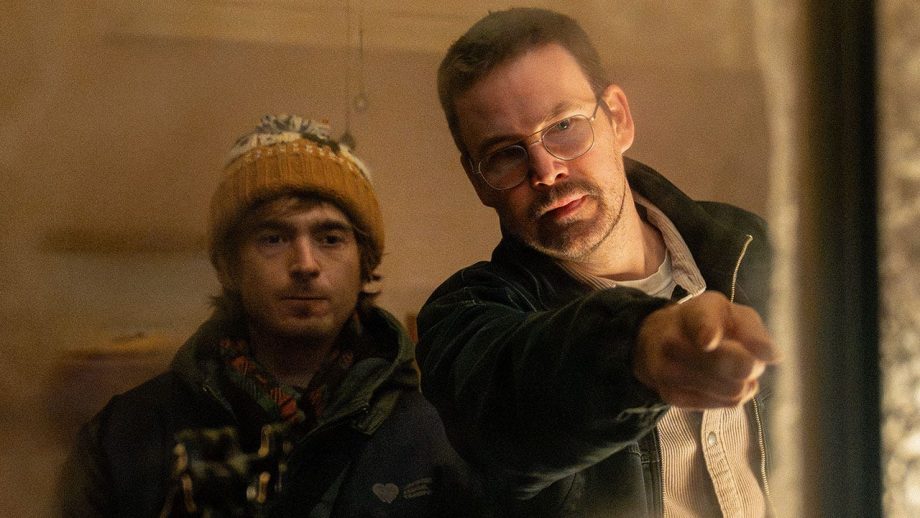
IGN’s own Tom Jorgensen recently sat down with Cregger and the film’s star Austin Abrams — who plays Bryan, a medical courier with some serious bad luck — to discuss the divided fan response to the film before it came out, how Cregger and his team went about evoking a true “video game feel” with the reboot, how Abrams almost got killed by a 150-pound bag of blood during production (!), and much more.
You can watch the discussion at the video above, or read it all right here…

Tom Jorgensen for IGN: There is a little bit of a conversation going on about this movie about to what degree it’s staying faithful to the games.
Zach Cregger: A little bit of a conversation?
IGN: A tiny, little bit of a conversation.
ZC: Wow. Okay. That’s putting it lightly.
IGN: Have there been unexpected challenges in convincing people this is the way to do this?
ZC: Yeah. I mean, of course. I think I was naive when I… I thought that fans of these games like me would be thrilled that somebody was coming along and turning Resident Evil into a survival horror movie. And I was like, “That’s great.” I did not really appreciate the sentiment [of] “We’ve been waiting forever for Leon’s story.” And I appreciate that. And I’m sorry that that’s not the story that I’m bringing here. I mean, I get it. I understand the frustration.
I understand it so well because I haven’t seen the earlier movies, because they don’t look like the Resident Evil that I love. You know what I mean? So how could I be frustrated with fans who have that same attitude? My only hope is that they will see the movie regardless of their skepticism or their disappointment that I’m not telling some of the stories that the games tell so well, and that they will feel seen when they do watch the movie and they will recognize all of the love for the games that is in this movie because it is there. And this is not just me telling a story and slapping Resident Evil on it so I can get a budget. This is me telling a Resident Evil story. I understand the resistance. I really do, because I have it myself. But it is coming from a true place of love.
IGN: I think historically video game adaptations have really struggled to translate the active experience of playing a video game into more of a passive experience [of] watching a film. How did that inform your choice to lean a little bit away from the specifics of exactly what happens in the Resident Evil games and more into how it feels to play them?
ZC: Well, there’s a lot of answers to that question. The first thing that comes to mind is the camera work. I’m using the language of the games in the camera work. So I’m staying rooted in that third-person, over the shoulder with a big wide lens [style], which is how all of these games are. That’s their language. And so that was a really fun thing, is to just almost one-to-one the visual language of the games in there.
And then to utilize the pacing of the games, the survival horror, the dread, the journey on foot where you’re entering this terrifying scenario, and you have two shotgun shells and you’re wounded. And that is such a fun, loaded, cinematic element that the games have done so well since the beginning, but the movies don’t really seem to be concerned with. And so I wanted to make a survival horror movie and pick up on all those things. I utilize the setting and the t-Virus and the Umbrella Corporation, all of those little ingredients that make Resident Evil, Resident Evil – that’s the bedrock of this movie as well. Another aspect [is] the length of the games, like weapon progression, starting with a pistol, graduating to the shotgun, graduating to the MP5. The increasingly dangerous enemies and mutants that you encounter.
Austin Abrams: The language, too, that you were talking about, just the camera and the angles of figuring out that dance, especially if it is over the shoulder or something of where to move and have the [camera] operator… We’re moving around and we’re doing a lot of things in one take. So getting that choreography right, but also doing it in a way that feels…
ZC: Spontaneous, yeah…
Read Full Article At Source