Giving the Pixel foldable another chance
The foldable market has been incredibly competitive in 2026. Big players like Samsung, OPPO, and Honor have excellent ones, despite rampant price increases, inventory shortages, and geopolitical uncertainty hamstringing their efforts. On the US side, Google now has to contend with the iPhone Duo as well.
Then there’s the added challenge of foldable creases. Serious innovation has gone into making it less noticeable. Cameras, too, are incrementally closing the gaps they once had compared with bar-type phones.
This puts the Google Pixel 11 Pro Fold against serious competition, arguably more than it historically faced (at least, in this corner of the planet).
To push through, Google is betting big on the software experience again. The Pixel 11 series is among the first (alongside the new Samsung Galaxy Z series) to offer Gemini Intelligence, including features like Rambler, Circle to Search in camera, and more.
There are also hardware upgrades, including brighter displays, a new main camera, and the HiLight LED array, which also appeared in the Pixel 11 Pro and Pro XL phones.
If you recall, we weren’t particularly impressed by the Pixel 9 Pro Fold. That makes us hopeful the new foldable has improved significantly after we gave the phones a break from reviewing them. Has Google done enough to go up against other big players in the foldable space? Let’s find out.
Thinner and lighter comes at a cost
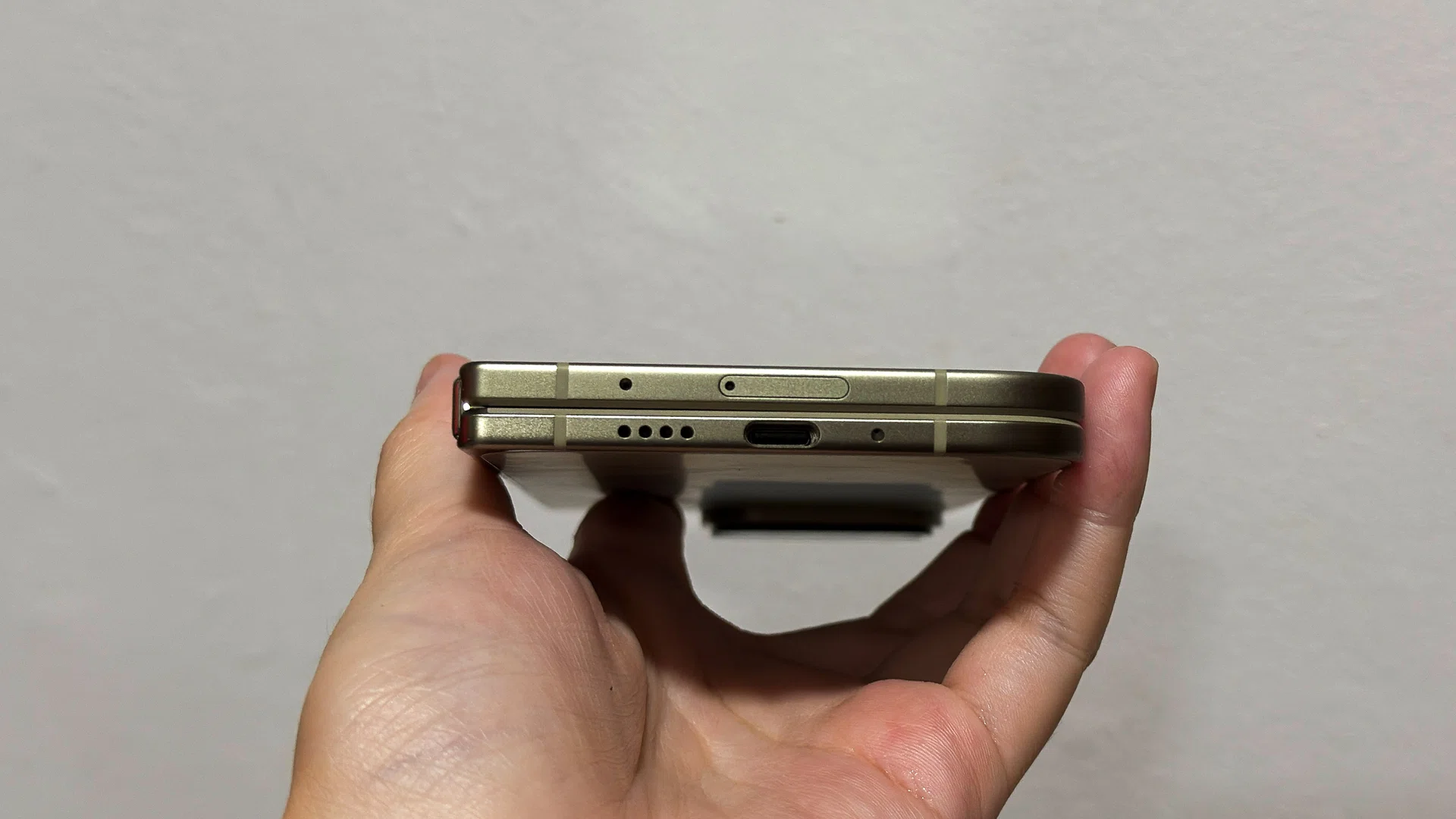
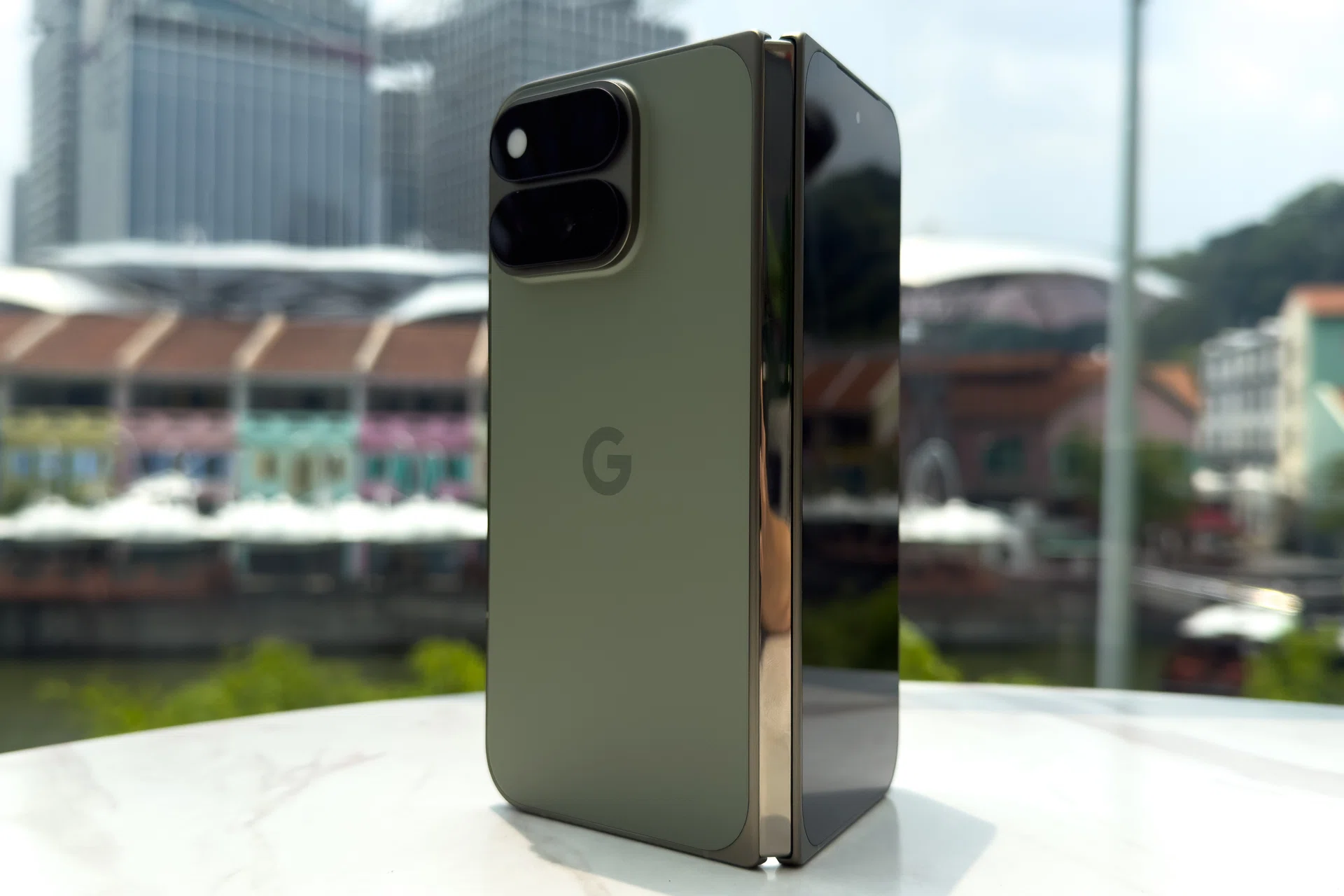
The side with the cover display is thicker, oddly enough.
Photo: HWZ
While the Pixel 11 Pro Fold’s overall look remains consistent with its predecessors, Google has made the phone almost 1mm thinner (10.1mm vs 10.8mm). This creates a small peculiarity in the phone’s design, though. While it’s not very noticeable at first, half of the device is ever-so-slightly thicker than the other.
Additionally, after having spent time with the new Samsung Z Fold8, the Pixel 11 Pro Fold is noticeably less easy to open, despite having bevelled edges as well.
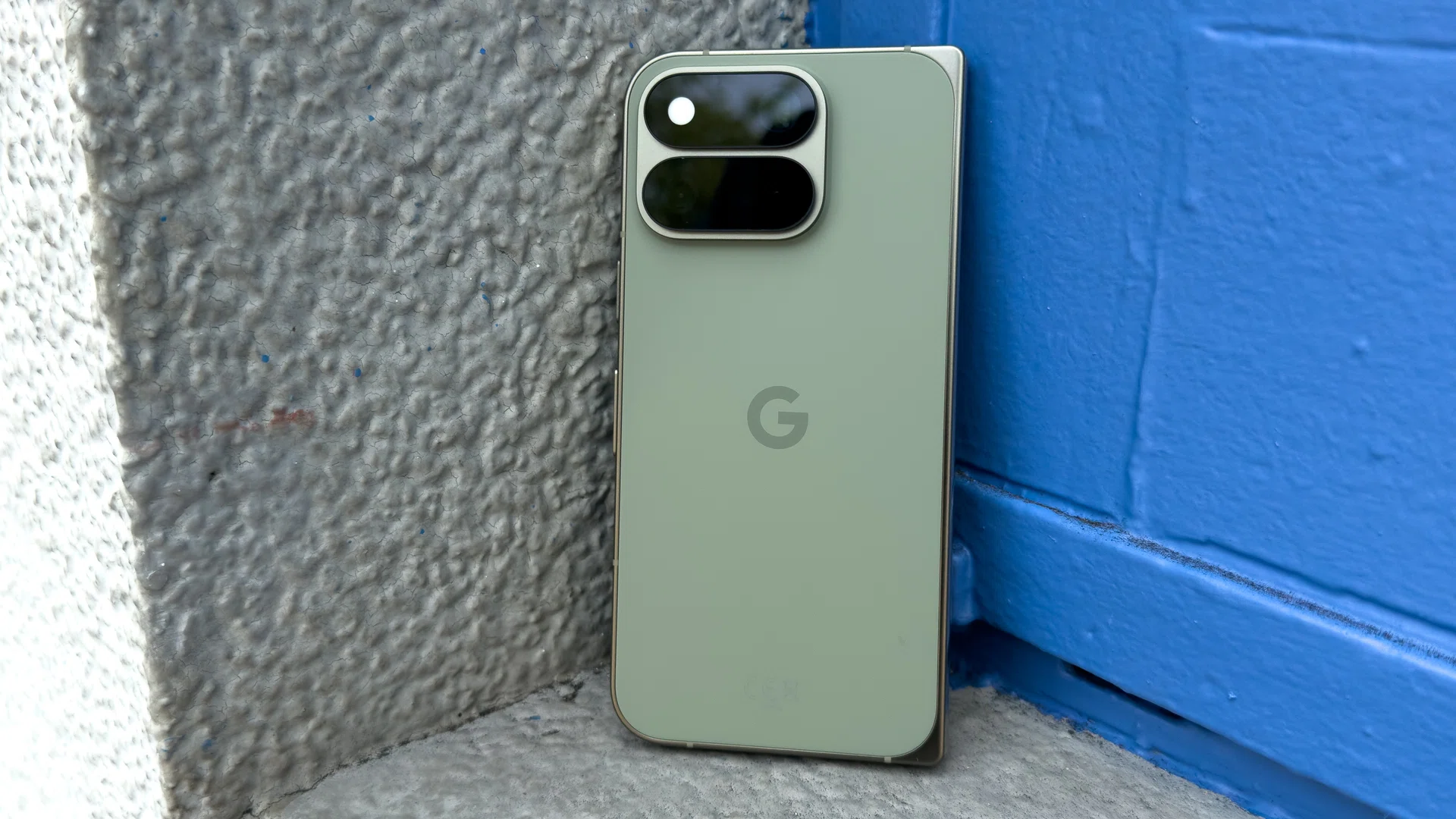
The device is slightly lighter at 239g, but that comes with a trade-off. Google swapped the rear glass panel for a composite back that feels like fancy but flimsy plastic. We’re not going to dig into it with a penknife à la JerryRigEverything’s hyper-destructive teardowns, but the cheap plastic toy texture is inevitable once you touch the device.
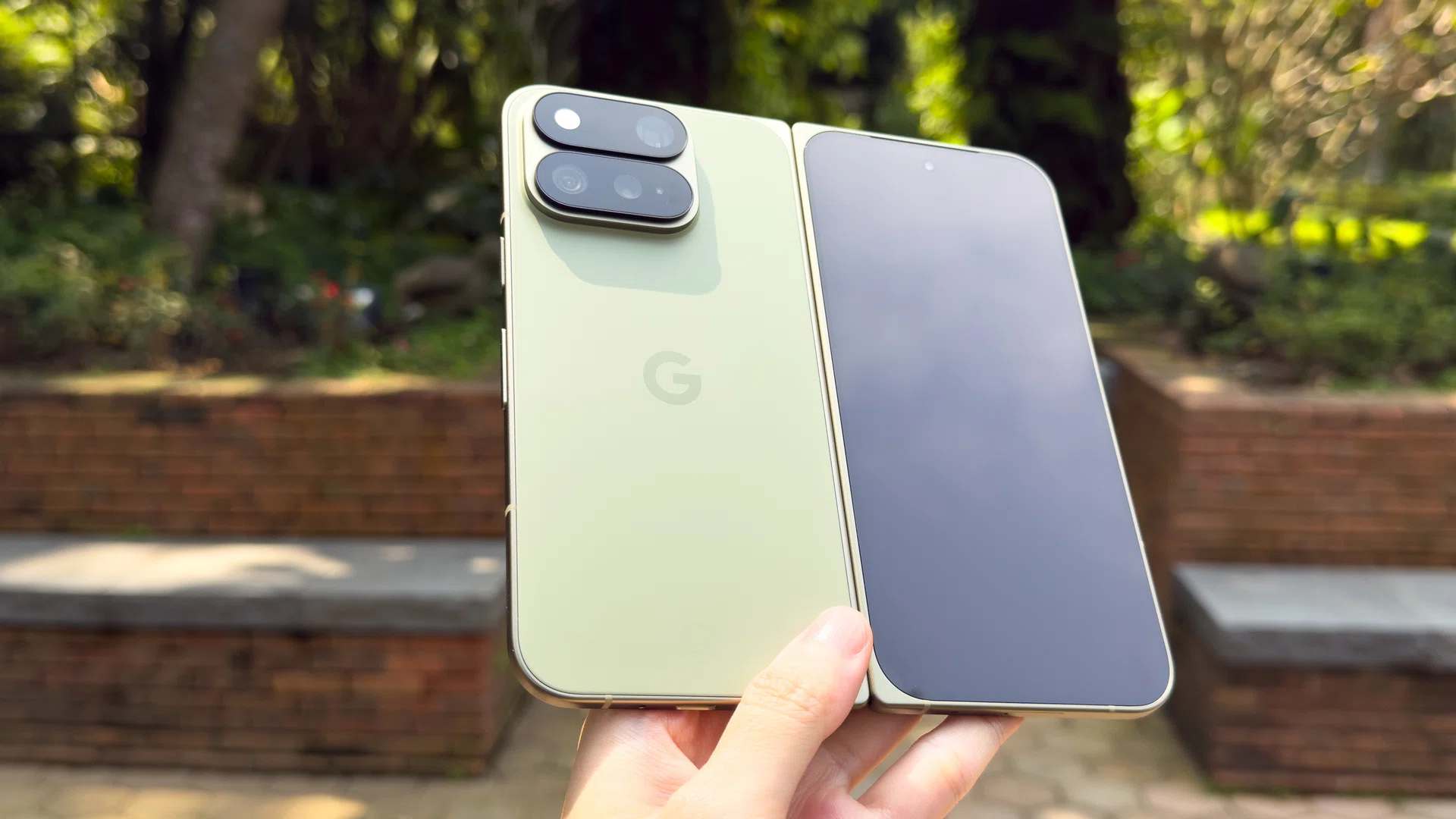
The cameras are no longer flush with the island.
Photo: HWZ
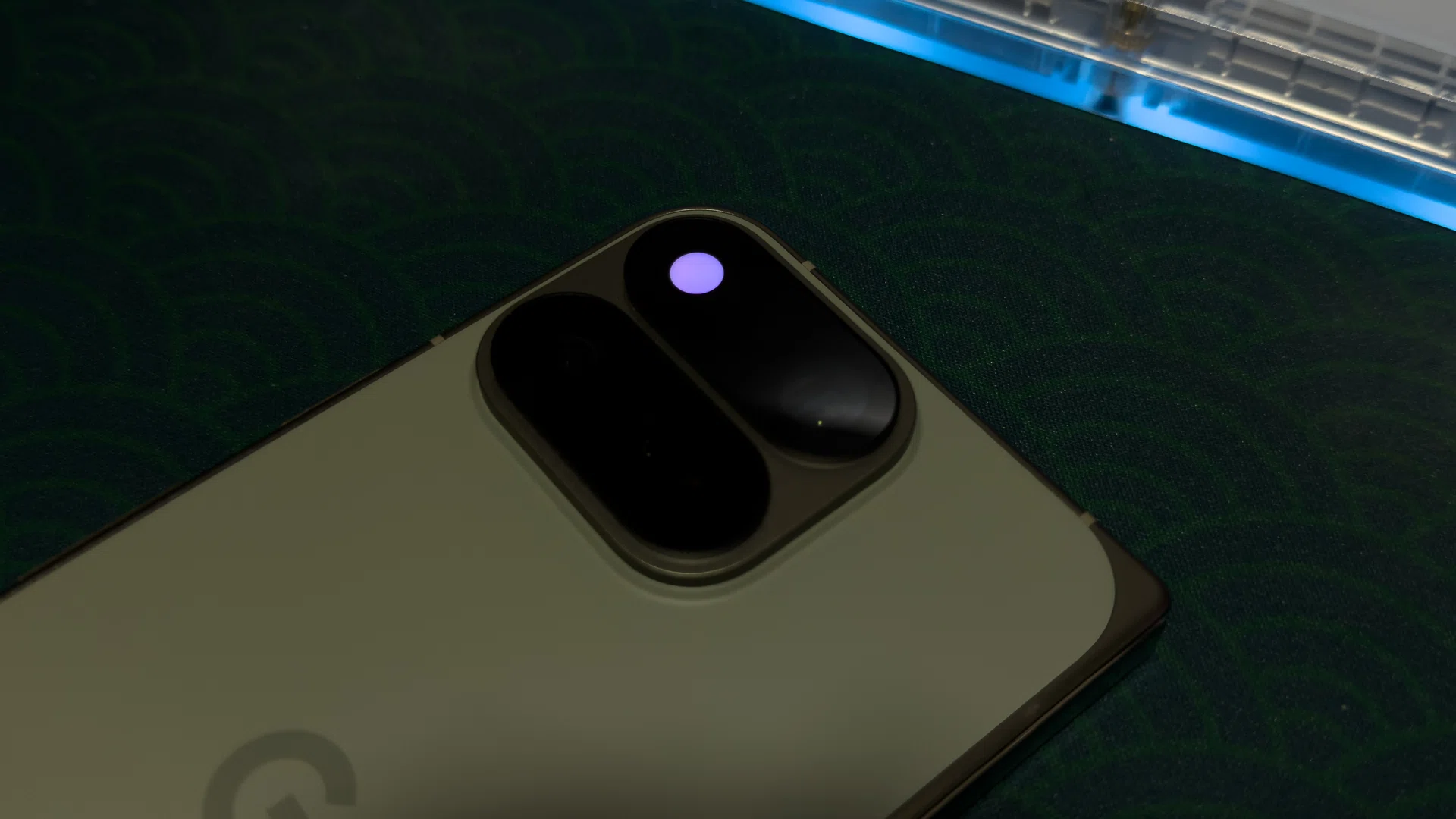
The camera array reuses its effective block shape, but the glass cover now protrudes from the metal housing and spans the width of the bump. Additionally, the flash module has moved to the other side and is now integrated with Google’s new HiLight LED indicator.
We’ve penned our thoughts on the HiLight feature in our review of the Pixel 11 series. To recap, the feature is in its infancy, and the foldable didn’t get extra HiLight perks beyond what we’ve already tried.
For calls, HiLight gives you five colours to choose from. Multiple contacts can share the same colour, so you can group contacts based on their importance or relation to you (e.g. work contacts, family members, and friends). This lets you use colours to know if it’s convenient to take certain calls, and how important they are.
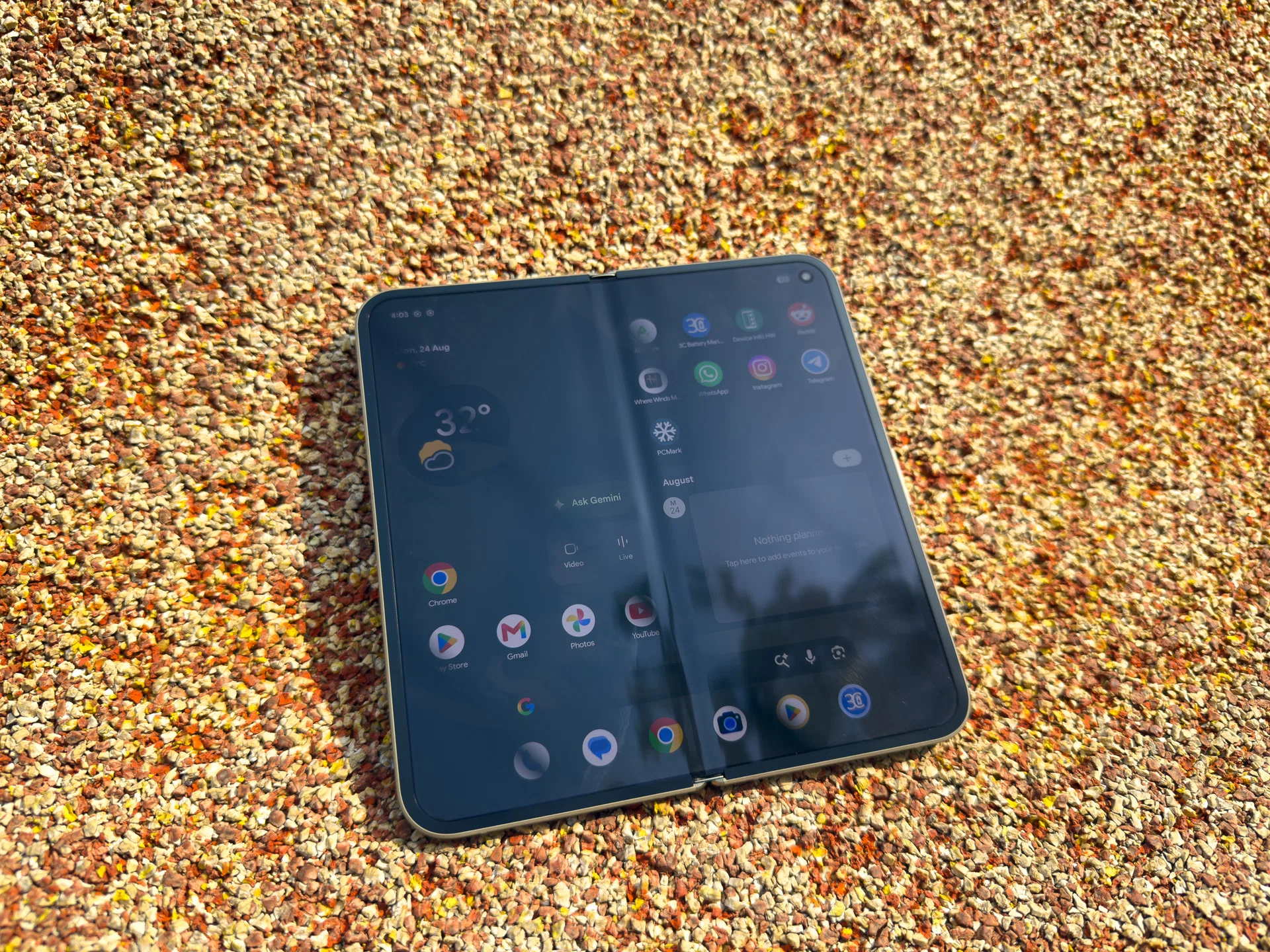
The crease is one of the more noticeable ones around.
Photo: HWZ
Google has also upgraded the displays on the Pixel 11 Pro Fold, with a new Super Actua display on the slightly larger 6.5-inch outer screen, as well as 3,600 nits of peak brightness on both screens (improved from 3,000 nits).
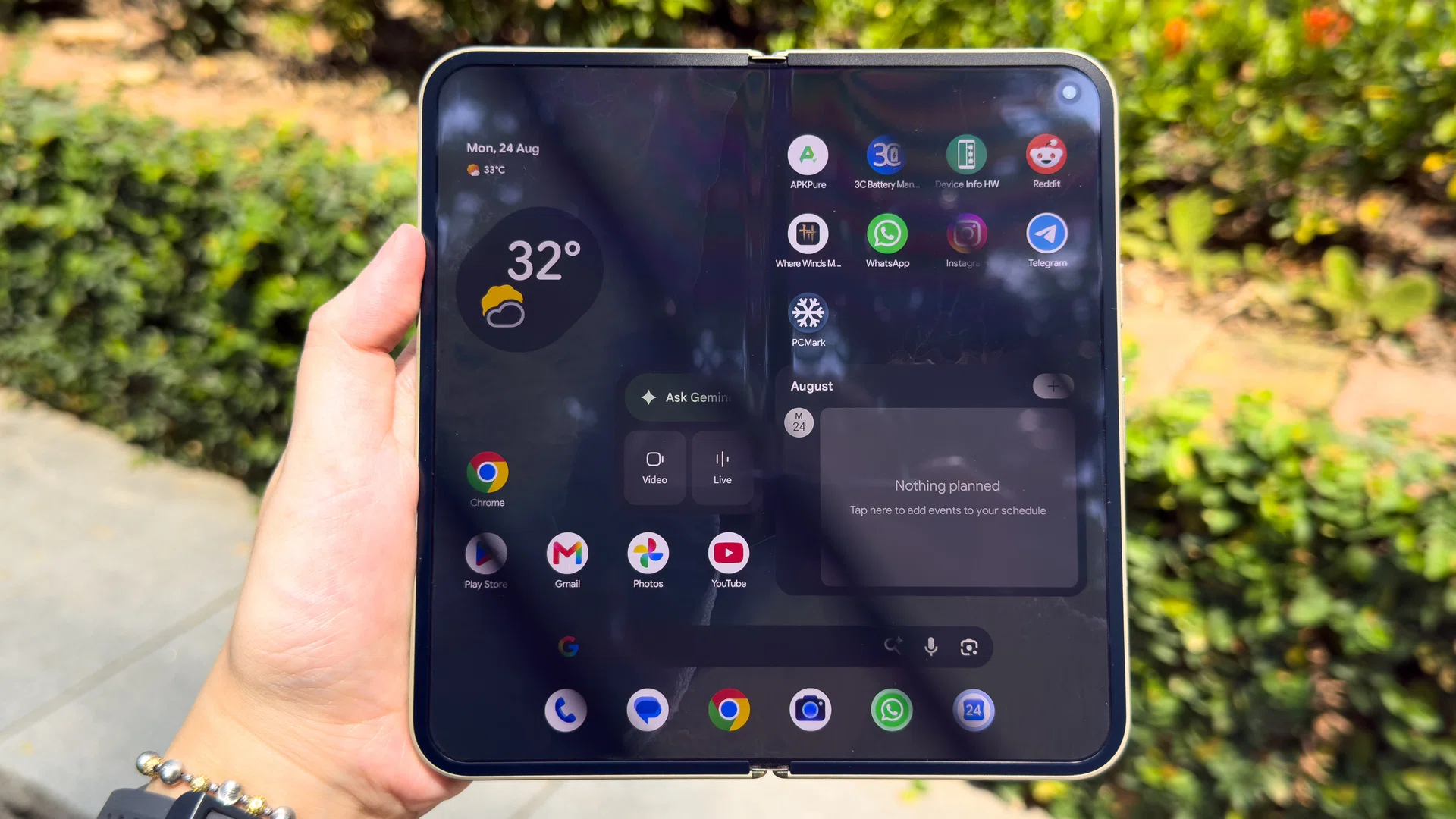
That said, a brighter display doesn’t fix the reflectiveness. Glare is especially noticeable under bright lights or direct sunlight (Singapore has plenty of both; we found that out this way).
The crease is less noticeable when looking straight at the display with content playing, but it’s still very obvious to the touch. Viewing from an angle makes it even more prominent, thanks to the display’s reflectivity mentioned above.
This is one area Google severely lags behind its main competitors like OPPO and Samsung (and now Apple, too). While it has improved slightly compared to the Pixel 10 Pro Fold, it still feels outdated next to sexier foldables released in 2026.
One thing that the Pixel 11 Pro Fold does better than most of the competition is rated dust and water resistance. At a certified IP68 dust and water resistance, this exceeds IP48 or IP59 ratings we see on Samsung or OPPO foldables, and it’s on par with iPhone Duo and Honor Magic V6.

Read Full Article At Source