SINGAPORE: Not many people can say their work involves briefing their country’s top leaders. For Ng Kah Meng and his colleagues at the Security and Intelligence Division (SID), the job involved not just regular briefings to the Cabinet, but also being grilled by Lee Kuan Yew.
Ng, a former SID senior director for counter-terrorism, recalled making trips to the Istana, where he faced Lee’s detailed questioning on national security matters.
Lee’s initial questions could drill into very minute details, as he wanted to “satisfy himself that you were not winging it”. But once Lee was satisfied, Ng said the conversation would shift into analysis mode, and then to decision-making based on the facts and assessments SID provided.
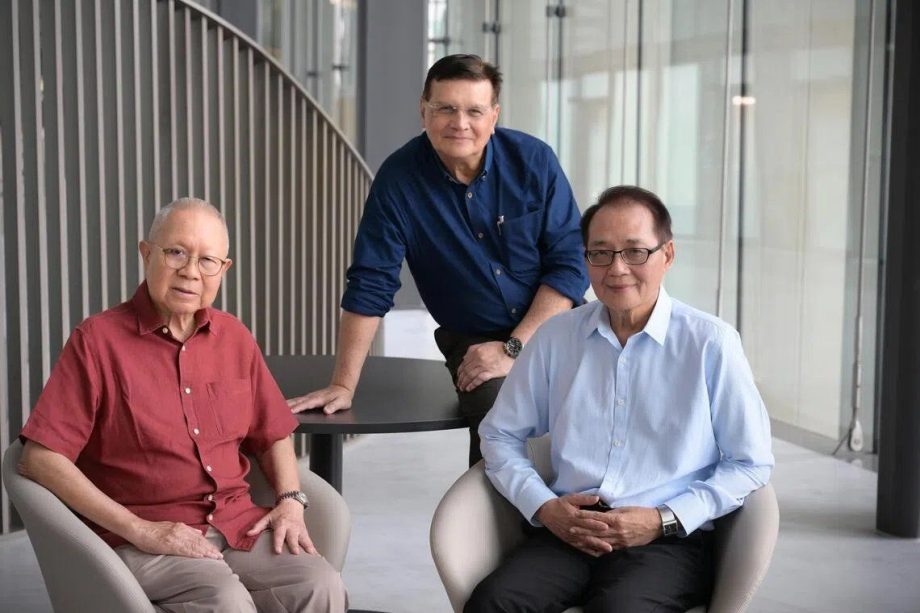
That Lee and other government leaders counted on SID’s intel to make critical policy decisions is a point of pride for three former SID directors, whom the secretive agency made available for media interviews ahead of its 60th anniversary.
“We saw this first-hand: We provided the intelligence, (Lee) made the decisions, but those decisions were taken in real time, based on the information that we had given him,” said Ng, who served in SID from 1981 to 2013.
“So we really felt the responsibility and accountability to make sure that we gave him the best possible, most accurate intelligence and the most insightful assessments.”
On Sept 4, a closed-door ceremony was held to commemorate the agency’s 60 years of contributions to the Republic’s success.
At the event, Prime Minister Lawrence Wong said Singapore’s external intelligence agency played an important role at critical junctures in the city-state’s history, and also at moments that “may never enter the public record, and will not be discussed, even in a closed-door setting like this”.
Among the policies that SID has helped shape is Singapore’s society-wide response to terrorism, said the three veterans.
The Sept 11, 2001 attacks by Al-Qaeda and the detection of the Jemaah Islamiyah (JI) network here in the same year sounded the alarm that terrorism was a very real danger to Singapore.
Senior leaders in Government realised that a fundamental shift had occurred. “This was no longer a policeman’s problem but a problem of strategic proportions,” said Ng.
He recounted how the agency “furiously” ramped up its counter-terrorism coverage in those years, and issued a series of assessments explaining the situation to the Cabinet.
SID argued that Singapore needed a far bigger and more strategic response, and it made logical sense “to go upstream way before these elements became tangible, concrete threats”, Ng added.
Once radicalised individuals were detained, there also had to be a framework to rehabilitate them with the help of community and religious leaders, he added.
All this would come to pass. In 2002, the authorities started the Inter-Racial and Religious Confidence Circles to build understanding between different ethnic and religious groups at the ground level.
Read Full Article At Source