TASHKENT – A free trade agreement (FTA) between Singapore and Uzbekistan could help reduce uncertainty in an unfamiliar market for local companies, while opening up opportunities in services, investment and selected goods, Senior Minister Lee Hsien Loong said on Aug 31.
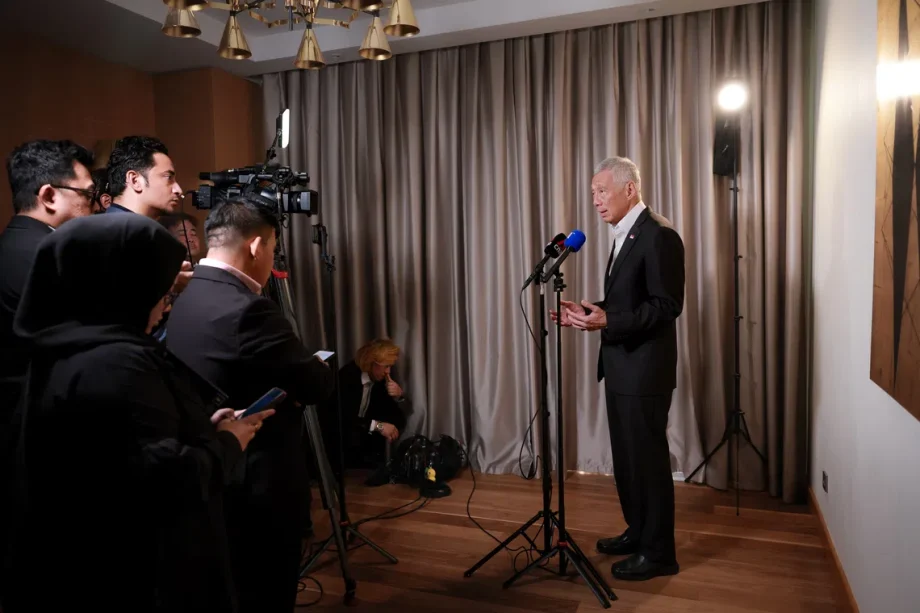
While trade and investment between the two countries remain relatively low, there is potential for growth in areas such as infrastructure projects, consultancy, IT and education, Lee told Singapore reporters in the Uzbek capital as he wrapped up his first official visit to Central Asia.
“For many Singapore companies, Uzbekistan is not a familiar market. They don’t know how it works. They are not sure, so they think that the uncertainty is high,” he said. “So they think there is risk, and if you have an FTA, it will help to de-risk.”
More broadly, Singapore’s economic links with Central Asia could grow four or five times over the next decade, Lee said, pointing to Changi Airport Group’s interest in an airport project in Astana, the capital of neighbouring Kazakhstan, as one potential opportunity.
He also touched on nuclear energy, saying what he saw on the trip confirmed Singapore’s assessment that nuclear may have to be part of the energy mix as countries shift from planet-warming fossil fuels to renewable energy.
On Aug 28, Singapore and Uzbekistan took the first formal step towards beginning negotiations for an FTA, signing a joint statement to formalise their intention.
Uzbekistan is the most populous country in Central Asia, with more than 38 million people, and has sought to attract more foreign investment as it opens up its economy.
Asked what such an agreement could achieve, Lee said there was some potential despite the relatively low volume of trade and investment between Singapore and Uzbekistan.
Trade in goods would be more challenging because the geographical connections between the two countries are not direct, he said, though there could be opportunities for high-quality Uzbek fruit and fresh vegetables to be exported to Singapore if flight connections were developed.
Uzbekistan exported about US$2.1 billion (S$2.7 billion) worth of fruit and vegetables in 2025, including grapes, raisins, peaches, cherries, onions and cabbage.
Trade in services offers additional possibilities, such as infrastructure projects, consultancy, IT and education, as companies explore investment opportunities in Uzbekistan.
As an example, Lee cited an agreement signed during his visit between an Indorama-Wilmar joint venture and the Uzbek government for a major agrotech project in Tashkent.
An FTA usually includes some element of investment guarantee, Lee said. If these guarantees could go beyond World Trade Organization (WTO) norms, they would provide extra reassurance to Singapore companies looking to do business in Uzbekistan.
Read Full Article At Source