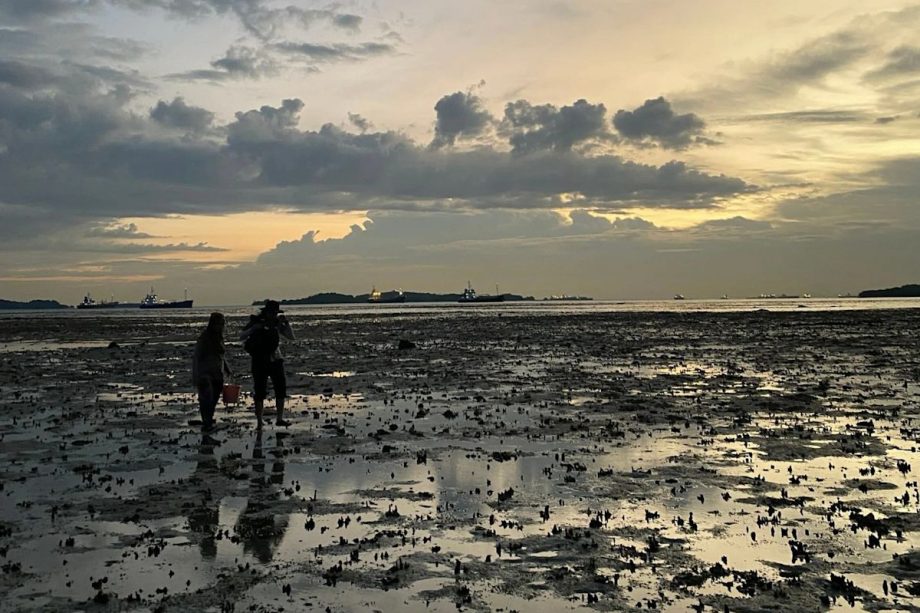
SINGAPORE – Nor Syazwan Abdul Majid remembers, as a child, scraping through the sands of Changi Beach with his mother to look for seafood like mussels and clams.
For Syazwan, now 29, foraging along Singapore’s shores is more than just a hobby. It is a tradition that tethers him to the Ubin Orang Pulau (Malay for people of Pulau Ubin) community.
His mother grew up as part of the island’s community and lived on Ubin for 20 years until 1979, when she moved to the mainland after getting married.
Today the community does not forage for sustenance, but to keep its tradition alive, he said.
However, crocodile sightings in local waters have deterred Syazwan and his mother from foraging for the past year.
Their hesitation only grew after a group caught flak in July for collecting a large haul of marine life – including crabs and shellfish – from Changi Beach and taking it to a restaurant to be cooked and consumed.
While the restaurant, Havelock Palace, apologised, some people online and members of nature groups called for stronger legislation against unethical foraging in local intertidal areas.
There is currently no broad law against the practice, though the National Parks Board (NParks) has restricted it in select zones like Sungei Buloh Wetland Reserve and Chek Jawa.
Others noted its cultural significance and asked if a more “ethical” way of foraging could be sustainable.
The Straits Times spoke to different groups who have walked the shores to understand their practices.
Adib Adrisson, 33, said he had been “beachcombing” since he was seven.
It used to be a family activity as they lived near the beach, but Adib said he does it on a smaller scale.
The freelance writer said he takes what is “enough for my own consumption” which amounts to less than half a bucket. He also looks for shrimp, clams and crabs to feed his pet fish.
“I’m careful not to collect species that may be locally endangered, such as the ramose murex or noble volute snails,” he added.
Firdaus Sani, founder of non-governmental organisation Orang Laut SG, said he learnt to forage from his family.
He currently does so every few months with his family on Singapore’s offshore islands.
Read Full Article At Source