Singapore haze precautions: Coconut water, masks & care packs

Singapore haze precautions: Coconut water, masks & care packs


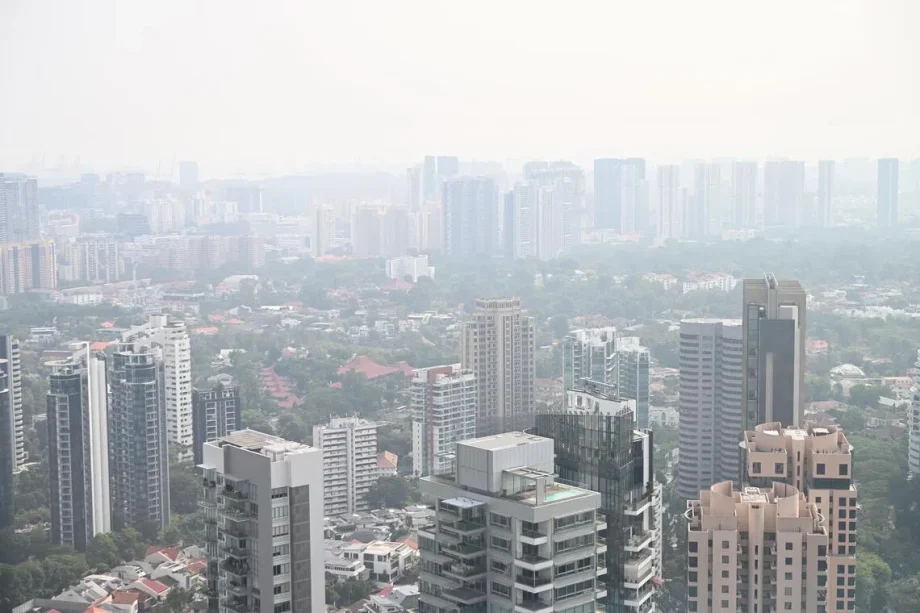
SINGAPORE – Organisations across Singapore are stepping up efforts to prepare vulnerable communities here for haze, as the region grapples with escalating air pollution caused by forest fires in Indonesia.

These include the preparation of a haze ward in a nursing home, the distribution of care packs to seniors and other vulnerable people by humanitarian organisation Singapore Red Cross, and pre-schools’ efforts to ensure that air purifiers and child-size masks are ready for deployment.

Several construction firms have pre-ordered N95 masks for their workers, while others are in the midst of identifying employees at higher risk of respiratory conditions.

These measures come amid worsening air quality in Singapore and Malaysia.

On Aug 25, the Pollutant Standards Index (PSI), a measure of air quality in Singapore, reached 99 in the central region at around midnight. A reading of 101 signals unhealthy air. Overnight, the PSI gradually fell. As at 9pm on Aug 26, the PSI was at moderate levels between 52 and 67.

Normal activities can be carried out when the PSI is in the moderate range. When the PSI hits unhealthy levels, healthy people should reduce prolonged or strenuous outdoor activity.

On Aug 25, 30 areas in Peninsular Malaysia and Sarawak recorded unhealthy air. Asthma cases there rose by 259 per cent earlier in August compared with previous weeks.

Land and forest fires caused by burning land for farming continue to choke Sumatra and Kalimantan in Indonesia. These fires are typical of Indonesia’s agroforestry landscape during the dry months of August and September.

But this year, the fires are likely worsened by the El Nino weather phenomenon, which is associated with drier-than-usual weather.

In a Facebook post on Aug 24, the National Environment Agency said dry conditions are expected to persist during the week. With winds blowing from the south or south-east, there could be occasional periods of haze affecting Singapore.

Winds blowing from the south send the smoke plumes to Singapore and Malaysia, causing air quality in these areas to deteriorate.

Amid warnings from meteorologists that this year’s El Nino event will be more severe than usual, the Singapore Red Cross has since April started distributing care packs targeted specifically to protect seniors against heat and haze.

The Singapore Red Cross had since April started distributing care packs targeted specifically to protect seniors against heat and haze.

The Singapore Red Cross had since April started distributing care packs targeted specifically to protect seniors against heat and haze.

ST PHOTO: LIM YAOHUI

The humanitarian organisation is looking to ramp up its existing home visits during the ongoing dry season with more check-ins with seniors from September, said Charis Chan, assistant secretary general for operations at the Singapore Red Cross.

Singapore Red Cross said its network of around 1,000 families, migrant workers and seniors will progressively receive the care packs comprising hydration supplies such as coconut water and easy-to-prepare food items like wholegrain drinks and crackers from Sept 16. With these packs, beneficiaries would not have to venture outdoors much during haze episodes.

“Our focus remains on early preparedness before any deterioration in air quality,” Chan added. “Through our distribution and outreach efforts, we hope to reach at least 10,000 individuals and equip them with essential items and information to better protect them from effects of haze.”

At the Thye Hua Kwan Nursing Home @ Tanjong Katong – which opened in Julya four-bedder “haze room” has been prepared. It has its own toilet, ventilation and air-filtration system to keep residents with respiratory conditions safe when air quality worsens.

The “haze room” at the Thye Hua Kuan Nursing Home @ Tanjong Katong.

The “haze room” at the Thye Hua Kuan Nursing Home @ Tanjong Katong.

PHOTO: THYE HUA KUAN NURSING HOME

At the other Thye Hua Kwan nursing homes and hospital islandwide, respiratory-support equipment and medications are ready, and non-urgent external appointments will be deferred where appropriate.

During haze or hotter weather, sessions conducted in the therapy garden may be moved to the rehabilitation gym in the hospital. Therapists may adjust the intensity of rehabilitation programmes and allow patients to rest longer, said a spokesperson for the hospital.

During poor air quality,  sessions conducted in the therapy garden may be conducted in the rehab gym.

During poor air quality, sessions conducted in the therapy garden may be conducted in the rehab gym.

PHOTO: THYE HUA KUAN HOSPITAL

At the 18 Little Olive Tree preschools, the air conditioning will be switched on the whole day when PSI reaches unhealthy levels instead of only during naptime, said its principal Regina Andal.

All 31 E-Bridge Pre-School branches have child-size masks and N95 masks for staff. When the PSI exceeds 100, children with pre-existing respiratory or heart conditions will not participate in physical exercise.

“If a child becomes unwell, the child will rest in an enclosed room with an air purifier operating,” said its director for brand and marketing Hannah Teo.

At E-Bridge preschools if the PSI exceeds 100, all outdoor activities would cease.

At E-Bridge preschools if the PSI exceeds 100, all outdoor activities would cease.

PHOTO: E-BRIDGE PRE-SCHOOL

Worksites are required to adhere to the Manpower Ministry’s haze guidelines and work advisory, which states that workers should use trolleys hoists to transport or carry heavy objects instead of manually lifting them when the PSI hits unhealthy levels. Tasks should also be rotated so that each worker spends less time outdoors.

At BHCC Construction’s worksites, preparations include identifying employees at higher risk of respiratory conditions and the types of outdoor work to be reduced when there is haze, said its corporate environmental health and safety manager Calvin Tan.

The company has pre-ordered enough N95 masks for seven days and will encourage employees to have 1.5 litres of water with them as they work, he said, adding that worksites have air quality monitoring systems in place.

Construction firm Hwa Seng Builder has been monitoring the PSI and conducting health talks for its workers. Its project director Lim Eng Boon said: “Since N95 masks can increase breathing effort and cause discomfort, tiredness or headaches, employees with health conditions are advised to consult a doctor before using them.”

The Ministry of Defence (MINDEF) and the Singapore Armed Forces will refer to the 24-hour PSI forecast to adjust the intensity of training and outdoor activities. Precautionary measures will also be taken to ensure the health and safety of all service personnel, said MINDEF.

The authorities have said that national N95 mask stockpiles are sufficient. Both Watsons and FairPrice outlets do not anticipate any supply concerns and are monitoring demand to replenish stocks.

Watsons said its sales of KN95 masks have at least doubled in the last two weeks, albeit from a relatively small base. It did not reveal figures. KN95 masks have ear loops while N95 masks are fitted with headbands. Guardian outlets have also seen a slight increase in demand for N95 and surgical masks in recent weeks.

FairPrice said: “We encourage customers to purchase only what they need for personal use, so that N95 masks remain available and accessible to everyone who needs them.”

Hazy conditions had also been recorded in Singapore between January and March this year, due to fires in Johor. Lim Wee Peng, medical director of Parkway Shenton, said there was a noticeable uptick in patients with sore throat, runny nose, eye irritation, as well as asthma and flare-ups in patients with pre-existing asthma and hay fever during that period.

“The key lesson from January to March is that even short-duration, moderate-level haze generates a measurable clinical signal,” he said.

The Parkway Shenton clinics have sufficient stock for respiratory medications including inhalers and antihistamines.

“Our doctors are briefed on the interaction between heat stress and poor air quality — the combination is more dangerous than either alone, because haze discourages outdoor hydration breaks while heat drives up respiratory demand,” Lim added.


Read Full Article At Source

Share. Save. Don't Miss The Buzz: XFacebookRedditLINETelegramWhatsAppGmail

Leave a Reply