This is an IGN opinion piece from Charlie Lopresto, who believes that love can bloom, even on a battlefield. He first encountered Metal Gear Solid on a demo disc from Pizza Hut and has since completed three hundred missions in VR– the kind that’s indistinguishable from the real thing.
Like Old Snake, Metal Gear Solid 4: Guns of the Patriots is a fossil. A genetic dead-end of gaming evolution, the unhinged and overflowing masterpiece that barely left a mark on the artform. Despite its commercial and critical success, MGS4 is rarely regarded as top tier Metal Gear. But is that actually fair?
Trapped on dead console hardware for the better part of its hard life, thanks to the new Master Collection Vol. 2 it’s finally possible for everyone to experience MGS4, from series diehards who first fired it up in 2008 to people completely new to Metal Gear who have absolutely no idea what they’re in for.
All of them will reckon with the many, many questions MGS4 brings to mind, like: Will we ever see a game like this again? Why did we stop talking about it? And, perhaps most importantly: MGS4 is really good, isn’t it?
“The Lightning in That Rain”
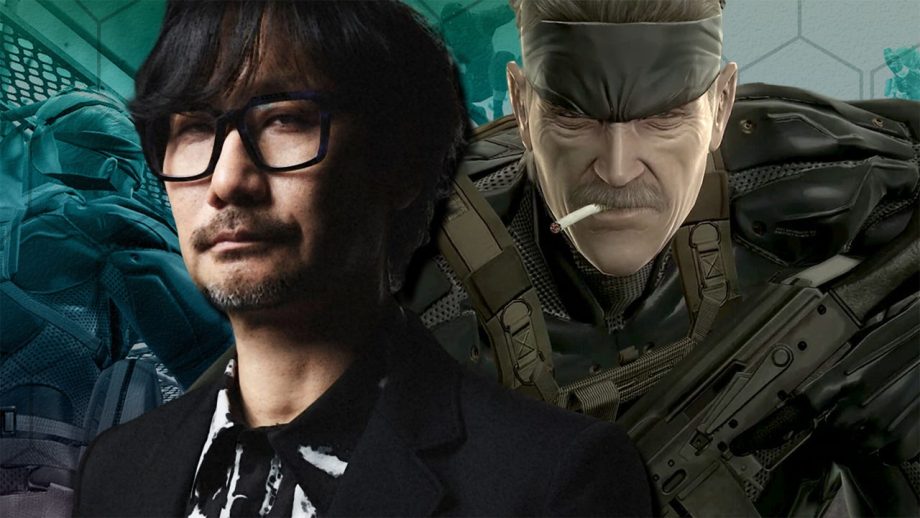
Hideo Kojima did not want to make Metal Gear Solid 4. He publicly declared his desire to end the franchise as early as MGS 2, then proclaimed that he was finished with the saga after Snake Eater. Kojima’s words were weary but his deeds said otherwise. He wasn’t really ready to move on– both of those games ooze with a sense of momentum and life.
Guns of the Patriots feels different. There’s a gloomy weight to the game, like a funeral – the raucous kind where friends, grudges, and flames gather to settle scores, awkwardly hook up, and celebrate the end.
Prior to MGS4, we’d last seen Solid Snake in 2001, when he dropped a prophetic monologue and vanished into the streets of lower Manhattan shortly after the former President of the United States crashed into the city with a giant sci-fi submarine. As situations go, it’s certainly one that begs for some followup, and after years of fans demanding the return of the Legendary Mercenary, Kojima obliged in trademark trolling fashion.

You don’t get the cocky, mech-smashing super soldier who slays Tengu by the dozen with a metafictional bandana. Kojima, who reportedly received death threats over his reluctance to move the story forward with MGS4, instead delivers a feeble, actively decomposing relic. Old Snake grunts, screams, coughs and gags wetly as he crawls in agony through his final mission, all for the privilege of being allowed to die before his poisoned blood wipes out humanity. Old Snake was punished before Punished was cool.
It’s a trope we’ve seen a lot lately: the beloved hero of a bygone age, bitter, broken down, and humbled, all in service of passing the torch to a spunky new recruit before the credits roll. But there is no Rey to don the cardboard box here, no Adonis Creed, no Robin, nor any kind of chipper next-gen protagonist queued to continue Snake’s legacy by selling some video games. Nearly everyone in Metal Gear Solid 4 is old, dead, or extremely married by the end of the story, a bittersweet and beautifully conclusive eulogy to a deeply heroic and thoroughly decrepit old man who reeks of cigarettes.
Modern media is designed to protect itself, to keep mythology marketable and leave endings open for future exploitation. Kojima does the exact opposite with MGS4, performing peaceful euthanasia on his life’s work to that point. It’s a brave move delivered with a lot of love and earnestness, and anyone upset at geriatric Snake were too busy feasting on a buffet of fanservice to stay mad for long.
Rarely do sprawling stories wrap up as neatly as Metal Gear Solid’s, even if “neatly” here means bursting at the seams and slightly slapdash. Kojima didn’t have a decades-long master plan when he made Metal Gear for the MSX in 1987, but managed to B.S. his way into satisfying answers for nearly everything. It’s an ambitious, messy, and sincere sendoff to Snake and the series. There’s really nowhere else to go from here.
Which brings us to the elephant in the room, dangling precariously from a Fulton balloon over this discussion: Guns of the Patriots is not the last Metal Gear Solid game. Despite his protestations, Kojima had two more Metal Gears in him: the portable Peace Walker, a numbered entry in all but name, and the tragic MGS5. Both respect the brick wall he built at the end of the timeline and tread water safely in the past instead of pushing forward. Kojima decided to move the series horizontally instead, experimenting with tech and form until Konami kicked him out.
Kojima’s actual final chapter, when it came, was compromised and ignominious, a casualty of his ugly exit from Konami and a sour note on which to end. Guns of the Patriots was Kojima ending things on his own terms; a bombastic epic with a massive budget that bursts with supreme confidence and unfiltered honesty. It would be the last time he ever made a game like this.
Read Full Article At Source