Gaming has never been more expensive. We’re here to investigate why, and help you play more while spending less. Welcome to GameSpot Cheap Week.
It’s a time of change in the gaming industry and nowhere is that more evident than the prices of games. What was once a fairly standard number has become incredibly variable, from ultra-cheap games like Vampire Survivors and Peak to pricey blockbusters like Mario Kart World and the upcoming Grand Theft Auto 6. For Cheap Week, we wanted to take a closer look at how publishers set their prices, and the potential impact that different pricing strategies can have on a game’s success.
The state of video game prices
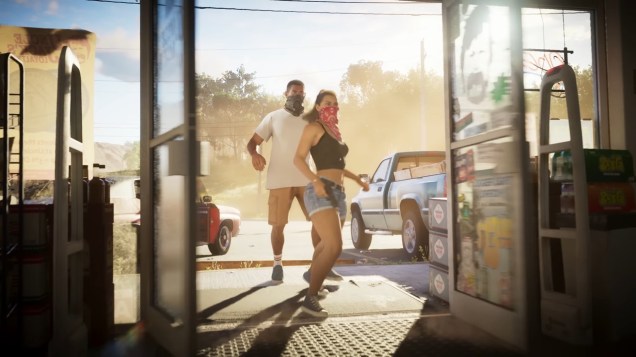
With some notable growing pains, the industry has widely adopted $70 USD as its default price point for new AAA releases. That appears to be the status quo for the foreseeable future, with a few notable exceptions. Mario Kart World launched at $80, a higher asking price that seemed aimed at pushing players toward the Switch 2 bundle that packed it in for the equivalent of just $50. And Grand Theft Auto 6 will be priced at $80 for the standard edition. It’s possible that other publishers will follow suit, but, for now, GTA 6 seems like a special case–essentially, Rockstar knows it has a generational event on its hands, so it can get away with asking for an extra 10 bucks.

One aspect that is contributing to price fluctuations is the stratification of the game business more broadly. Former PlayStation boss Shawn Layden recently pined for a return to the days of AA gaming–a space for smaller projects within the traditional publisher system that don’t need to be huge blockbusters.
Layden is correct that the space for games with a smaller scope has diminished, and is less common than it once was. The push for publishers to maximize profits has created a multitude of downstream effects, not least of which is a striving for bigger games that will turn into huge blockbuster sellers. But while AA development has diminished, it certainly hasn’t disappeared. Mid-tier publishers like Atlus, Saber Interactive, and THQ Nordic have taken up the mantle to make games at a lower budget, expecting a lower return on investment. That includes entries in smaller or more niche franchises like Warhammer 40,000: Space Marine 2, Turok Origins, and Wreckfest.
Larger publishers have grown more risk-averse, but there are exceptions. Capcom launched a new unproven franchise this year with Pragmata, and has already said it was successful enough to warrant a sequel. That’s a hopeful sign that more publishers will make space in their budgets and workflows for smaller games.

The AA space means there’s still room for games to launch at a lower price, without being the smaller scope associated with indie PC games. Pragmata launched at $60 instead of the $70 that is becoming increasingly the norm for big-budget games. Nintendo, similarly, has been experimenting with more price variety. It recently launched both Star Fox and Splatoon Raiders at $60 for physical copies, but $50 for their digital editions. (Then again, Nintendo’s prices are stubbornly fixed, and even much older games will retain their launch MSRP for years.) And one of the advantages of Game Pass in its heyday was the notion that it would help keep the AA space thriving by offering them as part of an all-you-can-eat model.
Then there are smaller and independent games, which largely release only on digital marketplaces, sometimes with physical editions put out post-launch by boutique publishers. This is the space with the widest range of prices, since the scope of the games is so variable. You might find a smaller indie game for just $5 or even less, while larger games or established franchises could be as much as $40. Hades 2, which was essentially indie game royalty, was priced at $30–an invitingly low price point for a fantastic game, but a savings compared to most games in the AAA space. Bigger publishers have also been known to dabble in these price points, like in the cases of Marathon or Helldivers 2, both of which Sony published at $40.
Lucy James of the curation newsletter LookingFor.Game (and former longtime GameSpot producer) says she’s noticed that AAA publishers are experimenting with lower prices, not higher ones. “I’d say most of the interesting stuff happening in pricing right now is definitely within the AAA space: companies toying with the price increases on some games but not others, like Nintendo, or releasing games that previously would have been $60 at $50 or $40.”
Similarly, the indie market is a fertile ground for trying out different price models, especially in particular genres. Friendslop, as it’s been called, has been especially popular for a low-price, low-risk price point that’s meant to be inviting for new players.

“You see a lot of ‘friendslop’ games launch in the $5-$10 region,” James said. “It’s an enticing lower price point, less than the cost of a movie ticket, and it can easily be an impulse purchase. $70 or $80 games cause you to take a beat and really consider if this purchase is going to be ‘worth it.’ With cheaper games, the perceived value is lower, so it’s less of a big deal if you drop the game shortly after buying it, or just let it sit in your backlog.”
So in broad terms, this is the modern state of the video game industry. Smaller, usually independent releases on digital storefronts have a wide range of low prices from $5 to $40, depending on their scope and what they can demand. AA games, remakes, and new releases with a more niche audience are $50 and $60. And AAA blockbusters are mostly $70, with the occasional $80 price point.
But how did we arrive at this point, and what goes into these pricing decisions?