Despite first hitting storefronts a decade ago, Stardew Valley still remains king of the farming simulators. Solo developer Eric “ConcernedApe” Barone struck gold when he took the formula established by games like Harvest Moon and improved on just about every facet, weaving charming visuals and music with a rewarding gameplay loop that sees players restore a rundown farm–and town–to its former glory. Since then, many similar games have strived to achieve the same level of ubiquity to varying degrees of success, but 10 years of improvements and updates on an already stellar Stardew experience means most players haven’t had a reason to leave Pelican Town behind. However, one of the latest challengers to the crop collecting crown, Fields of Mistria, feels primed to change everything.
After two years in early access, NPC Studio’s debut title has officially entered 1.0 and is already garnering critical acclaim. And though there’s plenty to love about about Fields of Mistria, its willingness to lean into and remedy some of Stardew Valley’s most glaring weaknesses–weaknesses like its story, surface-level relationships, dearth of diversity, and lack of a world that feels truly connected–make it one of the first farming sims that feels like a true contender against Stardew Valley.

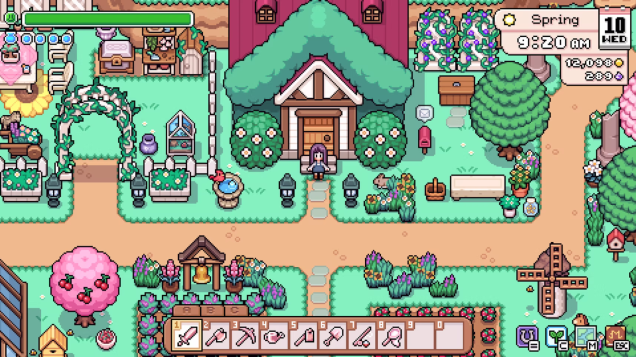
Fields of Mistria has a lot of the gameplay elements invented by Harvest Moon and perfected by Stardew Valley. You move into an abandoned farm and introduce yourself to the two dozen or so characters, many of whom you can romance; You go through four 28-day seasons and attend events and give gifts; You enter the mines to collect ore and fight monsters; And, naturally, you farm. Besides the immediate hit of anime-inspired visuals–the town leader’s pastel-colored hair and bevy of glittery accessories look more like Sailor Moon than Harvest Moon–it might seem like little more than another copycat. It doesn’t take long for those feelings to melt away though.
Early on in my playthrough, I donated a worm to the town Museum. The next day, a villager commented on just how bewildering that action was. A few days later, I responded to a simple quest to deliver some copper ore to the town’s cranky blacksmith. A few hours after turning the materials in to him, I ran into his older brother, who thanked me. In the city square, NPCs engage in conversations amongst themselves that you can listen in on, while a weekly game of D&D at the inn gives you a look at various group dynamics.