Think Singapore is just a nation of people working typical corporate jobs? Introducing Stomp’s new original series, Don’t Try This At Work, where we spotlight individuals with risky, exciting, unconventional and even downright terrifying jobs.
From embalming dead bodies to handling bees by hand, the series offers a behind-the-scenes look at occupations most people would never dare to try — and the people who do them every single day.
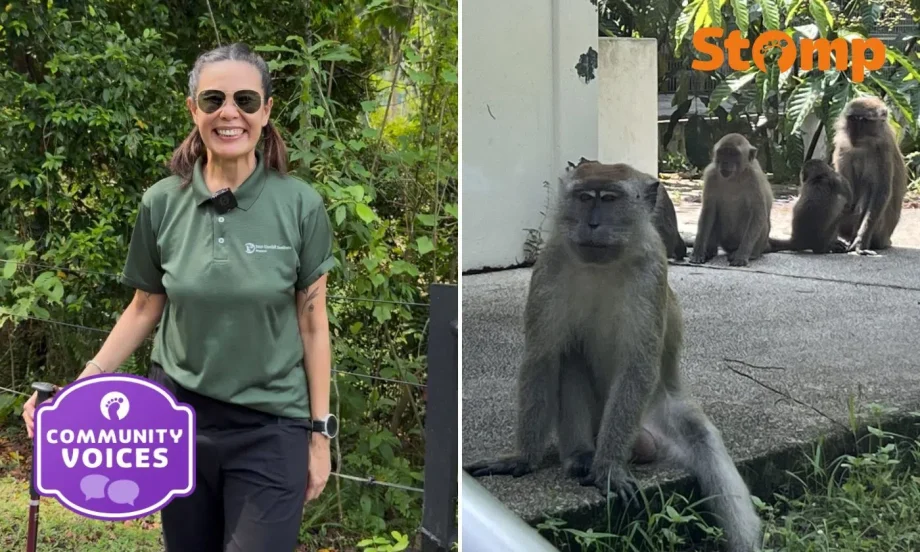
As a preschool teacher, Hani Kader spends her weekdays caring for children. When she’s not at work, however, the lithe 54-year-old can be found helping to keep long-tailed macaques safe — even though the job comes with risks.
Since 2024, Hani has been a volunteer monkey guard with the Jane Goodall Institute (Singapore) (JGIS), guiding monkeys away from roads and residential areas, and educating the public on how to interact with the creatures — often labelled as “pests” and overly hostile.
Macaques may get a bad rap for being aggressive, but Hani assured it’s only because they’re protective of their troop.
While her monkey guarding sessions usually go without incident, she recounted one scary experience she’ll never forget.
Scroll to continue reading
While patrolling Upper Peirce Reservoir some time ago, she found herself caught between two fighting macaque tribes. She kept her distance, but an alpha male suddenly locked eyes with her. In her words, Hani said it was an “accident” that should not have happened, as macaques may interpret direct eye contact as a challenge.
“He looked at me, I looked at him… suddenly he started running towards me with the whole troop behind him,” she recalled.
After she had sprinted some distance away, she turned and realised the monkeys had stopped giving chase. Soon, each tribe departed for their respective part of the forest.
Although the encounter left her shaken, it didn’t affect her commitment to the cause.
She returned to monkey guarding the very next weekend.
Changing perceptions about Singapore’s macaques
Her motivation to continue volunteering with the nonprofit is simple: she loves any and all animals.
“I wanted to know more about monkey guarding and how I could protect monkeys from being abused, beaten or having stones thrown at them.”
She first discovered the volunteer opportunity after seeing a recruitment post on JGIS’ Instagram page. Now, two years on, she volunteers about twice a week, helping the institute to collect data on monkey sightings.
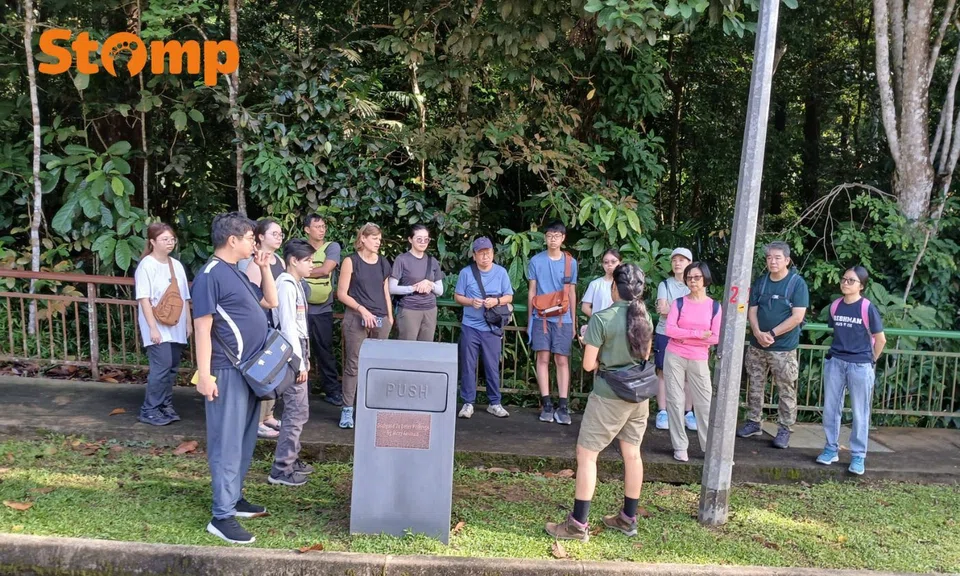
Volunteers go through a training session to understand what they can expect and what they should do on a regular monkey guard patrol.
PHOTO COURTESY OF HANI KADER
Stomp joined Hani on one such patrol session at the residential area near Bukit Timah Nature Reserve on a warm Thursday afternoon in July.
The patrol involved checking for “positive reinforcement” — feeding or food left in accessible areas — and carrying along “negative reinforcement”.
The latter takes the form of a walking stick, which Hani will bang on the ground to create noise that guides monkeys back into the forests.
The 54-year-old told Stomp that monkeys do not wish to disturb humans, and that a primary source of human-monkey conflict is human feeding, which the primates can grow reliant on.
“Every time they see someone carrying a plastic bag or backpack, they’ll think there’s food inside. When they don’t get it, that’s when the snatching happens.”
Hani and JGIS’ executive director Carmen Pang, who was also present during the interview, shared a video of a monkey uncovering an unmarked plastic package at Dairy Farm Nature Park.
They ultimately discovered that the package did not contain food, but cigarettes.
Pang said the team observed the monkey sniffing and biting “a little bit” into one cigarette before proceeding to toss the package. Such incidents risk not only complaints of monkeys “littering” and causing a nuisance to parkgoers, but also nicotine poisoning to the macaque if ingested.
This is where the public education aspect of Hani’s volunteer role comes into play. When she sees anyone feeding monkeys, she will put on her “bestest” tone to remind them not to feed monkeys.
“Nine out of 10 people will apologise and stop,” she said. “But there’s always one who will say, ‘They’re hungry what.’”
Despite the pushback she sometimes receives, Hani was cheerful and friendly as she patrolled her usual route — greeting and making small talk with residents, security staff from the nearby condos and even the occasional cyclist.
She emphasised how important it is to build trust with the community, as speaking to them helps inform her of recent monkey sightings or incidents.
Recognising kindred spirits in ‘mummy monkeys’
Hani, who is a single mother to her 19-year-old son, tears up as she recounts road accidents involving macaques.
She has seen mother monkeys cradling the bodies of babies killed by vehicles back into the forest to grieve. According to Hani, the families will grieve for a few days, before leaving the dead body by the side of the forest.
“Losing a child is every mother’s nightmare,” she reflected.
“When I see a mummy monkey carrying her (dead baby) back into the forest, I think it is very sad — no, I know it is very sad.
“Can you imagine if that was my child? I cannot imagine,” Hani added, highlighting the importance of remembering that monkeys are social animals who grieve and love their families as humans do.
“Watching them taking care of one another warms my heart,” she said.
In Hani’s words, she is still trying to regain the confidence and self-esteem she had lost after two divorces, and watching the macaques “fight to survive” is inspirational.
“I should be strong too. If even a macaque can be so resilient, so can I.”
‘As long as the monkeys need me’
One misconception she and JGIS hope to correct is that the Republic has “too many” monkeys.
“We usually see them only because we’re near forests. This is their home,” she said, gesturing to the trees around the nature reserve.
Far from overpopulation, the long tailed macaques native to Southeast Asia are endangered, according to the International Union for Conservation of Nature.
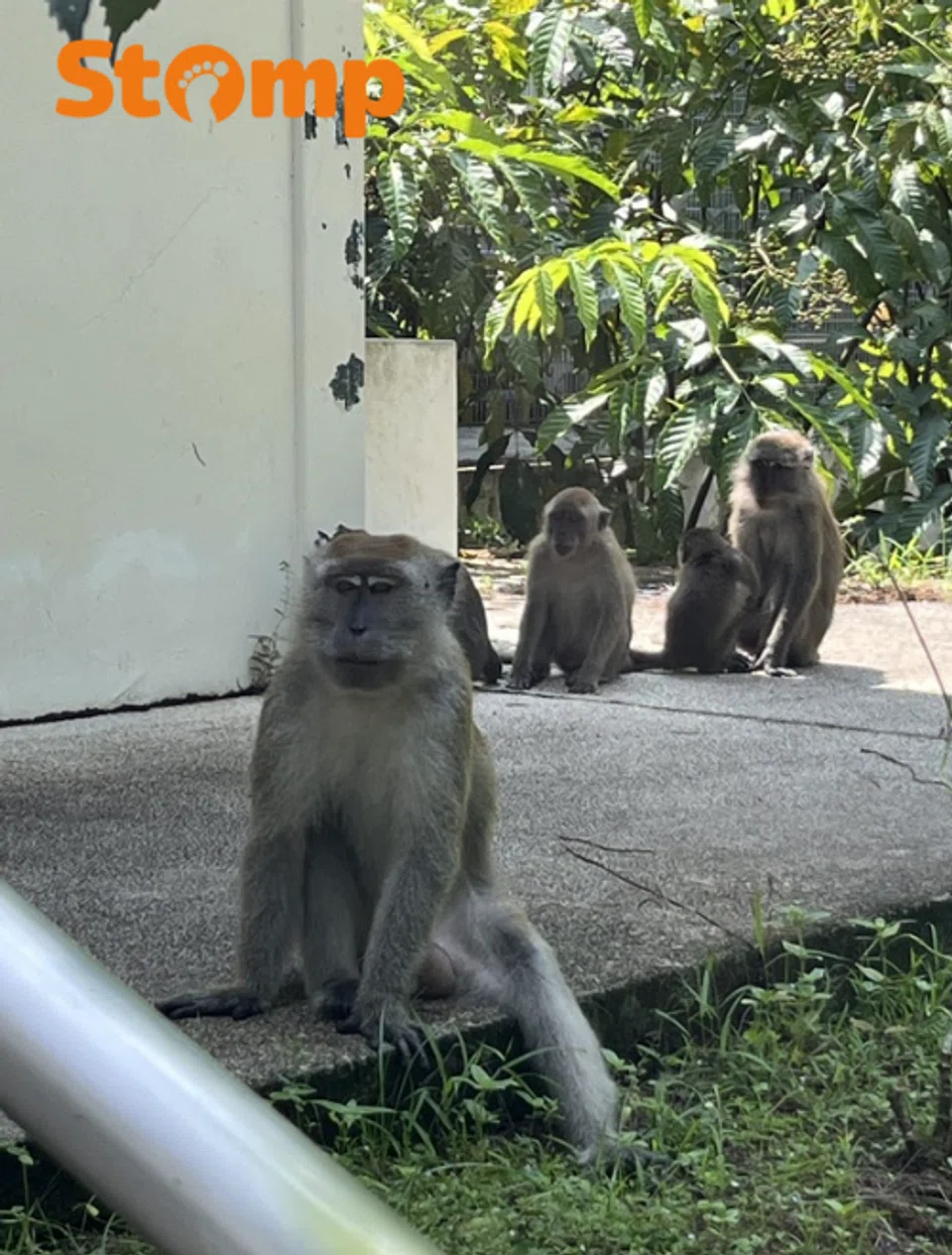
Long tailed macaques are on the International Union for Conservation of Nature’s red list of endangered species.
PHOTO COURTESY OF HANI KADER
While Hani’s role as a monkey guard is solely voluntary, its rewards are immeasurable as every patrol contributes to conserving the species.
“When I see the monkeys safely returning to the forest with their families, I’ve done my job,” she said.
When asked how long she plans to continue monkey guarding, her answer comes without hesitation: “For the sake of the late Jane Goodall, I’ll continue monkey guarding for as long as I can.”

Have something to say? Join in!
Explore more on these topics
See something interesting? Contribute your story to us.
Read Full Article At Source