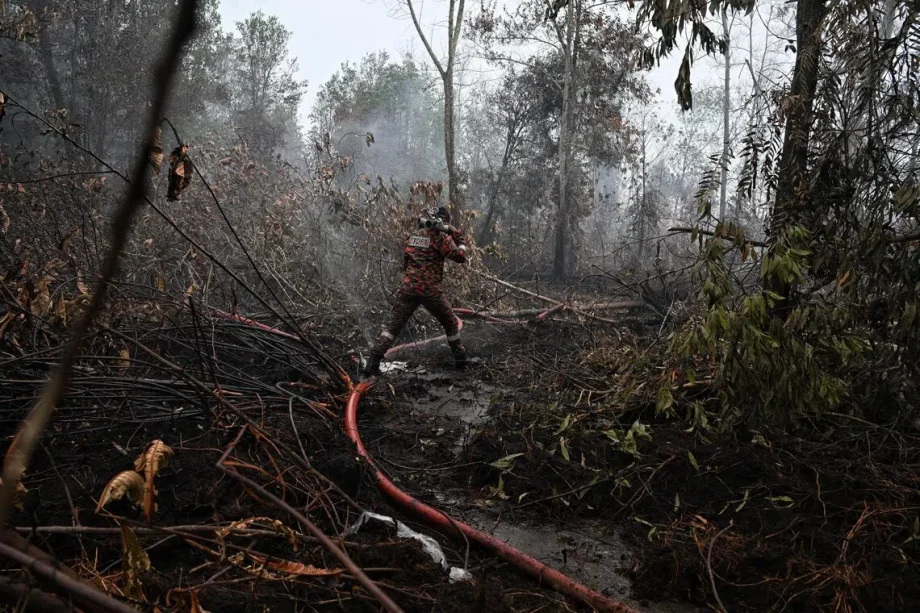
SINGAPORE – Dry conditions that have worsened fires in the region are expected to persist this week, raising the risk of haze over Singapore.
On Aug 9, the Republic’s haze task force announced its readiness to roll out plans after the 24-hour Pollutant Standards Index (PSI) entered the moderate range in central Singapore in the afternoon.
Following the recent warning of the possible return of hazy weather, The Straits Times looks at what residents need to know to protect themselves.
How worrying is the recent haze outlook for Singapore?
Singapore is among the southern South-east Asian countries at high risk of severe haze affecting the region for the rest of 2026. These conditions are expected to peak from August to September, according to think-tank Singapore Institute of International Affairs.
This is due to unusually hot and dry weather, fuelled by an intensifying El Nino climate phenomenon.
El Nino occurs when the atmosphere reacts to a sustained warming of the Pacific Ocean’s surface temperatures above average levels, bringing less rain, longer dry spells and higher temperatures to South-east Asia.
Scientists have warned that the 2026/2027 El Nino could become a “Godzilla” or Super El Nino, with temperatures in the tropical Pacific warming rapidly.
El Nino events tend to have the greatest bearing on Singapore’s rainfall during the dry south-west monsoon season from June to September.
Past moderate-to-strong El Nino events over the last 30 years have resulted in 40 per cent to 80 per cent less rainfall in parts of Singapore for some months.
These drier and warmer conditions worsen the region’s peatland and forest fires, which are the main drivers for transboundary haze experienced in Singapore.
The National Environment Agency (NEA) on Aug 9 said the dry conditions that escalated hot spots in Indonesia’s Sumatra and Kalimantan are expected to persist in the coming week, increasing the risk of haze if the fires persist.
Under prevailing southeasterly winds, smoke haze could be carried to Singapore, especially from the hot spots in the southern parts of Sumatra.
For 2026, the confluence of El Nino and the potential development of another climate phenomenon called the positive Indian Ocean Dipole could prolong the dry season and extend it into October. A positive Indian Ocean Dipole is similar to El Nino, but develops in the equatorial Indian Ocean.
Read Full Article At Source