SINGAPORE: A couple sued the builder of a condominium in Serangoon North, claiming that vibration-causing construction works that took place over more than two years had damaged their house across the road.
The builder, L S Construction, offered some repairs out of goodwill, patching up cracks and water seepage at the house, but the pair said the patched-up areas were “uneven and ugly”.
The married pair, Mr Soh Chuan Swee and Madam Tok Beng Kee, sued the construction firm for performing the vibration-causing works and the repair works negligently.
However, in a judgment made available on Saturday (Oct 4), a judge threw out the suit, saying the claimants had failed to prove that the construction firm had performed either set of works negligently.
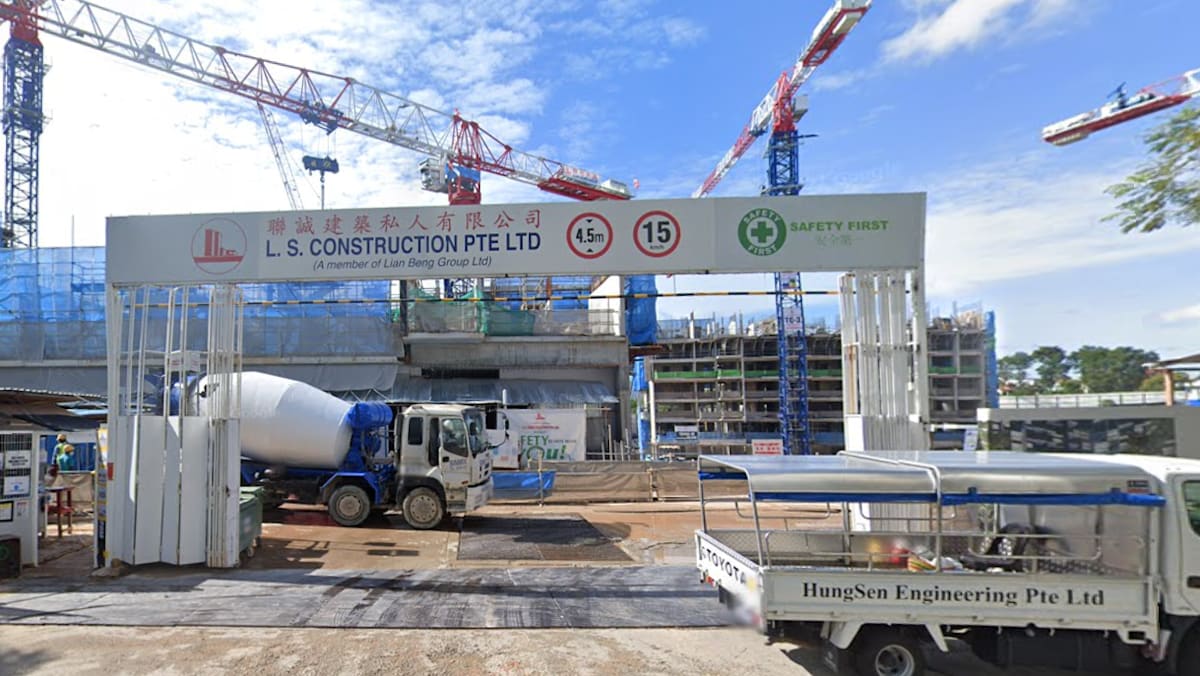
According to the judgment, the defendant was constructing “Affinity at Serangoon”, a residential development comprising apartments and strata landed houses in Serangoon North Avenue 1.
The claimants live across the road from the construction site, in a house that was built between 2017 and 2018. There was a distance of around 12m between the site and the house.
Before the construction works began, a pre-condition survey of the claimants’ house was conducted in October 2018 and showed that the house was generally defect-free at the time, although there were cracks observed in the walls and tiles.
In November 2018, the builder began demolition works at the construction site to remove the existing buildings, before carrying out piling works in 2019 followed by I-beam installation and extraction works from 2020 to April 2021.
I-beams are steel structures shaped like the letter “I”, used for various purposes in construction.
According to the claimants, they first noticed damage to their house in October 2019, about two months after the piling period and before the I-beam period began.
This included cracks in a wall, glass blocks and floor tiles at their front porch, which resulted in water seeping through the cracks when it rained.
According to WhatsApp texts, the builder offered to perform repair works for the claimants after its employee inspected the claimants’ house.
Based on a letter dated Jan 7, 2020 from the defendant to the claimants, the offer to perform the repairs was made on a “without prejudice and without admission of liability basis”.
Before this, the claimants did not complain about any damage arising from the vibration-causing works. While the claimants pointed to dust that had gone into their house during the demolition period, and possible inadequacies in the barriers and netting installed at the construction site, this had nothing to do with the alleged damage caused by the vibrations, said District Judge Samuel Wee.
VIBRATIONS CRACKED FLOOR, MADE LIGHT SWAY: CLAIMANT
In March 2020, Mr Soh experienced vibrations in the house that allegedly caused cracks in the granite floor. This was when the builder was extracting I-beams from the ground.
Mr Soh testified that the vibrations were so strong that one of the lighting fixtures in his house started swaying vigorously over three days in March 2020.
Judge Wee said that while Mr Soh submitted video footage to support this, the footage was “not helpful” as it simply showed some swaying of the lighting feature, which could have happened for a variety of reasons given its dangling design.
The builder produced monitoring reports that showed that the vibrations at the perimeter of the construction site were lower than 2mm/s and within the limit of 5mm/s.