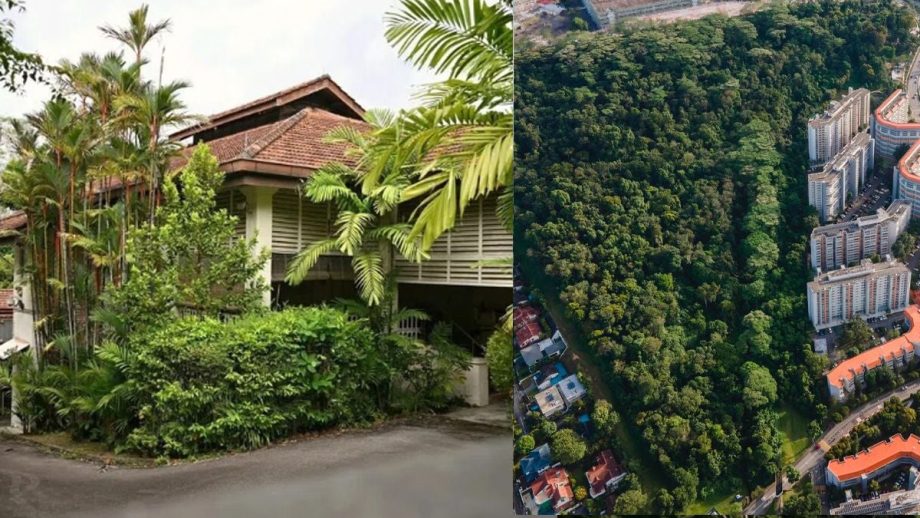
On 31 July, the government took possession of 38 Oxley Road. The Singapore Land Authority and the National Heritage Board didn’t need to explain themselves twice.
The property had been gazetted a national monument in December 2025, over the written objection of its owner, Lee Hsien Yang, who told the Prime Minister’s Office in plain terms that his late father wanted the family house demolished — a wish Lee Kuan Yew had stated, by the government’s own account, “clearly and unambiguously” throughout his life.
Ministry of Culture, Community and Youth of Singapore (MCCY)’s answer to that objection was one sentence: the decision “is made in the public interest, and goes beyond the personal preferences of any individual.”
“Preserving the Site will allow current and future generations of Singaporeans to reflect upon significant events in our nation’s history that took place there, and the ideals and values that have shaped Singapore.” — MCCY on gazetting of 38 Oxley as a National Monument
Fine. Let’s take the government at its word.
If a single bungalow’s historic significance is sufficient to override the express wishes of the man who built its legacy and the family that owns it — if “public interest” is a strong enough instrument to survive that — then the principle is established. Public good can outrank private preference in Singapore. The government didn’t hedge this. It said so, in an official release, and then followed through with compulsory acquisition.
Now put that principle beside two other sites the government is currently deciding on. Maju Forest is the regenerating secondary forest along the old Jurong railway corridor in Clementi, within the Housing Development Board (HDB)’s Sunset Way study area. Gillman Barracks is the former British military site in Alexandra — now known for its arts and heritage precinct — whose Environmental Impact Assessment (EIA) study area contains its own stretch of native-dominated secondary forest, connected to the wider Southern Ridges green corridor.
Different histories, different site names, but the same question sitting under both: HDB has proposed housing on land its own commissioned scientists say carries serious, largely irreversible ecological cost. For simplicity, this piece refers to them from here as the two forests.
To be clear about what’s being compared here: a Preservation Order under the Preservation of Monuments Act and an HDB development decision are different statutory instruments, built on different tests, answerable to different processes. Nobody is arguing NHB’s gazette power should apply directly to a forest, or that an environmental rating and a heritage assessment measure the same thing. That’s not the claim.
The claim is narrower, and harder to wave away: both processes rest on the government’s own expert bodies identifying an exceptionally weighty public interest — in one case sufficient to override a family and a founding leader’s will outright, in the other, apparently, insufficient to outweigh a housing timeline. The instruments differ. The pattern of whose findings get deference and whose get managed does not.
The consultants HDB commissioned rate the loss of native secondary forest at both sites at the highest severity category their assessment framework allows.
Read Full Article At Source