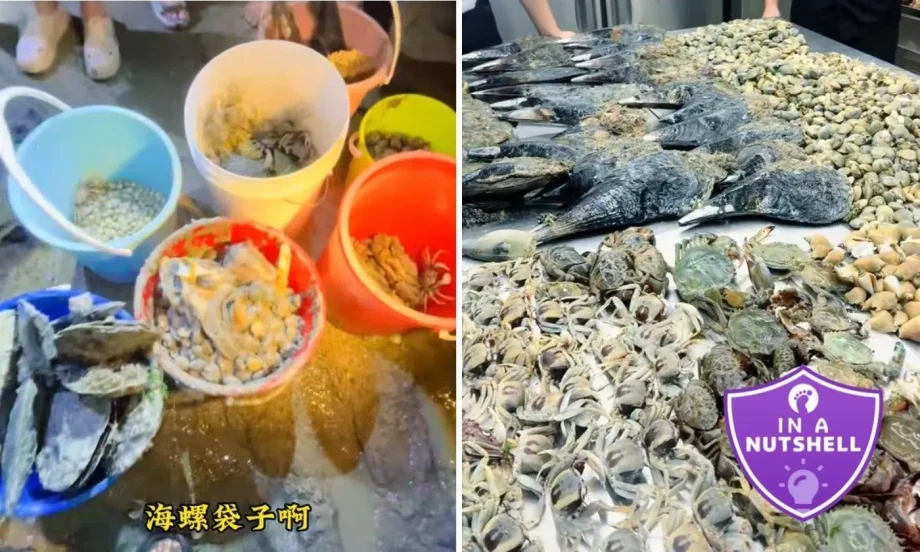
Videos of groups armed with buckets, nets and shovels combing Singapore’s shores for marine animals have recently gone viral, sparking concern among nature groups.
The activity, known in Chinese as “gan hai” (赶海), has surged in popularity on social media platforms like Douyin and Xiaohongshu, where enthusiasts share videos of themselves foraging for seafood and other marine creatures along beaches at low tide.
Also known as intertidal foraging, the practice may seem like a harmless seaside pastime, but conservationists warn it can disrupt fragile coastal ecosystems and harm marine life if done irresponsibly, particularly given Singapore’s limited marine habitats.
Here’s what you need to know about the gan hai phenomenon — what it is, how it works and whether it is legal in Singapore.
The viral trend involving people digging for seafood
The trend has reached Singapore’s shores, with a recent wave of viral videos drawing large crowds to the country’s beaches.
Scroll to continue reading
A Facebook post shared on the Complaint Singapore page on July 13 raised concerns about the growing practice after Douyin videos showed groups of people foraging for marine life in Singapore’s intertidal areas.
The post included videos and photos showing a large group of people armed with buckets and nets foraging along Changi Beach. At least seven buckets filled with marine creatures could be seen in the footage.
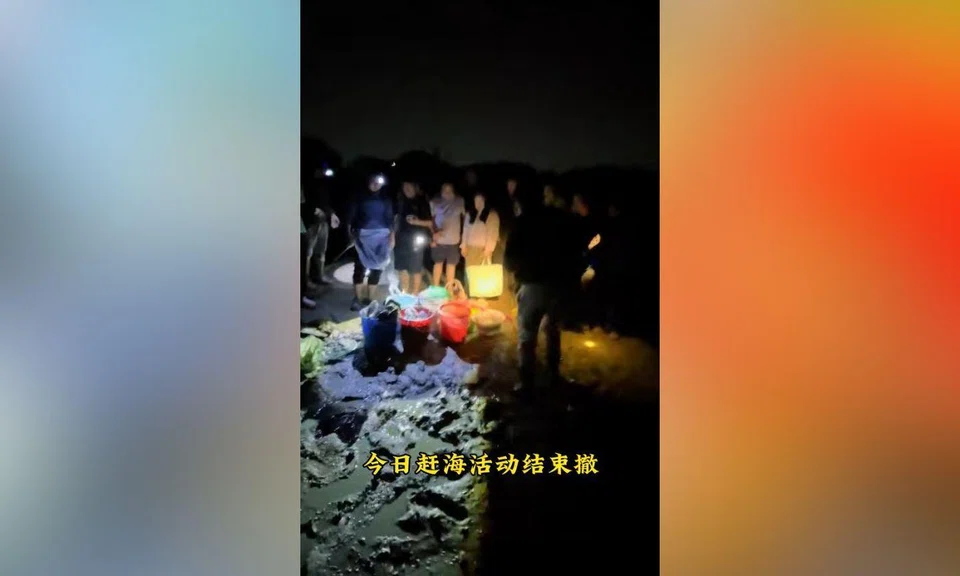
At least seven buckets filled with marine creatures could be seen in the footage.
PHOTO: COMPLAINT SINGAPORE/FACEBOOK
They later brought their harvest to the Havelock Palace restaurant, where it was cooked and eaten.
The user said they were not opposed to coastal foraging itself, but were concerned about the “frequency of their visits and the volume of marine wildlife they harvest during each trip.”
They added that they were particularly concerned by the number of fan clams being harvested, noting that the species is listed as vulnerable on Singapore’s Red List of threatened animals.
Citing the Douyin videos, the user said the group appeared to have harvested at least 30 fan clams before later “(celebrating) their catch” at the restaurant.
“Singapore’s natural resources are limited. Whether local or foreign, everyone should respect our environment and practise responsible foraging. Take only what you need, and leave enough for nature to recover,” they wrote.

Read Full Article At Source