Claudia Ruth Selvakumar spent her secondary school years focused on one thing: improving her grades.
When the N-level examinations ended, she had to choose what to study next. “I was suddenly presented with so many choices and I had to make a decision,” Claudia, now 24, recalls. “It was very difficult.”
She enrolled in electronics engineering at the Institute of Technical Education (ITE) College Central in 2019 – a course she chose because of her results and the prospect of a stable income.
But she had little interest in electronics engineering. “I felt like I was in limbo,” she says.
A conversation with a senior in 2020 set her on a different path. Claudia learnt that she could apply for a different course in polytechnic.
Having organised community events as a student councillor in ITE, Claudia knew she enjoyed working with and helping people. She took the leap, and successfully applied to study community development at Ngee Ann Polytechnic.
“It was the first time in my life I enjoyed what I studied,” she says.
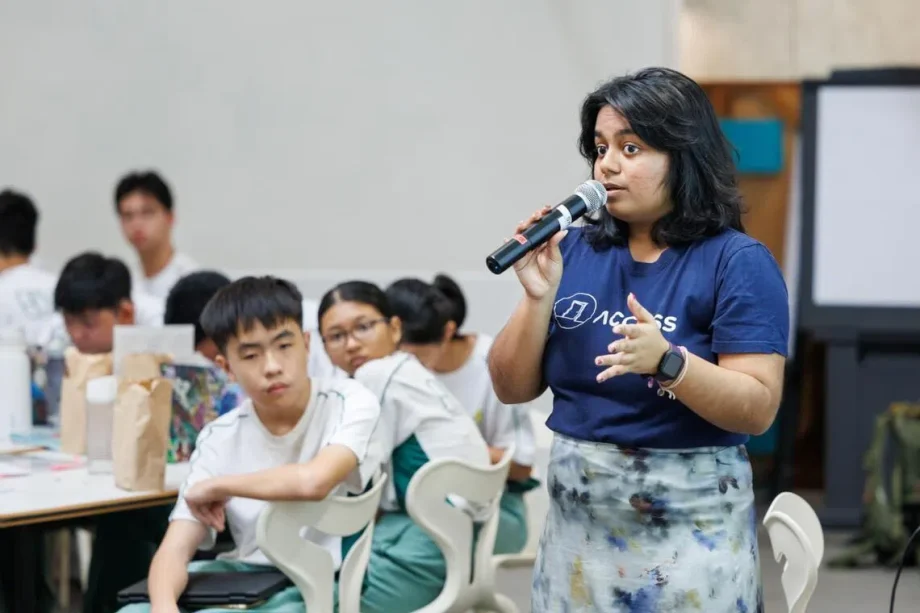
Today, Claudia majors in social work and South-east Asian studies at the National University of Singapore. She also works as a senior executive in charge of projects at social mobility charity Access Singapore, where she helps disadvantaged students discover career opportunities she once knew little about herself.
Claudia is not alone in having felt that way.
Like her, 58 per cent of youth aged 15 to 19 polled say they want early career exposure so they can make better decisions about what to study. Yet, they often do not know how to begin.

More than half of youth aged 15 to 19 polled say they want early career exposure so they can make better decisions about what to study.
ST PHOTO: GIN TAY
The findings emerged from the National Youth Council’s (NYC) engagements with over 60,000 youth aged 15 to 35 between late-2024 and early-2026.
Together, the responses shaped the SG Youth Plan, a five-year roadmap to help young Singaporeans become more confident, connected, and contributing citizens.
Unveiled on July 25, the plan includes more than 20 key moves spanning areas such as career exploration, well-being, social connections and youth-led initiatives.
What is the SG Youth Plan?

The SG Youth Plan involves over 20 new key moves to help young Singaporeans become confident, connected and contributing citizens. Among the moves is the development of the Somerset Belt, which includes *SCAPE, as a youth precinct by 2028.
ST PHOTO: JASON QUAH
Spearheaded by the Ministry of Culture, Community and Youth (MCCY) and the National Youth Council (NYC), the SG Youth Plan is a five-year action plan aimed at helping young Singaporeans aged 15 to 35 to become confident, connected and contributing citizens.
It is based on feedback NYC gathered through engagements, such as outreach sessions and surveys, with over 60,000 youth from late-2024 to early-2026. Young people were asked for their opinions and thoughts on a wide range of topics, from career anxieties to challenges in personal relationships.
The over 20 new key moves outlined in the plan aims to help young people navigate uncertainty, build meaningful relationships and give back to society. More details can be found at go.gov.sg/sgyouthplan-keymoves.
Among the moves is the launch of Discover, a one-stop online platform to support youth through key life transitions. Through Discover, young people can receive personalised recommendations for career programmes, access mentorship opportunities and find out about interest-based events and hobby groups. Find out more at go.gov.sg/discover-join
Exploring what’s next
One such move is the creation of 30,000 job taster opportunities annually by 2030, starting with 10,000 in 2026. Job tasters are bite-sized career exploration opportunities that range from half a day to a few weeks, giving participants a first-hand experience of different jobs and industries.
Singapore-based decarbonisation platform Terrascope is among seven companies under the SG Digital Leaders network offering job tasters.
Tang Siang Hou, Terrascope’s senior director of product, tech and data, hopes these opportunities will help students understand what it is like to work in the tech industry.
“Tech is moving so fast now that many of today’s roles didn’t exist five years ago,” says Tang. Students only know of job titles and entry requirements, she adds, not what the work actually entails.


Read Full Article At Source