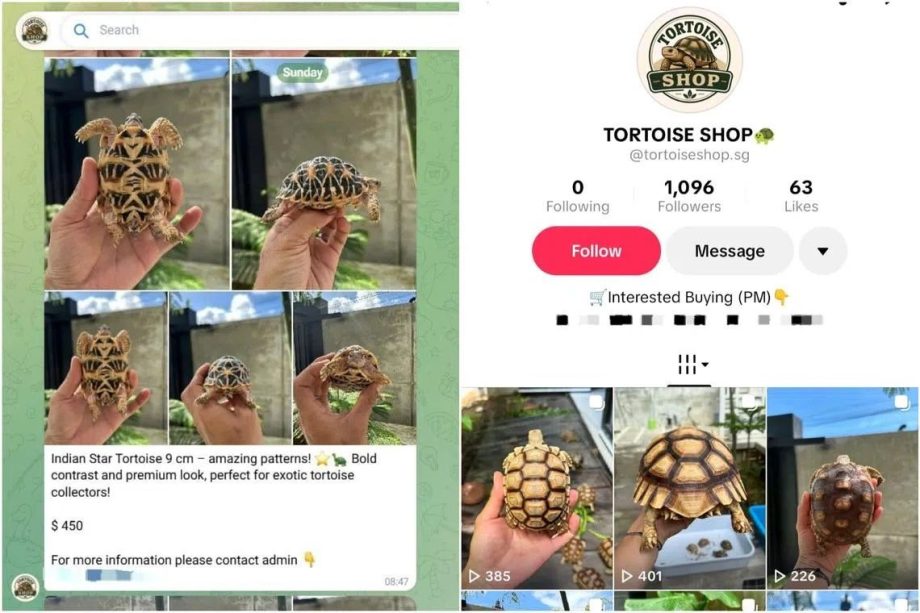
SINGAPORE: For over a month, a network of linked TikTok and Telegram accounts brazenly marketed threatened and illegal tortoises in Singapore.
Checks by The Straits Times found that posts by the now-defunct tortoiseshop.sg TikTok account began in the first week of June.
It shared photos and videos of various reptiles, describing them as having “complete anatomy”, as well as giving their dimensions, with the posts primed for local users. This included tagging the listings at Marina Bay Sands and using the hashtag #Singapore.
Interested buyers were directed to a Telegram group to arrange islandwide delivery for animals priced at up to S$1,500 for an Aldabra giant tortoise, a species native to the Seychelles that can live for more than a century.
The Telegram account linked to the shop told potential buyers that the tortoises would be dispatched from Malaysia, noting that delivery would occur only after payment was processed.
Receipts shared by the administrator implied successful purchases, with the latest transaction having taken place on July 4, it claimed.
At least six species of tortoises were peddled, all of which are illegal to keep as pets in Singapore. Most of those advertised on TikTok were sulcata tortoises, an endangered species native to Africa.
The only reptiles allowed as pets in Singapore are the red-eared slider and Malayan box turtle.
Notably, the inventory included at least six Indian star tortoises. The most recent Indian star tortoise was marketed on July 5 for $450 and advertised for its “amazing patterns”, “bold contrast” and “premium look, perfect for exotic tortoise collectors”.
The Indian star tortoise is banned from commercial international trade under Appendix I of the Convention on International Trade in Endangered Species of Wild Fauna and Flora (CITES). CITES is an international agreement to which Singapore is a party and is designed to ensure that wildlife species are not driven to extinction by international trade.
Those found guilty of illegally importing such species into Singapore can face severe penalties, including fines of up to $100,000 per specimen and a maximum prison sentence of six years.
Read Full Article At Source