SINGAPORE – AI-related demand continued to drive Singapore’s manufacturing output in the second quarter of 2026, primarily for electronics and precision engineering, but it was not enough to sustain the momentum of economic growth from the previous quarter.
The Republic’s economy expanded 5.7 per cent year on year in the April to June period, slower than Q1’s 6.3 per cent, according to the Ministry of Trade and Industry (MTI) on July 14. This expansion still surpassed the median forecast growth of 5.5 per cent by economists in a Bloomberg poll.
MTI said manufacturing during the quarter was largely driven by output increases in the electronics and precision engineering clusters because of strong AI-related demand for semiconductors and semiconductor manufacturing equipment, respectively.
But slower growth was observed in sectors such as construction as well as wholesale and retail trade.
Most analysts believe it would be difficult to outpace the growth Singapore’s economy recorded in the first quarter unless the volatile energy markets calm down. The situation has grown more uncertain once again after the recent flare-up of hostilities between the US and Iran, shattering the 60-day ceasefire they agreed on in mid-June.
Crude oil prices, which had dropped to a low of US$71 a barrel after the ceasefire deal was announced, have rebounded to around US$81 a barrel on July 17, though still far from the peak of US$120 in the weeks after the conflict began on Feb 28.
AI-related exports are set to remain the key growth driver for the second half of the year. However, analysts noted that lagged spillovers from the Middle East conflict and uncertainty surrounding energy and freight costs will likely moderate domestic demand and momentum, with household spending and business investment likely to be affected.
Disruptions to the supply of energy and other key inputs such as fertiliser and aluminium amid the blockade of the Strait of Hormuz will weigh on the global economic outlook, MTI said.
South Korea’s SK Hynix hardest hit in semiconductor share plunge
Increased AI demand has not boosted market sentiment on semiconductor companies, and it was a torrid week for chipmakers, with share prices falling as AI investments wane.
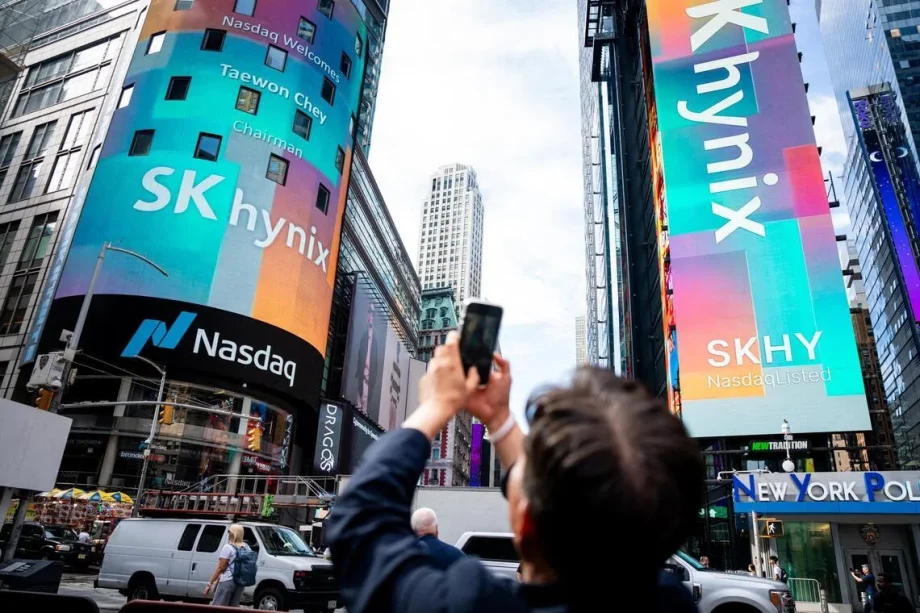
Bearing the biggest brunt was South Korean firm SK Hynix, the world’s leading AI memory chipmaker, which made its Nasdaq debut on July 10. Its Seoul shares posted their biggest one-day fall in nearly two decades on July 13, tumbling more than 15 per cent, as investors locked in profits.
Its American Depositary Shares (ADS) opened 14 per cent above the offer price at US$170 before ending their first trading day with a 12.8 per cent gain.
ADS are US dollar-denominated equity shares of a foreign company that can be bought and sold on US stock exchanges. They allow US investors to easily invest in international companies without dealing with the complexities of overseas trading, currency conversions, or differing trade practices.
Despite its strong debut, SK Hynix was unable to shake off the jitters that weigh on South Korean chip and memory stocks, with demand for the country’s specialised memory chips already forecast to exceed production capacity well beyond 2030.
After seeing a brief rally on July 15, its shares dropped 11.5 per cent on the Korea Exchange the following day, and closed the week 15.5 per cent lower.
The major sell-off could have been partially triggered by a Korea Investment & Securities report on July 13, which projected that SK Hynix’s operating profit for the latest quarter would fall short of estimates, adding to concerns that the company is overvalued.
Its domestic rival Samsung Electronics also saw its share price fall more than 8 per cent through the week despite reporting a 19-fold increase in quarterly profit.
The AI data centre boom has fuelled soaring demand for high bandwidth memory (HBM) chips. Samsung has unveiled its next-generation HBM4 chip, while SK Hynix is reportedly slowing the ramp-up of its own sixth-generation HBM chip in favour of higher-margin DRAM chips used in CPUs and conventional servers. This has raised doubts about SK Hynix’s ability to retain its lead in AI memory.
Samsung is also reportedly considering a US listing.

Read Full Article At Source