Spoilers for The Odyssey follow.
Zeus’ Law is broken. But who is to punish the guilty for it, who do they owe restitution to, if there is no Zeus?
Before its release, Christopher Nolan revealed to TIME magazine that he’d be taking a more “grounded” approach to the gods and mythical elements of The Odyssey, prompting some debate among purists who argued that this modern lens stripped Homer’s epic of elements essential to the narrative. In fact, Nolan did not cast Zeus, Poseidon, or many major Olympian gods as classic “humanized” deities intervening from Olympus.
“The wonderful thing about cinema…,” Nolan said in the TIME interview, “is that you can take an audience to a place of immersion, feeling close to events like storms, turbulent seas, high winds. You want the audience to be on the boat with them fearing the ocean, fearing the wrath of Poseidon, the way the characters do. That to me is so much more powerful than any individual image you can have [of a god].”

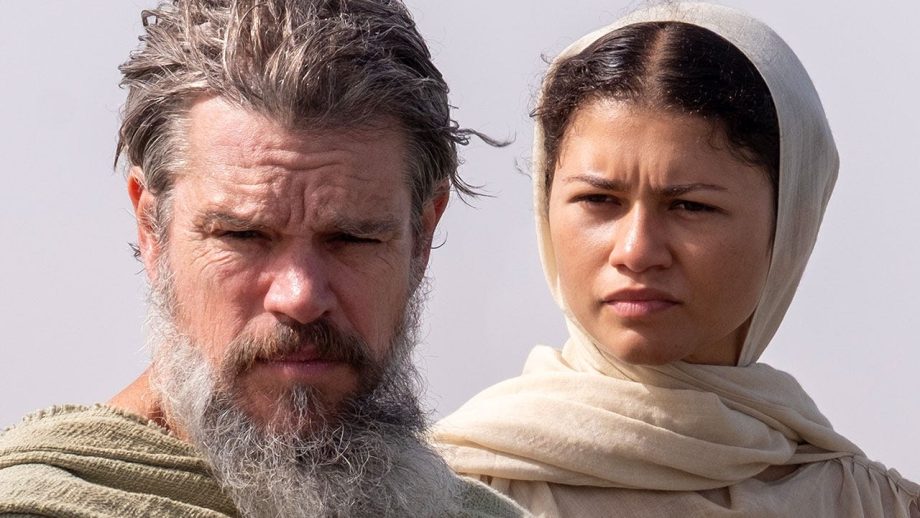
Nolan seems to be saying he was striving to convey an ancient people’s attempt to understand natural phenomena via their construction of the gods. In fact, Zendaya’s Athena overtly says something to the effect of, “What are the gods if not the waves crashing in?” And while the film does place the viewer directly in the perspective of the men and women living in this world (look no further than the interior POV sequence of The Trojan Horse), Nolan’s choice to depict the gods with ambiguity isn’t just cinematically engaging or reflective of a time past; it is essential to his movie working at all.
Put simply: There is no Christopher Nolan’s The Odyssey without that final Athena reveal.
Read Full Article At Source