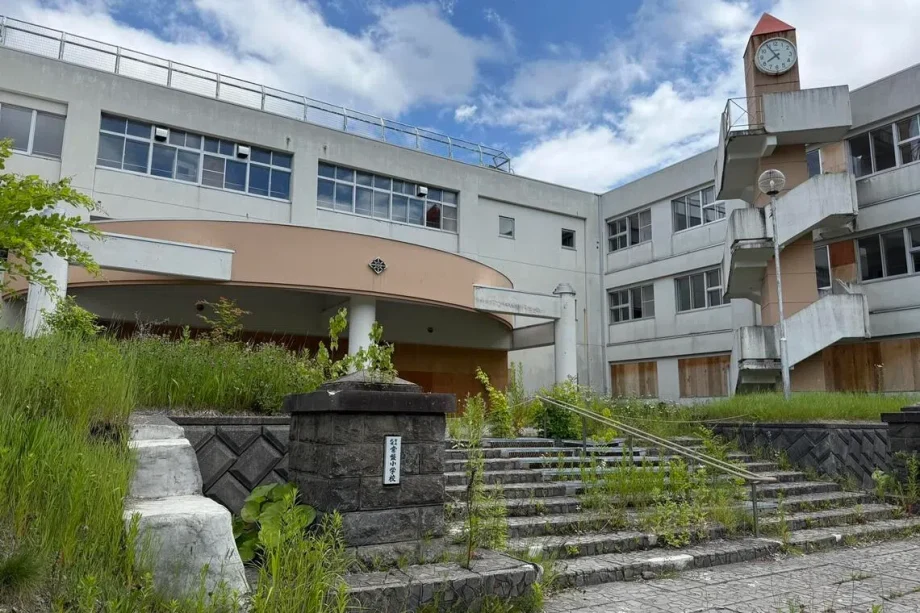
SAPPORO – For 111 years, the carefree laughter of children was woven into the everyday fabric of the suburban Tokiwa district in the south of Sapporo city, a neighbourhood surrounded by dense forests and rolling golf courses.
But the classrooms of Tokiwa Elementary School, which opened in 1910, have sat empty since 2021 in what is a textbook casualty of Japan’s deepening demographic winter. Today, its weather-beaten facade is boarded up and its front yard has been reclaimed by overgrown weeds.
When schools close, communities hollow out and Tokiwa, located 45 minutes away by public transport from central Sapporo – the capital city of Japan’s northernmost prefecture Hokkaido – is no different.
One Singapore-based private school operator, however, has a plan to breathe life into the district. Global Indian Education (GIE), which is part of Singapore-headquartered Global Schools Group (GSG), was in July 2025 named the winner of the bid for the plot of land where Tokiwa Elementary School sits for 25 million yen (S$200,000), above the state’s appraised value of 22.2 million yen.
GSG has a track record of 64 schools across 11 countries, including six campuses in Japan with four in Tokyo, one in Osaka and another in Tsukuba, a science city north-east of Tokyo. GIE proposed opening a prestigious international school in Tokiwa by August 2027, projecting 650 pupils by 2033.
But instead of being celebrated as an injection of vitality into the district, the plan became a lightning rod for backlash, a manifestation of nationalistic sentiment among a vocal segment of the Japanese public. Efforts by many local governments to woo foreign talent have been met by inevitable pushback.
A GIE public briefing in Tokiwa in September 2025 was hijacked by protesters using megaphones to drown out representatives and harangue attendees. By November, 90 public petitions had flooded the Sapporo City Assembly demanding a total shutdown of the project. Xenophobic rumours branded the school a “front for mass immigration” that would invite crime.
This was despite public records, detailed to the point of minutiae, showing GIE’s plan for inclusive enrolment not unlike its other campuses – in Osaka, 54.7 per cent are Japanese, while in Tsukuba, 82 per cent are Japanese.
It will provide an International Baccalaureate curriculum. The school will also serve as an emergency evacuation centre and, outside school hours, open its gymnasium to residents.
The complaints forced the project to be suspended but, on May 21, municipal lawmakers in a show of multipartisan unity unanimously rejected the petitions on grounds that they were based on untruths. This, in effect, was the green light to proceed.
“When we gathered feedback from actual residents living in the community, while not everyone was in favour, a vast majority supported the plan,” Liberal Democratic Party assembly member Ichiro Yamada told The Straits Times, noting that many of the petitions did not come from Tokiwa residents.
“But given the current political climate with the rise of ‘Japanese First’ sentiments of late, people have become extremely sensitive,” he said.
He added, however, that international schools are necessary infrastructure to increase Sapporo’s appeal for global talent.
“Our population isn’t going to suddenly increase tomorrow, but we certainly need it to grow,” he said, adding that while a concerted push must be made to ensure credible information reaches the public, this is easier said than done.
The nationalist ‘Japanese First’ political sentiment entered mainstream politics in the mid-2020s, as the conservative Sanseito party explicitly made the slogan its key election platform.
The populist movement pitted anxieties among locals caused by economic strain and inflation against the burgeoning and increasingly visible influx of foreign tourists and residents. The resultant momentum of the anti-foreign sentiment pressured the national government to impose stricter immigration controls.
Culture war
What was meant to be a story of suburban regeneration has instead exposed a culture war amid Japan’s halting transition to a multicultural society.
Sapporo’s foreign population has surged 2.7 times from 9,302 in June 2013 to 25,331 in June 2026. Today, foreign nationals account for a record 1.29 per cent of Sapporo’s 1.96 million residents, of whom one in three is a senior.
In response to the changing demographics, Sapporo became Japan’s first major municipality to enact a “community coexistence” ordinance, officially named Ordinance for Building a Community Where Everyone Can Connect with Each Other and Coexist.
Yuichi Sasaki of the city’s urban planning bureau said this means fostering “a society free from discrimination that draws strength from diversity”, with the policy formulated as a “philosophy” without any legal deterrent powers including against hate speech.
This is unlike cities such as Kawasaki and Osaka, which have enforcement measures against hate speech. Sapporo officials told ST that the situation in their city is not so severe as to warrant such a step, adding that it hopes to respect freedom of expression and diverse opinions.
In this climate, GIE appears to be retreating from the spotlight. When approached for comments, a GSG spokesperson told ST that “the local team is unavailable for comment or conversation at the moment”.


Read Full Article At Source