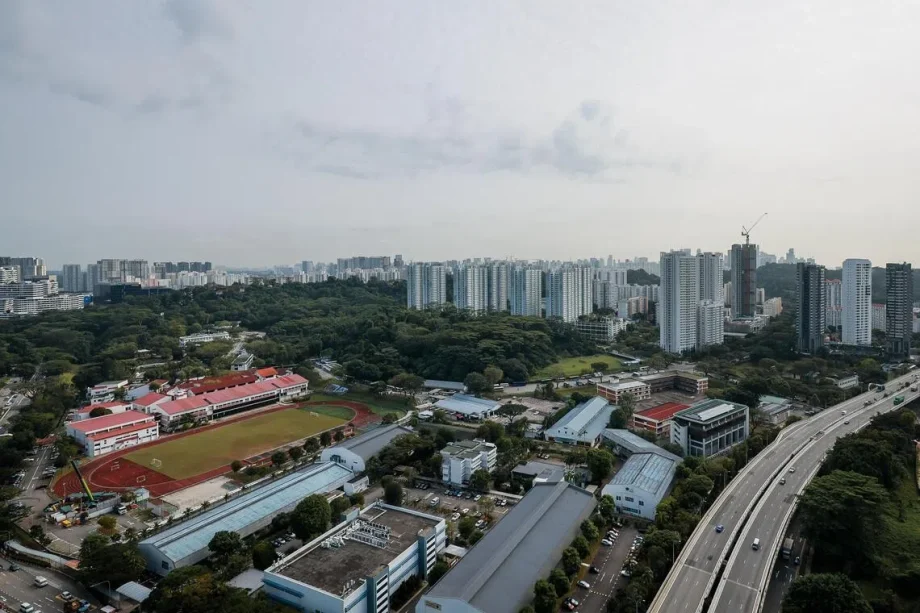
SINGAPORE – Built on the area’s highest hilltop and overlooking the sea and the island, Alexandra School was said to command a glorious view when it was opened in 1939.
The school’s original block – now largely forgotten, except by students and staff of ISS International School, which it houses – is set to become an important link to the past as one of 25 buildings slated to be retained in an upcoming housing estate at Gillman Barracks.
These buildings were among 86 that were assessed in a heritage study ahead of the redevelopment of the former military site for housing. Also assessed were various features and settings at the site.
In addition, about a fifth of the 40ha estate – which will comprise public and private housing – will be green areas, including existing greenery, as well as greenery that will be planted.
These plans were revealed by the Housing Board on July 10, as it published reports of heritage and environmental studies carried out on the area, which is now mostly occupied by creative lifestyle, arts, as well as food and beverage establishments.
HDB said in a press statement that along with other agencies, it has worked on a blueprint for the upcoming estate, which will offer residents “a charming and vibrant place to live, with the Southern Ridges and Labrador Nature Park Network providing green respite close to home”.
When plans for a new residential estate at Gillman Barracks were first announced in 2024, it was reported that the tenancies of existing tenants will progressively expire by 2030.
While the board did not state how many homes will be built at the site, the upcoming Berlayar estate nearby – which will have 10,000 homes over a 48ha site that includes 10ha of greenery – gives an indication of Gillman Barracks’ development potential.
The upcoming estate will add to existing homes in Telok Blangah, where public housing was first built in the 1970s, with the latest project completed in 2018.

Heritage study
The heritage study, conducted by conservation consultancy Studio Lapis, considered various chapters of the site’s history.
These include the mid-1930s to 1971, when the area was a British military camp; the 1970s to 1990s, when it housed Singapore Armed Forces (SAF) troops; as well as when educational institutions such as St Andrew’s Junior College (SAJC) and Pasir Panjang Vocational Institute (PPVI) opened there.
Since the 2000s to the present day, the site has been largely used as an arts and lifestyle destination.
The site’s 86 state-owned buildings were grouped into seven clusters – a school and a housing cluster in Preston Road, two clusters associated with Gillman Barracks in Lock Road and Malan Road, the SAJC cluster, the PPVI cluster, and a final cluster of buildings that provide public utilities for Telok Blangah.
Of all the buildings studied, four were assessed to have exceptional significance. They are the original block of Alexandra School in Preston Road, as well as three blocks in Lock Road that belonged to the barracks – a military camp completed in the mid-1930s that originally accommodated the British Middlesex Regiment.

The main block of the former Alexandra School, which is located at the end of Preston Road and opened in 1939.
PHOTO: STUDIO LAPIS CONSERVATION
Of the three blocks, Block 6 housed the headquarters of the Singapore Combat Engineers during the SAF days, while Block 9 was where the British Navy, Army and Air Force institutes were sited, and Block 22 was the sergeants’ mess during the British military days.

Block 22 Lock Road was once the sergeants’ mess of Gillman Barracks.
ST PHOTO: GAVIN FOO
A further 27 buildings were assessed to be of high significance. HDB said six of these will be demolished as they are in areas required for essential infrastructure such as roads, while 21 will be retained.
This means none of the buildings built by SAJC or the vocational institute – which both officially opened in the 1970s – will be retained based on current plans.


Read Full Article At Source
