For many people in Singapore, the phone is no longer just a phone. It is a distraction, a coping tool, a social lifeline, a work device, and, on a bad day, the easiest place to disappear for a while. StarHub’s latest digital wellbeing push leans straight into that uncomfortable truth, after a national study by StarHub and YouGov found that seven in ten people in Singapore use screens to cope with everyday pressures, while more than 80% say prolonged screen time leaves them mentally drained. The survey was conducted in April 2026 with 1,036 respondents in Singapore.
That finding builds on StarHub’s earlier digital detox effort, which had already painted a fairly familiar picture of life in an always-on country. In 2025, StarHub said an internal StarHub-YouGov study found that more than 80% of people in Singapore felt worn out after long hours on screens, nine in ten admitted to scrolling mindlessly, nearly seven in ten said it became harder to focus after scrolling, and almost nine in ten turned to their devices when they felt lonely.
StarHub then introduced its Digital Balanced Media Index, or Digital BMI, alongside a 5G Wellness Festival at Capitol Outdoor Plaza that ran in September last year. The event featured live DJ music, free-flow coffee, board games, and workshops such as mindful journaling, Silent Disco Yoga, and leather crafting.
Now, StarHub is taking that idea into its next chapter with The Power of Pause, a refreshed Digital Wellbeing initiative that shifts the conversation away from simply counting screen time. Instead, it asks a more personal question: why are people picking up their phones in the first place?
It is a small but important distinction. A screen can be useful, comforting, productive, or genuinely social. It can also be the place people go when they are stressed, lonely, bored, overstimulated, or simply too tired to do anything else.
Tan Toi Chia, Chief of People, Organisation and Communications at StarHub, says the conversation around screen time is now increasingly about balance and creating meaningful, real-life moments with the people around us.
“As lives become more digital, choosing to pause creates opportunities to strengthen the connection between individuals, families and communities, one moment at a time.”
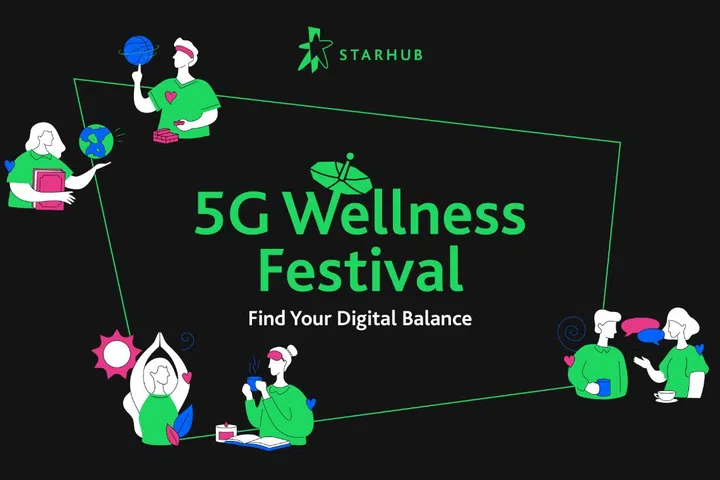
This was last year’s wellness festival’s banner.
Photo: StarHub
The refreshed initiative will run through the year via StarHub’s updated Digital BMI microsite, corporate partnerships, creator collaborations, and community activations. It will also culminate in the return of the StarHub 5G Wellness Festival in September 2026. That return quietly answers one of the questions left hanging from last year’s event, which was whether StarHub’s wellness push would be a one-off campaign or something with a longer shelf life.
The Digital BMI itself has also been reworked. The earlier version offered users a quick snapshot of their screen-time habits and mapped the results to StarHub’s five wellness pillars:
- Gather for social connection
- Glide for relaxation
- Glow for self-care
- Ground for physical presence
- Grow for mental enrichment
The new version adds more tailored recommendations and expert-backed resources from partners including the Infocomm Media Development Authority, National Library Board, and digital mental health platform ThoughtFull.
That partner mix matters because StarHub is no longer treating digital wellness as a simple “put the phone down” message. IMDA is contributing online safety resources in support of the national Digital for Life movement, with a focus on helping parents and youths build healthy digital habits. Digital for Life’s own Positive Use Guide on Technology and Social Media frames the issue in similar terms, focusing on intentional use, balanced screen time, self-check worksheets, and meaningful connections in a connected world.
Singapore’s public agencies have also been moving in the same direction. The Ministry of Health updated its guidance on screen use in children in November 2025, noting that screens can bring both benefits and harm, and that families increasingly need healthy habits to reduce potential harm to children. IMDA and MOE also introduced a Cyber Wellness lesson package for schools in 2026, with resources to help students practise healthy digital habits and online safety.
ThoughtFull brings the mental health piece into StarHub’s platform. Dr John Pinto, Head of Counselling at ThoughtFull, says the study findings reflect what the company sees in its clinical data across the region:
“Hyperconnectivity is becoming a measurable driver of psychological strain. Through the partnership, Digital BMI users will be able to better understand their emotional needs through clinically backed content and a dedicated support journey within the ThoughtFull app.”
There is more than this single study to support the evidence. A 2025 study published by the US Centers for Disease Control and Prevention found that teenagers with four or more hours of non-schoolwork screen time a day were more likely to report poorer outcomes across physical activity, sleep, weight concerns, depression symptoms, anxiety symptoms, and perceived support. The study also notes that high screen time can displace healthier behaviours such as physical activity and adequate sleep.
The World Health Organization’s Regional Office for Europe has also warned about rising problematic social media use among adolescents, with rates increasing from 7% in 2018 to 11% in 2022. WHO’s report does not argue that all online time is bad. In fact, it recognises that responsible social media use can support connection. The concern is when digital habits become hard to control, crowd out other activities, and start affecting sleep, mental wellbeing, school, or social life.
That is why StarHub talks about intention rather than abstinence. Few people in Singapore can realistically unplug for long. Work chats, school updates, banking, transport, reading, shopping, government services, entertainment, and friendships all live on screens now. The more useful question is whether the screen is serving the person, or whether the person is simply being pulled along by habit.
The refreshed Digital BMI microsite is designed to sit in that middle ground. It offers guidance around digital wellbeing, long-form reading to improve focus, and staying safe online, with recommendations tailored to different life stages and needs. StarHub says users can visit its Digital BMI site to learn more and discover their own score.
Read Full Article At Source