By David Ngiau
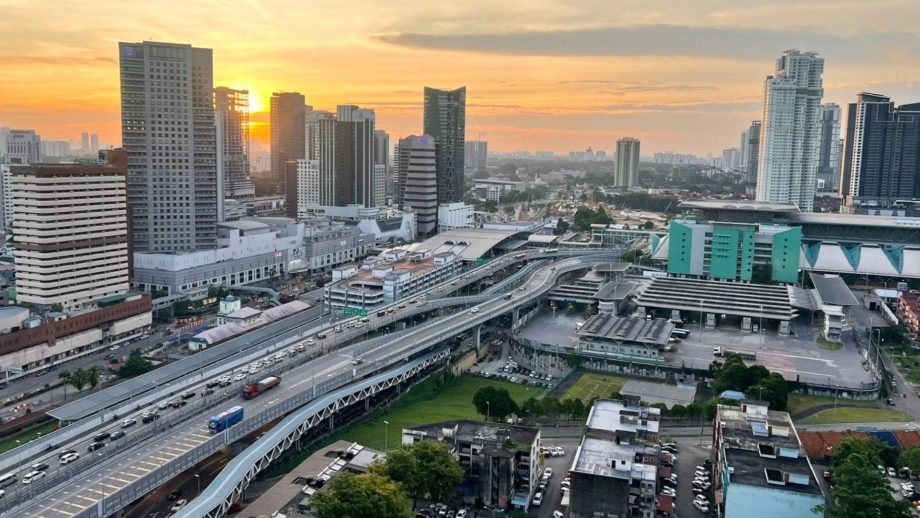
If you happen to cross the Causeway or drive along the elevated tracks near R&F Mall in downtown Johor Bahru (JB) these days, you might catch a heart-warming sight cutting through the city’s skyline: A sleek, silver Rapid Transit System (RTS) train quietly skimming along the elevated track. The much-anticipated rail link, due to go online in early 2027, just began integration and signalling tests in mid-June.
For those accustomed to the decades of grinding, gridlocked misery that defines the Causeway, watching that physical vehicle move across the infrastructure is more than just a milestone. It is a visual promise that the long-prophesied economic symbiosis between Singapore and Johor is finally materialising — and for a Singaporean watching petrol, rent, and grocery prices climb at home, that promise is starting to look less like scenery and more like an exit ramp.
Just as the tracks are being laid to tether these two territories closer than ever before, Johor itself is heading to the ballot box. On July 11, the state goes to early polls. To the casual observer in Singapore, the local horse-trading, candidate shifting, and campaign flags might look like a pedestrian, insular affair — somebody else’s election, somebody else’s problem. In a dramatic twist, Barisan Nasional (BN) has broken ranks with its federal Madani (unity) Government allies to contest all 56 seats on its own, leaving Prime Minister Anwar Ibrahim to manage the fallout in Putrajaya. It is tempting to file that under “Malaysian politics, business as usual” and move on.
That would be a mistake. For a regional audience — and specifically for Singaporeans now treating Johor less as a weekend grocery run and more as a long-term hedge against the cost of living at home — the outcome of this vote has a direct bearing on whether the bet they’re quietly placing on JB pays off. This election is not just about who wins the state assembly; it is about whether Johor can hold the line as a hyper-pragmatic, pluralistic southern fortress, even as the rest of the peninsula drifts toward a more conservative, nationalist political settlement.
The ‘Green Wave’ from the far north
The anxieties shaping Malaysian politics are not unique to Malaysia. Across the world, a defensive swing to the right — from Europe’s conservative resurgence to populist movements further west — reflects a broader unease about globalisation moving faster than people can absorb it. In Malaysia, this shows up as the “Green Wave”: The steady electoral advance of the Islamist party PAS (Parti Islam Se-Malaysia).
The standard Western liberal assumption has long been that prosperity is the cure for cultural conservatism — fill people’s bellies, and their minds open to pluralism. Malaysia is quietly disproving that. Wealth here seems to be funding a more confident, better-resourced traditionalism rather than dissolving it, tracking closer to a Gulf-style pattern where growth and religious conservatism advance together rather than trading off against each other.
The “Green Wave” is no longer just a story of rural Kelantan and Terengganu. It has taken hold among the urban, educated, affluent Malay middle class in states like Selangor — voters who are doing well financially but remain anxious about preserving their cultural and political standing in a country where Malay political power has fractured badly since 2018. To many of them, PAS now reads as the only uncorrupted anchor left standing.
Read Full Article At Source