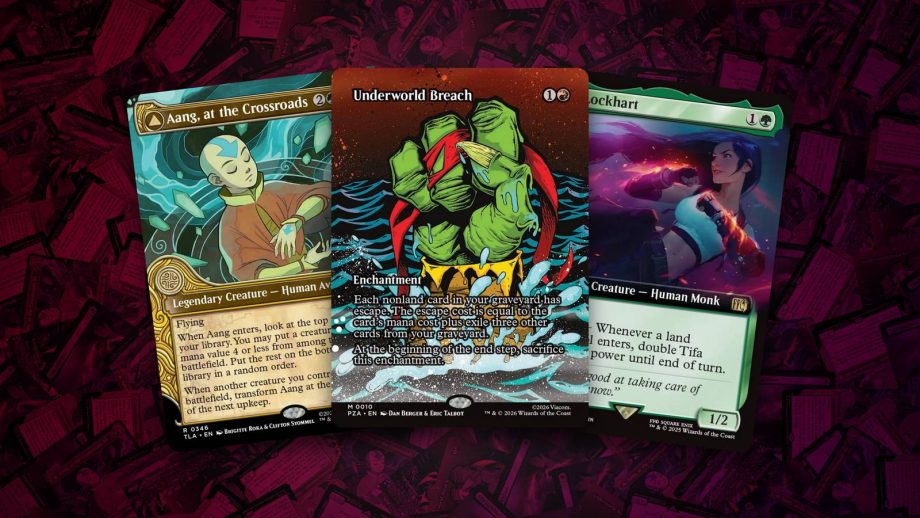
During the pre-release weekend for Magic: The Gathering’s Marvel Super Heroes, I walked into my local game store in the late morning to get a few packs for the new set. It was a ghost town during the store’s open play hours (prerelease events didn’t start until the afternoon). Off in one corner, a couple played a random board game. The rest of the store’s tables sat empty.
While I rattled off which packs I wanted (one collector booster and four play boosters), I heard a pair of small feet rush up the stairs behind me. A young girl, probably 10 years old or so, came in with her mother close behind, excitedly bouncing around. She high-fived the life-sized statue of fiery Planeswalker Chandra Nalaar. As I started ripping my packs at an empty table, I noticed that they too were buying Marvel products — both the mother and girl. I couldn’t help but smile.
Say what you will about how Universes Beyond dilutes the core authenticity of Magic as a standalone game, but moments like this — of a young new player brimming with excitement — warm my heart. Universes Beyond gets a lot of flak from the wider Magic community, and it often feels like most of the people that dislike it are older players who want their game to stay the same. It’s a kind of gatekeeping where people say things like, “My hobby is being corrupted by an endless barrage of crossovers that are making it feel like Fortnite.”
And yet, sets like Avatar: The Last Airbender, Teenage Mutant Ninja Turtles, and Marvel Super Heroes attract new audiences in droves. What’s better for the health of any trading card game than new players entering the hobby and spending money?

As the oldest trading card game — and eclipsed only by the Pokémon TCG in terms of volume sold — Magic has a legacy going back more than 30 years, and plenty of its own in-universe lore. I was in kindergarten when the game first launched in 1993, and didn’t start playing until sometime around 2000. I have a bunch of old cards from Urza’s Block and even more from the Odyssey Block, along with Classic Sixth and Seventh Edition. I remember reading Magic novels like The Brothers’ War and Chainer’s Torment.
Falling in love with certain characters and then finding those same characters in a booster pack makes for one of the best card-collecting experiences possible. You get hyped. You build an entire deck around that character. Even if the deck itself is not that great, the journey of building it is the most entertaining part — at least for me. But these moments have always been few and far between for Magic, a game that sometimes seems to bounce around its multiverse in chaotic ways.
Pokémon TCG is bigger not because it’s a better game (I would argue it’s a lot worse), but because it understands that players and collectors alike crave that experience, of having a strong emotional attachment to a character and then finding them on a little piece of cardboard after gambling on the purchase of a booster pack. The most expensive Pokémon cards are often the Illustrated Rares depicting fan-favorite characters with beautiful art. A card might be borderline useless in competitive play.


Read Full Article At Source