Is Angel Studios’ Historical Drama Good?

Is Angel Studios’ Historical Drama Good?


Young Washington is now playing in theaters.

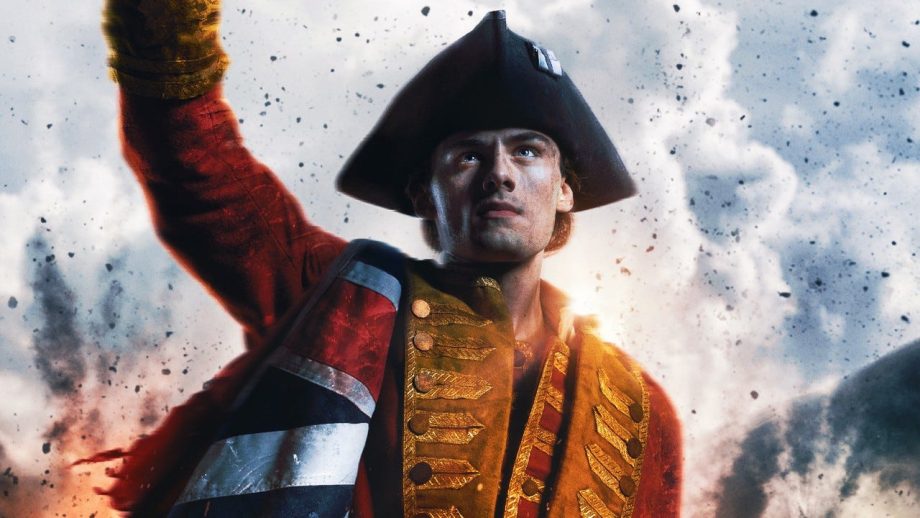
Young Washington is a sincere if stunted and superficial chronicle of the first US President’s formative years that forged his character, leadership skills and saw him, two decades after the events depicted here, rebel against the British Empire he had dutifully served to become one of America’s Founding Fathers. This Jon Erwin-directed film strives to be a big screen historical epic, but its formulaic script and plainly evident budgetary limitations (there are some notable digital shots that are either rudimentary CGi or straight-up AI) keep it more at the level of a decent but generally flat TV movie.

That said, this Angel Studios release is far more competently made and engaging than their other recent Presidential biopic, Reagan (a schmaltzy, underwritten slog despite Dennis Quaid’s earnest turn as the Gipper). Young Washington’s battle scenes and depiction of survival on the early American frontier (Ireland stands in for colonial America) gives this film more grit and action than most other entries in the admittedly niche subgenre of Presidential biopics.

As the title character, William Franklyn-Miller has the height and presence one associates with George Washington even if he otherwise looks nothing like him. He tries to find some layers in the role, and you care about George, but ultimately the story doesn’t let him do much in the way of soul-searching beyond when he blows it in 1754 at Fort Necessity.

Washington’s character arc goes from aspiring aristocrat and officer in His Majesty’s Army to realizing that his goal to join the British gentry or receive a royal military commission is naive and unattainable. His ambition leads him to seek out benefactors in the persons of Lord Fairfax (Kelsey Grammer, in his third project about Washington) and Virginia’s Lt. Governor Robert Dinwiddie (a by-the-numbers Sir Ben Kingsley). Andy Serkis shows up later in a distractingly showy turn as General Braddock, who belatedly comes to see Washington’s value.

Although born into Virginia’s planter class, Washington is still deemed by most of the Brits he interacts with as an inferior colonial, despite his older half-brother Lawrence (a kindly John Foss) being accepted among them because he owns property and was educated in England. George wants to join their ranks so when a chance to survey the Ohio frontier presents itself he eagerly volunteers. Turns out that Britain’s nemesis France is already out there with imperial designs of their own…
Washington’s experience on the frontier — where he encounters the fierce Seneca leader Tanacharison (a commanding Ryan Begay), whom the Europeans refer to as the “Half-King” — lead George directly into events that spark the global conflict known to Americans as the French & Indian War. This is the film’s strongest section, where George’s inexperience and pride lead him into the ruinous blunder that was Fort Necessity.

Following that notorious and avoidable defeat, the film sees Washington eating a hefty dose of humble pie as he wrestles with his faith in himself and what he thought God wanted of him. The issue of faith factors into the story — this is an Angel Studios film, after all — with George’s tough but pious mother Mary (a welcome Mary-Louise Parker), and even the Natives who failed to kill him in combat, coming to believe Providence is protecting him for some larger purpose.

We all know Washington is destined for greater things after the French & Indian War so the film’s final scene — where George has traded in his royal reds for colonial blues — plays like the climax of a comic book origin story where the superhero finally earns his iconic costume. Sure, it’s an unsubtle, low-hanging fruit of a crowd-pleaser moment but it works.

I’m a history buff not a historian so I will leave it to those better informed to scrutinize the film’s historical accuracy, but even a cursory reading of the French & Indian War reveals Young Washington took some big creative liberties, such as having one key supporting character perish at Fort Necessity years before they actually died or another character being present for scenes years after they’d historically died. I understand the dramatic necessity behind those decisions, but I’d be remiss if I didn’t point those errors out.

And while the film makes clear that Washington comes from a slave-owning family, slavery is largely relegated to the background, save for a few small scenes where their plight is acknowledged by supporting characters but then the story quickly moves on without ever exploring Washington’s own thoughts on it.

The film, as a whole, bypasses any sort of moral exploration of the complicated era when it’s set in favor of a less dimensional, more romantic view of Young Washington as an action hero with a bright, preordained future ahead of him.


Read Full Article At Source

Share. Save. Don't Miss The Buzz: XFacebookRedditLINETelegramWhatsAppGmail