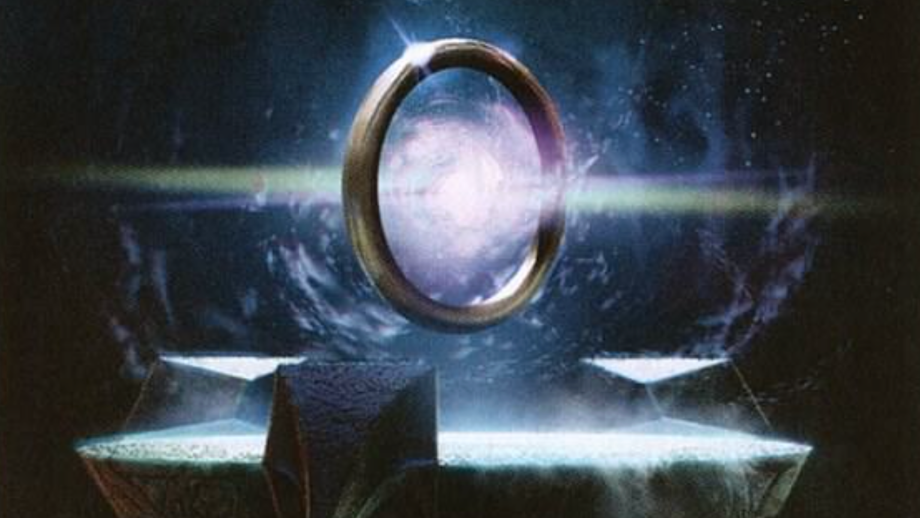
If you’re building a Commander deck in Magic: The Gathering, there are a few hard and fast rules you need to follow as you assemble your 100-card battle plan: roughly 36-40 lands, about a dozen removal spells or other ways to interact with your opponents, a few boardwipes in case things really get out of hand, and one Sol Ring. Virtually every single Commander deck in existence benefits from Sol Ring, one of the most overpowered, totally busted cards in all of Magic‘s 33-year history.
That’s why Wizards of the Coast includes a copy of Sol Ring in every single new preconstructed Commander deck it puts out. It’s also why Wizards should finally do the right thing and ban Sol Ring from Commander once and for all.
I’ll lay out my argument in a minute, but before that, it’s worth clarifying what a Sol Ring even is, in case you’ve never played a game of Magic before. Sol Ring was printed in the very first set of Magic, known as Limited Edition Alpha, in 1993. For one mana of any color, you get an artifact card that taps for two colorless mana each turn.
That’s right. You spend one mana to get a permanent that pays you back two mana every turn. If that sounds unfair, that’s because it is. Sol Ring essentially breaks the First Law of Thermodynamics. But even worse, it breaks the rules of Magic itself.

Over more than three decades, Wizards has established some unwritten rules for how new Magic cards are designed. These rules change over time (power creep is a major issue), but some are hard and fast. When it comes to cards like Sol Ring (artifacts that tap for mana, aka, mana rocks), most fall within one of two buckets:
- Two mana typically gets you a mana rock that taps for some but not all colors, and with some sort of restriction (Example: Talisman of Hierarchy)
- Three mana gets you a mana rock that taps for one mana of any color, with some sort of upside (example: Dragonstorm Globe)
There are notably also a lot of exceptions to this rule, especially when you include super-rare cards that are already banned or heavily restricted due to their rarity. But when Wizards goes to design a new mana rock, it will almost always follow one of these two basic frameworks.


Read Full Article At Source