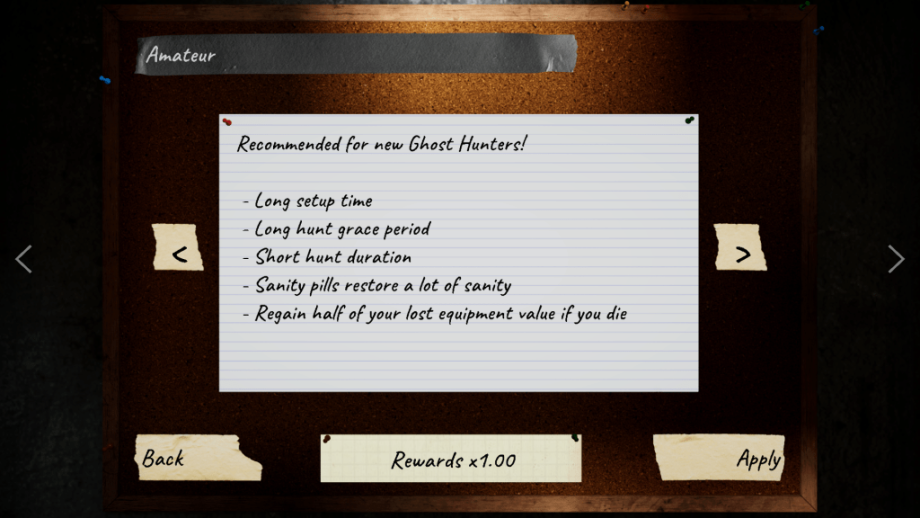
Phasmophobia offers five preset difficulty options, plus a custom and challenge mode, for you to choose from. But these difficulty levels don’t simply dictate how aggressive the ghost will be; they also influence critical aspects such as how much official evidence you can gather, how quickly your Sanity drains, the number of cursed possessions, how long (if any) set-up time you get, and, most importantly, your rewards.
That doesn’t mean you should jump to Insanity, the hardest preset difficulty level in Phasmophobia, as soon as you have a few successful contracts. Beginners should start on Amateur mode, where you’re offered a bit more leniency. Then, once you begin leveling up, unlocking higher-tier equipment, and becoming more comfortable gathering evidence, escaping the ghost, and identifying unique ghost abilities, you should gradually increase your difficulty level.
Higher difficulty levels, like Nightmare and Insanity, are when a lot of Phasmophobia’s tips and tricks are particularly important to know, as investigations are much more challenging and the ghosts more lethal–with some difficulty levels offering only one or two pieces of official evidence. But once you graduate to these higher levels and can complete these contracts successfully with ease, the rewards are huge, with Insanity offering a x6 multiplier on your normal cash and experience payout. If you’re feeling particularly brave, you can adjust Custom settings to take on the game’s Apocalypse Challenges.
Below, we break down all the available difficulty options in Phasmophobia, including the player level required to unlock them, their settings, and reward multipliers.