Ubisoft published a new Assassin’s Creed Black Flag Resynced trailer showcasing how the game looks on PS5 Pro, and it reminded me how these 4K game trailers just don’t work on YouTube. And it just makes me wonder why this unappealing method has become the preferred way of showcasing what should be cutting-edge visual capabilities.
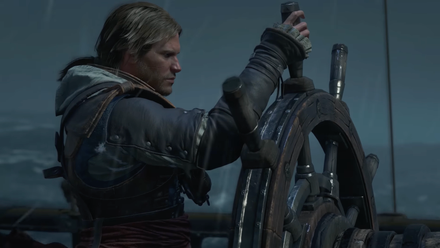
If you keep your eye on protagonist Edward Kenway, and only him, it’s fine. (Well, except at 0:44 and 0:45, where his hair gets a bit blurry.) It’s fine! It looks pretty decent, the colors are vivid, the framerate looks smooth. And everything else around him is markedly less so. Just look at the blurred tree leaves five seconds in, the sand in the fight scene after that, the artifacts at 0:12 and 0:30 — it’s not a pretty trailer.
It’s not Ubisoft’s fault, though. YouTube compresses every upload (as do Twitch and other platforms). In plain terms, compression squashes data together to lower the file size and bitrate (data) demand, which reduces the video and audio quality. If you’re watching a YouTube video with tinny-sounding audio, for example, you can thank compression for that.
The idea is that compression helps ensure people with less speedy or reliable internet connections can still stream something at a moderately decent quality. And YouTube’s compression has become less egregious, at least with 1440p and 4K videos, for which the platform uses a different transcoding method (VP9) than it does for 1080p videos (assuming the uploader uses a browser or device that supports VP9). In theory, it helps retain more data during compression, so the quality is higher, even if it’s not fully 4K. The generally accepted wisdom is to avoid compressing your files before uploading, if you can help it, and to upload only the highest quality footage so it stays nicer even after compression. Upscaling also helps.
Read Full Article At Source