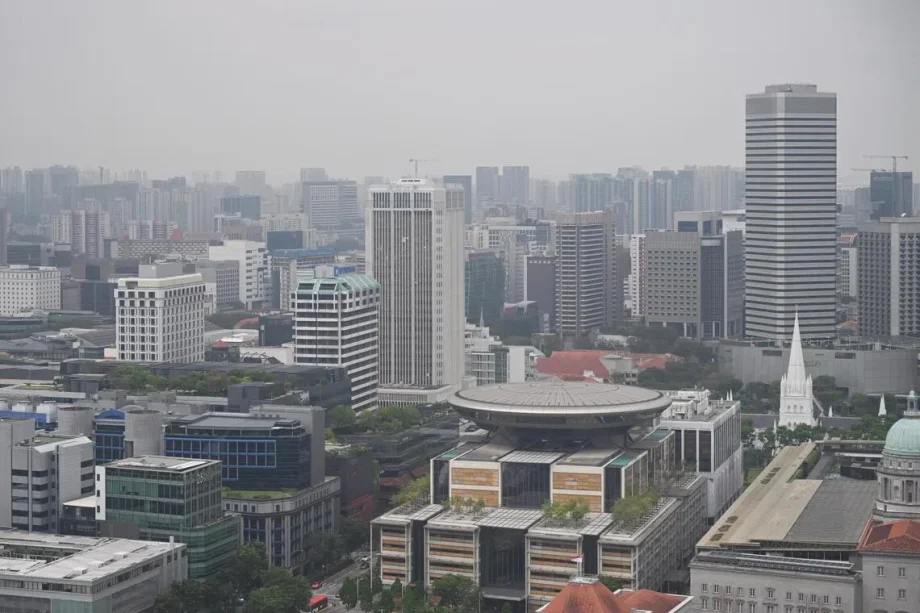
SINGAPORE – There is a high risk of severe haze blanketing the region in the second half of the year, due to the return of El Nino, as well as increased deforestation spurred by biofuel demand.
The warming El Nino climate phenomenon is expected to create a longer and stronger dry season at a time when fire readiness could be compromised by economic uncertainty and budget pressures, said the Singapore Institute of International Affairs (SIIA) in its annual haze outlook report.
This is the second time since its annual outlooks began in 2019 that the think-tank has put out a red alert. The first was in 2023, also an El Nino year when Singapore experienced haze over a weekend in October.
El Nino refers to the warming of the sea surface over the eastern Pacific, leading to hotter and drier weather over the region. Scientists predict that this cycle could be a super El Nino, putting 2026 and 2027 on track for exceptionally sizzling years.
At the same time, another climate phenomenon called the positive Indian Ocean Dipole is expected to develop in July or August. An Indian Ocean Dipole is similar to El Nino but develops in the equatorial Indian Ocean.
An El Nino and a potential positive Indian Ocean Dipole could prolong and intensify Singapore’s dry season in the second half of the year and extend it into October, the National Environment Agency and Singapore’s weatherman has said.
According to the ASEAN Specialised Meteorological Centre’s website, El Nino conditions are already present in the region, and are set to strengthen from August to September.
Past severe haze events such as the crises of 2015 and 1997 also coincided with a super El Nino and positive Indian Ocean Dipole.
Read Full Article At Source